
.png?w=1368&h=240)
Have you ever noticed your power tools struggling to start, or felt an extension cord getting dangerously hot during a project? These aren't just minor inconveniences—they are red flags for potential equipment failure or fire hazards. Choosing the correct extension cord gauge is essential for safety, performance, and long-term reliability. While a thinner cord might seem like a budget-friendly choice, the hidden costs of voltage drop can permanently damage your expensive appliances.
Among the most common options, 12AWG and 14AWG extension cords are widely used for both indoor and outdoor applications—but they are not interchangeable. Whether you are running a heavy-duty air compressor, an RV, or high-performance garden tools, understanding the technical threshold between these gauges is critical.
This guide explains the key differences between 12AWG and 14AWG extension cords, including electrical capacity, voltage drop, safety margin, and real-world usage scenarios. Our goal is to help you determine which one is truly better for your specific outdoor power needs.
Understanding 12AWG and 14AWG Wire Gauges
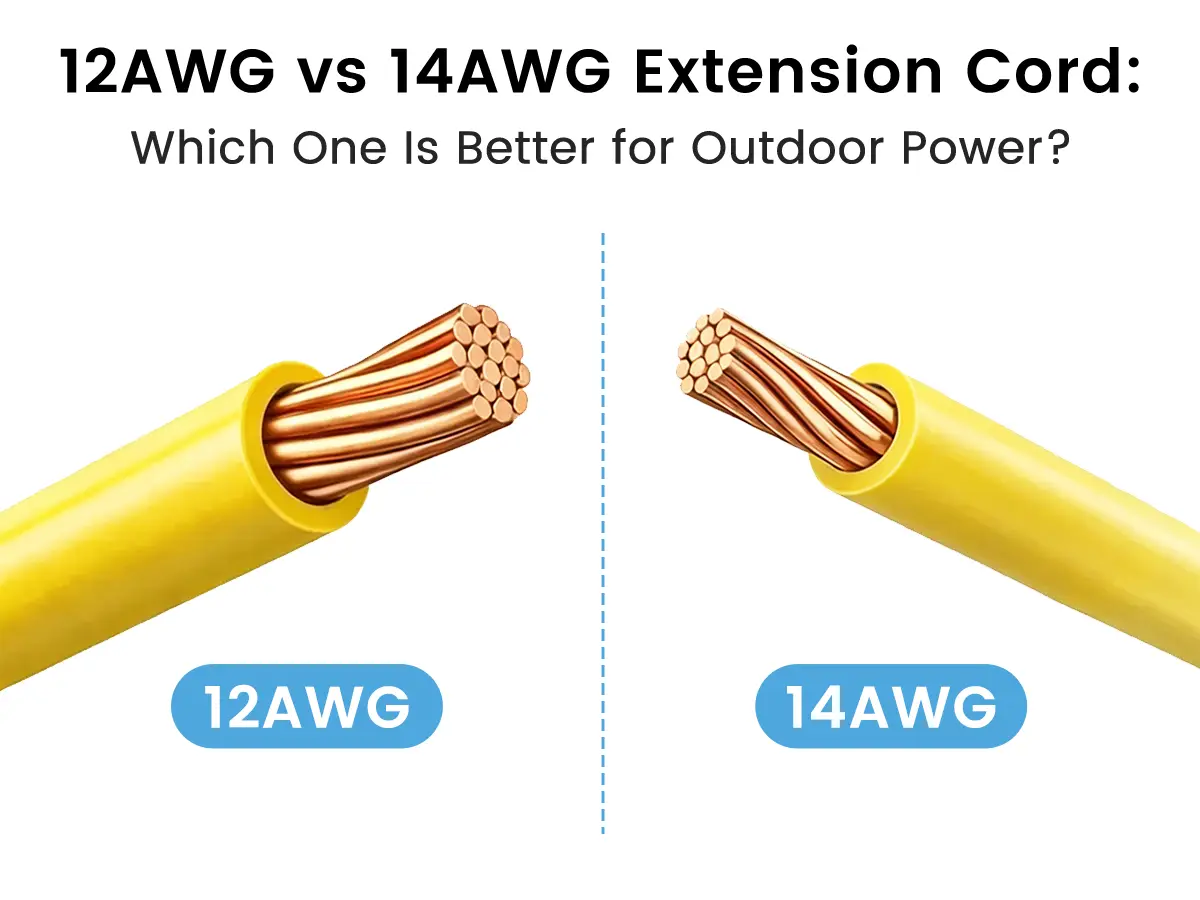
AWG (American Wire Gauge) is the standard system used in North America to measure the thickness of electrically conductive wires. A fundamental rule to remember: the lower the AWG number, the thicker the copper wire. A thicker wire has a larger cross-sectional area, which allows it to carry more current with less resistance.
The "Why" Behind the Specs: More Than Just Numbers
When comparing 12/3 AWG and 14/3 AWG extension cords, the physical difference in copper volume is significant. A 12AWG cord has a diameter of 2.05 mm compared to the 1.63 mm of a 14AWG cord, resulting in approximately 60% more copper. This extra material is what provides the "Heavy Duty" performance Vantecable is known for.
| Specification | Diameter | Cross-section | Max Wire Ampacity | ETL Rated Amps | Safety Margin | Resistance | Voltage Drop (@100ft, 15A) |
|---|---|---|---|---|---|---|---|
| 12/3 AWG | 2.05 mm | 3.31 mm² | 20A | 15A | +33% (Extra Capacity) |
5.21 Ω/km | ~4.8V (Low Loss) |
| 14/3 AWG | 1.63 mm | 2.08 mm² | 15A | 15A | 0% (At Limit) |
8.29 Ω/km | ~7.6V (High Loss) |
(Scroll horizontally to view full specs →)
Why is a 12AWG Cord Rated for 15A?
Many professional users know that 12AWG copper wire is physically capable of carrying up to 20 Amps. So, why is our 12/3 extension cord labeled as 15 Amps?
The answer lies in the NEMA 5-15 Standard and ETL Certification:
-
The Connector Limit: Most standard household extension cords use NEMA 5-15 plugs (the common 3-prong plug). Per ETL and UL safety standards, these connectors are rated for a maximum of 15 Amps.
-
Safety First: Even though the wire inside (12AWG) is heavy-duty enough for 20A, the overall rating of the product must match its weakest link—the plug. To ensure compliance and 100% safety, we label the cord based on the connector's 15A limit.
-
The Vantecable Advantage: By using 12AWG wire for a 15A rated cord, we are effectively "over-engineering" for your safety. While a 14AWG cord would be working at its thermal limit at 15A, our 12AWG cord runs significantly cooler and delivers more stable voltage over long distances.
12AWG vs 14AWG: Electrical Performance and Safety
Current Capacity and Power Rating
Understanding the raw power potential of your cord is the first step in ensuring project success.
-
12AWG Performance: A 12-gauge wire is a heavy-duty powerhouse, physically capable of supporting up to 20A. This translates to a massive ~2.4kW at 120V, providing the high-torque energy required by professional tools like table saws, miter saws, and large air compressors.
-
14AWG Limitations: While versatile, 14AWG is typically limited to 15A, supporting approximately ~1.8kW at 120V. It is the standard choice for medium-duty equipment like orbital sanders or power drills, but pushing it beyond this threshold for high-draw machinery can lead to immediate breaker trips or efficiency loss. Using a wire gauge below the required capacity is not just a performance issue; it is a primary cause of electrical failure.
Using a wire gauge below the required capacity may lead to overheating or breaker trips.
Heat and Safety Margin
Thermal management is where the physical thickness of a 12AWG cord truly shines, providing an invisible layer of protection for your workspace.
-
12AWG Thermal Advantage: Because 12AWG wire has a larger cross-sectional area and lower resistance (5.21 Ω/km), it operates significantly cooler under heavy loads. This creates a high safety margin, ensuring that even during continuous operation, the cord maintains its structural integrity and remains safe to handle.
-
14AWG Thermal Stress: In contrast, when a 14AWG cord (8.29 Ω/km) is used near its maximum rating for extended periods, the higher internal resistance generates more heat. Over time, this thermal stress can lead to accelerated insulation aging, causing the outer jacket to become brittle or even melt, which significantly increases the risk of short circuits or fire hazards.
Physical Versatility and Long-Term Value
Beyond electrical specs, the physical build of your cord dictates its usability. 14AWG extension cords are lighter and notably more flexible, making them the ideal choice for indoor routing around furniture or light-duty yard work where maneuverability is key. However, for demanding environments, 12AWG cords provide superior mechanical strength. While heavier and less flexible due to the increased copper volume, they offer enhanced durability against abrasion and foot traffic. In terms of cost, the 20–30% price premium for 12AWG is a strategic investment in longevity, ensuring consistent performance for high-load tools where standard cords might fail.
Usage Scenarios: When to Use 12AWG or 14AWG
Indoor and Light-Duty Applications
For short distances and low-power devices such as lamps, electronics, and small appliances, a 14AWG extension cord is usually sufficient and more economical.
Typical uses include:
-
Indoor lighting
-
Light-duty outlets
-
Small household appliances
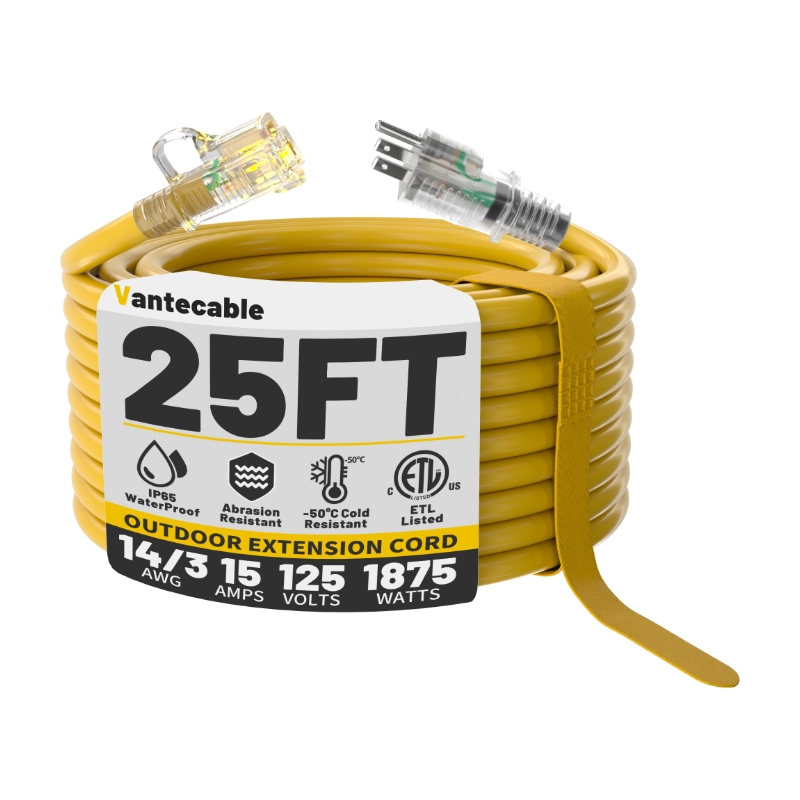
Vantecable 14/3 Heavy Duty Cord
Waterproof, ETL Certified, and featuring a high-visibility LED indicator. The smart choice for everyday home and garden power.
Get 25ft to 200ft NowOutdoor, Long-Distance, and Heavy-Duty Applications
For higher current loads, outdoor environments, or long extension runs, a 12AWG extension cord is strongly recommended.
Typical uses include:
-
Power tools and workshop equipment
-
Outdoor lighting and landscaping
-
Air conditioners, heaters, and compressors
-
RV and vehicle power connections
Lower voltage drop and higher heat tolerance make 12AWG the safer choice in these scenarios.
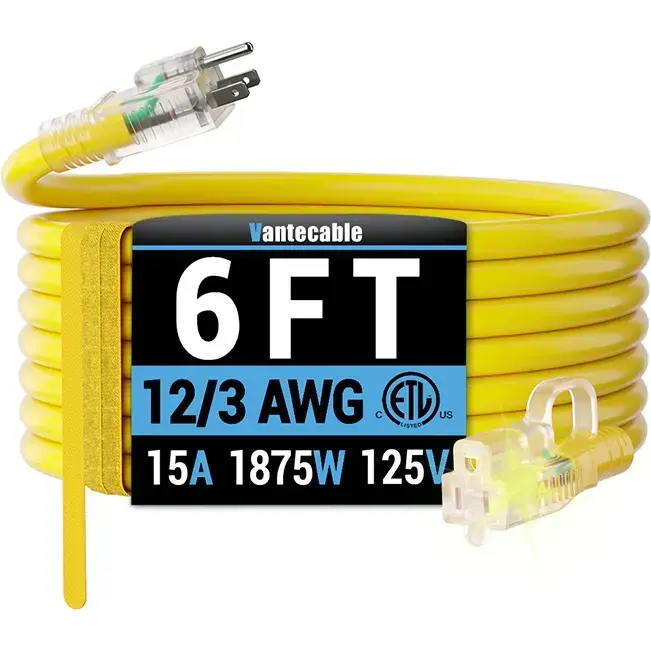
Vantecable 12/3 Ultra Heavy Duty Cord
Our bestseller. Industrial-grade 12AWG copper supports up to 500ft runs. LED Lighted End & All-Weather flexibility.
Shop 6ft to 500ft RangeWhy Choosing the Correct Extension Cord Gauge Matters
Selecting the correct gauge helps prevent:
-
Overheating and insulation failure
-
Voltage drop that reduces equipment efficiency
-
Premature wear on tools and appliances
For a broader view of available options, you can explore our complete extension cord category to compare different gauges, lengths, and jacket types for indoor and outdoor use.
Final Verdict: Best 12AWG vs 14AWG Outdoor Extension Cord
Deciding between 12AWG vs 14AWG depends on your equipment's power draw. For heavy-duty tasks involving air compressors, table saws, or RVs, the 12/3 AWG extension cord is the essential choice due to its lower resistance and superior safety margin. While 14AWG works for light-duty indoor tools, the 12AWG remains the ultimate outdoor extension cord investment. It ensures a more stable voltage delivery and protects your expensive motors from overheating, offering long-term reliability where standard cords might fail.