
.png?w=1368&h=240)
-
14/2 Gauge Wire, CCA, for Speaker Wire, LED, Automotive, ETL Listed, 100-250ft$19.99 USD$38.99 USD
-
-
-
14/2 Gauge Copper Electrical Wire, Low Voltage Power Cable, black, ETL Listed, 25-50ft$22.99 USD$42.99 USD
-
-
-
NM-B 14/2 Gauge Electrical Wire with Ground, OFC, 600V, Yellow, UL Listed, 25ft-100ft$27.99 USD$47.99 USD
-
14/3 Gauge Outdoor Extension Cord with LED Lighted End, SJTW, ETL Listed, 25-200ft$24.32 USD$49.99 USD
-
14&16 Gauge 3/7 Outlets Plugs, Outdoor Extension Cord, Green, SJTW, ETL Listed, 25-50ft$22.99 USD$49.99 USD
![[100ft to 250ft] 14 Gauge Wire, 2 Conductors Electrical Wire Red Black Cable, Low Voltage Copper Clad Aluminum,Waterproof,ETL,flexible](https://img-va.myshopline.com/image/store/1754964108957/1-WH-651x651px-35.webp?w=651&h=651)
![[10ft to 100ft] 14/3 Gauge Heavy Duty Outdoor Extension Cord Waterproof with Lighted,yellow,Waterproof,ETL,flexible](https://img-va.myshopline.com/image/store/1754964108957/10-WH-651x651px-9.webp?w=651&h=651)
![[3ft to 15ft] 14 Gauge Flat Plug Extension Cord (1~3pack) Indoor Outdoor,black,Waterproof,ETL,flexible](https://img-va.myshopline.com/image/store/1754964108957/5-WH-651x651px-24.webp?w=651&h=651)
![[25ft to 50ft] 14/2 Gauge Copper Electrical Wire, Flexible Stranded Low Voltage Power Cable,black,Waterproof,ETL](https://img-va.myshopline.com/image/store/1754964108957/1(1)-WH-651x651px-0.webp?w=651&h=651)
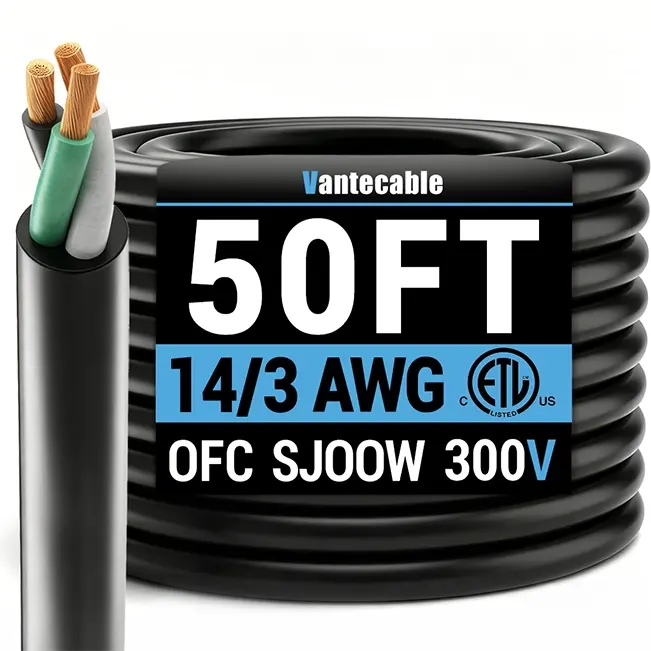
![[1ft to 15ft] 14/3 Gauge Flat Plug Extension Cord, White Space-Saving Slim Design, Indoor/Outdoor,Waterproof,ETL,flexible](https://img-va.myshopline.com/image/store/1754964108957/2-WH-651x651px-21.webp?w=651&h=651)
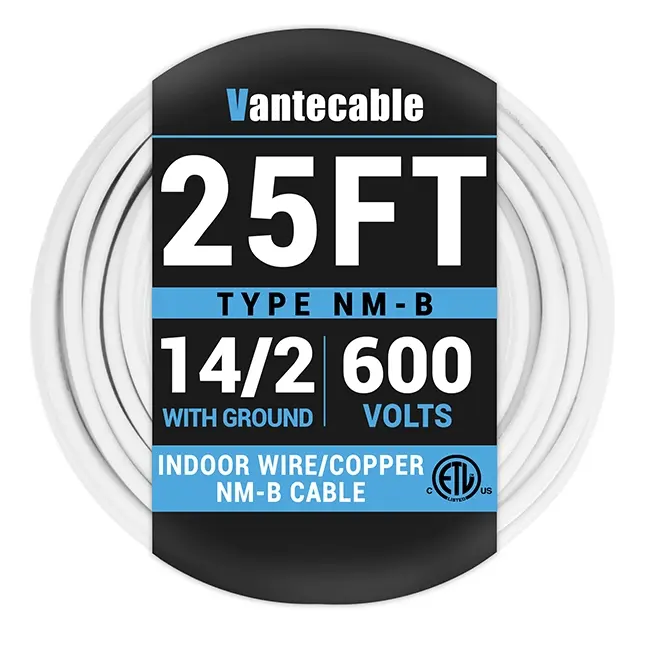
![[25ft to 200ft] 14/3 Gauge Heavy Duty Outdoor Extension Cord, Waterproof with LED Lighted Indicator,balck/yellow,Waterproof,ETL,flexible](https://img-va.myshopline.com/image/store/1754964108957/4-WH-651x651px-25.webp?w=651&h=651)
![[25ft to 50ft] 16/3 Gauge Multi-Outlet Outdoor Extension Cord, Waterproof Power Splitter, Green for Holiday & Landscape,Waterproof,ETL,flexible](https://img-va.myshopline.com/image/store/1754964108957/2-WH-651x651px-33.webp?w=651&h=651)
14AWG Extension Cord Parameter Table
| Wire Gauge | Diameter | Cross-Sectional Area | Current Rating | Voltage Rating | Wattage | Jacket Type | Certification | Plug Type | Temp Range |
|---|---|---|---|---|---|---|---|---|---|
| 14 AWG | 1.63 mm | 2.08 mm² | 15 Amps (Max) | 125 Volts | 1875 Watts | SJTW/SOOW | ETL Listed | NEMA 5-15P to 5-15R | -40°F to 140°F |
What Is a 14 Gauge Extension Cord?
14AWG extension cord has a diameter of 1.63mm, a cross-sectional area of 2.08 square millimeters, and a maximum current carrying capacity of 15 amps. It is a medium-load extension cord suitable for indoor or outdoor use, safely delivering current from the outlet to power tools. 14 AWG is approximately 26% thicker in diameter and 59% larger in cross-sectional area than 16 AWG, meaning it offers greater current carrying capacity and safety margin compared to 16 AWG, making it ideal for medium-duty tasks both indoors and outdoors.
Common Uses for 14 Gauge Extension Cords
14 AWG extension cord is the preferred choice for medium-load equipment, as standard 16 gauge wire may not be able to handle the power required by such equipment. Designed for reliability and safety, it provides stable power to tools requiring up to 15 amps.
-
Circular Saw (7-1/4"): 13A - 15A, 120V, 1560W - 1800W.
-
Portable Table Saw: 15A, 120V, 1800W.
-
Miter Saw: 12A - 15A, 120V, 1440W - 1800W.
-
Portable Air Compressor: 12A - 15A, 120V, 1440W - 1800W.
-
Electric Pressure Washer: 13A - 14.5A, 120V, 1560W - 1740W.
-
Heavy-Duty Drill Press: 10A - 12A, 120V, 1200W - 1440W.
-
Space Heaters & Portable AC Units: 12.5A, 120V, 1500W.
When to Choose 12 Gauge Cord
While 14 AWG is sufficient for many home and studio tasks, Vantecable recommends upgrading to a thicker extension cable for the following specific scenarios to ensure both safety and performance:
- Distances over 50 feet: If you need to transmit distances of more than 50 feet, 14 AWG cables may experience significant voltage drops. For long outdoor work, switching to 12 AWG ensures that your equipment gets the full 120V voltage.
- Continuous high-load operation: If you are operating the equipment at a current of 15 amps or close to 15 amps for more than 3 hours, using thicker gauge wires will result in lower operating temperatures and reduce the risk of heat damage to the wire sheath.
- Commercial-Grade Machinery: For industrial equipment like massive dust collectors, commercial treadmills, or high-capacity table saws that pull a constant, heavy current, a 12 AWG cord provides the extra "copper headroom" needed to prevent motor burnout.
- Simultaneous Tool Use: If you are using a power strip at the end of your extension cord to run multiple devices at once, the combined amperage can quickly exceed the capacity of a standard wire. In these cases, a thicker cord is the only way to ensure the circuit remains stable.
Safety Tips for 14 Gauge Extension Cords
Always check the cord rating before use to prevent overloading.
Keep cords away from water, heat sources, and high-traffic areas.
Inspect cords regularly for wear or damage, and replace them if necessary.
Choosing the correct length prevents unnecessary tension and tripping hazards, while heavy-duty insulation and flame-resistant materials add an extra layer of protection.
Avoid running cords under carpets or through doorways where they can be pinched or damaged.
Why Choose Vantecable 14 Gauge Extension Cords
Vantecable extension cords are engineered for durability, safety, and reliable performance. Each cord features heavy-duty insulation, flame-resistant materials, and flexible construction to withstand frequent bending. Our curated selection of lengths and configurations ensures you find the perfect cord for your project, whether it’s indoor, outdoor, or for RV use. Using a Vantecable 14 gauge extension cord gives you confidence in both performance and safety.
14 Gauge Extension Cord FAQs
Q: Can I use a 14 gauge cord for outdoor power tools?
A: Yes, absolutely. Our 14 AWG extension cords are rated for medium-duty tasks and are perfect for outdoor power tools such as lawnmowers, hedge trimmers, and leaf blowers. However, ensure the cord has an "W" rating on the jacket (e.g., SJTW), which indicates it is moisture and sunlight resistant for safe outdoor operation.
Q: How do I choose the right length without losing power?
A: Measure the direct distance and add about 10% extra to prevent tension. For a 14-gauge cord, we recommend staying within 50 feet for high-draw tools to minimize voltage drop. If you need to reach 100 feet or more for heavy-duty equipment, you might consider upgrading to a 12-gauge cord to maintain consistent performance and tool longevity.
Q: What is the maximum wattage and amperage for these cords?
A: Our 14 gauge cords are typically rated for up to 15 Amps and 1,875 Watts (at 125 Volts). Always check the "Total Amps" listed on your power tool's motor plate. To ensure safety, the tool's amperage should not exceed the cord's rated capacity.
Q: Are these cords safe for continuous use (e.g., appliances)?
A: Yes. These cords are engineered for medium-duty continuous use and feature reinforced blades to prevent overheating at the plug. While they are durable enough for shop fans or portable lights, for high-wattage continuous appliances like space heaters or large refrigerators, we recommend a dedicated heavy-duty 12 AWG cord for maximum safety.
Q: How can I tell if my 14 gauge cord is damaged and needs replacing?
A: Inspect the cord regularly for any cuts in the outer jacket, bent prongs, or extreme heat near the plug during use. If the cord feels "soft" or you see exposed copper wire, replace it immediately. Our cords use premium SJTW jackets to resist cracking, but proper storage (coiling without kinks) will significantly extend their lifespan.