What Is a 12 Gauge Extension Cord?
A 12 gauge (12 AWG) extension cord uses thicker copper conductors than lighter-duty cords, allowing it to safely carry more current over moderate distances. Compared to 14 or 16 gauge cords, 12 gauge extension cords are better suited for tools and equipment that draw higher power without sacrificing flexibility.
These cords are commonly rated for outdoor use and feature durable insulation designed to withstand regular bending, dragging, and exposure to jobsite or backyard conditions.
Common Uses for 12 Gauge Extension Cords
12 Gauge Cords: Powering Your Toughest Tasks
Designed for high-draw performance, our 12 AWG extension cords safely support up to 20 Amps, preventing voltage drop for:
Shop Tools: Table saws, air compressors, and miter saws.
Outdoor Gear: Electric lawn mowers and heavy-duty blowers.
Home & Garage: Treadmills, shop vacs, and space heaters.
When to Choose a Heavier Gauge Cord
While 12 gauge extension cords perform well for many applications, certain scenarios demand a heavier conductor size to meet safety standards.
Consider upgrading to a heavy-duty 10 AWG cord if:
Higher Amperage: Your equipment draws 15 to 20 Amps of continuous current. While 12 AWG is rated for 15A, a 10 AWG cord provides a safer buffer for high-draw tools like table saws or air compressors.
Longer Distance: The extension cord run exceeds 50 feet. At lengths of 100ft or more, 10 AWG is essential to prevent significant power loss.
Extended Use: You need continuous power for more than 3 hours. Following the 80% Rule (NEC standard), 10 AWG handles sustained heavy loads without overheating.
Critical Voltage Drop: You need to keep voltage drop below 3% for sensitive equipment. 10 AWG minimizes resistance, ensuring your motor-driven appliances start quickly and run cooler.
Using the appropriate gauge helps protect your tools, appliances, and power source while ensuring stable performance. If you are selecting a power tool extension cord, you can refer to our Power Tool Extension Cord Guide 2026 to learn how to select the right wire gauge based on current and distance
Safety Tips for 12 Gauge Extension Cords
To use 12 gauge extension cords safely and effectively, follow these best practices:
Use outdoor-rated cords for exterior applications
Fully unwind the cord during use to prevent heat buildup
Avoid running cords through water or wet areas
Inspect the jacket and plugs regularly for damage
Do not exceed the cord’s rated amperage
Proper handling and correct gauge selection are key to safe and reliable power delivery.
Why Choose Vantecable 12 Gauge Extension Cords
100% Pure Oxygen-Free Copper: We never use CCA. Our pure copper conductors ensure maximum conductivity and safety.
SJTW Weatherproof Jacket: Rated for both indoor and outdoor use, our insulation remains flexible in temperatures as low as -40°F.
ETL Certified: Every cord meets rigorous North American safety standards to prevent overheating.
LED Power Indicators: Quickly verify if your cord is energized, even in low-light jobsite conditions."
12 Gauge Extension Cord FAQs
Q: What is a 12 gauge extension cord best used for?
A: A 12 gauge extension cord is a medium-to-heavy-duty power solution. It is best used for high-wattage power tools (circular saws, drills), gardening equipment (electric chainsaws), and workshop machinery. It is significantly more capable than 14 or 16 gauge cords, making it safer for extended outdoor projects.
Q: Can I use a 12 gauge extension cord with a generator?
A: Yes, for portable generators with a 15-20 Amp output over short distances. However, for high-output generators or runs exceeding 50 feet, we strongly recommend upgrading to a Vantecable 10 AWG heavy-duty cord to minimize resistance and potential tool damage.
Q: Is 12 gauge better than 14 gauge extension cord?
A: Yes. A 12 gauge extension cord can handle more current and is better suited for higher-demand tools compared to a 14 gauge cord.
Q: Does cord length affect performance?
A: Yes. Longer cords increase resistance and voltage drop. Choosing a heavier gauge helps maintain stable power over longer distances.

.png?w=1368&h=240)
![[1ft to 100ft] 12/3 Gauge Heavy Duty Outdoor Extension Cord, Multiple Outlets & LED Indicator,yellow,Waterproof,ETL,flexible,SJTW](https://img-va.myshopline.com/image/store/1754964108957/12-3-2-WH-651x651px.webp?w=651&h=651)
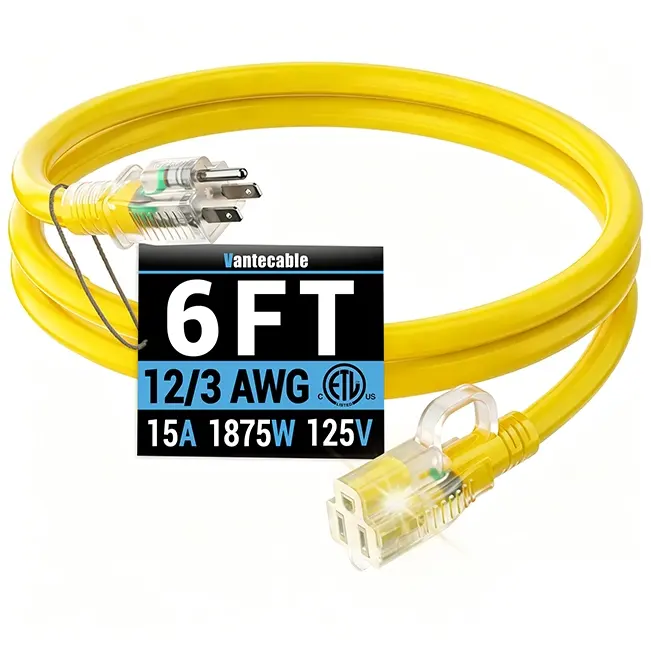
![[15ft to 25ft]12/3 Gauge Outdoor Extension Cord with Multiple Outlets,black,Waterproof,ETL,flexible](https://img-va.myshopline.com/image/store/1754964108957/2-WH-651x651px-36.webp?w=651&h=651)
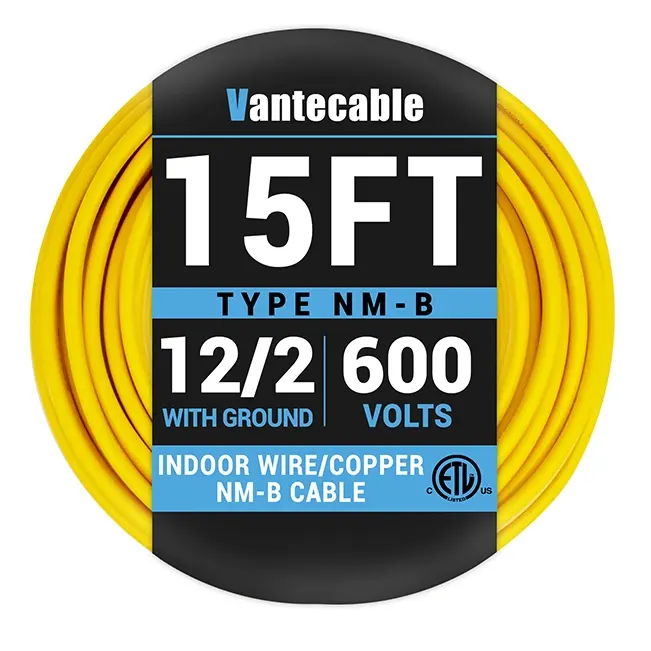
![[25ft to 100ft] 12/3 Gauge Heavy Duty Outdoor Extension Cord, Waterproof with LED Lighted End,yellow,Waterproof,ETL,flexible](https://img-va.myshopline.com/image/store/1754964108957/6-WH-651x651px-13.webp?w=651&h=651)
![[100ft to 250ft] CCA Electrical Wire 12/2 Conductors Red&Black Cable Hookup LED Lighting Strips Flexible Wire,ETL](https://img-va.myshopline.com/image/store/1754964108957/3-WH-651x651px-30.webp?w=651&h=651)