
.png?w=1368&h=240)
When purchasing a power solution—whether it’s for a professional construction site, a 30-amp RV, or a portable generator—the safety mark on the jacket is the only thing standing between reliable power and a fire hazard.
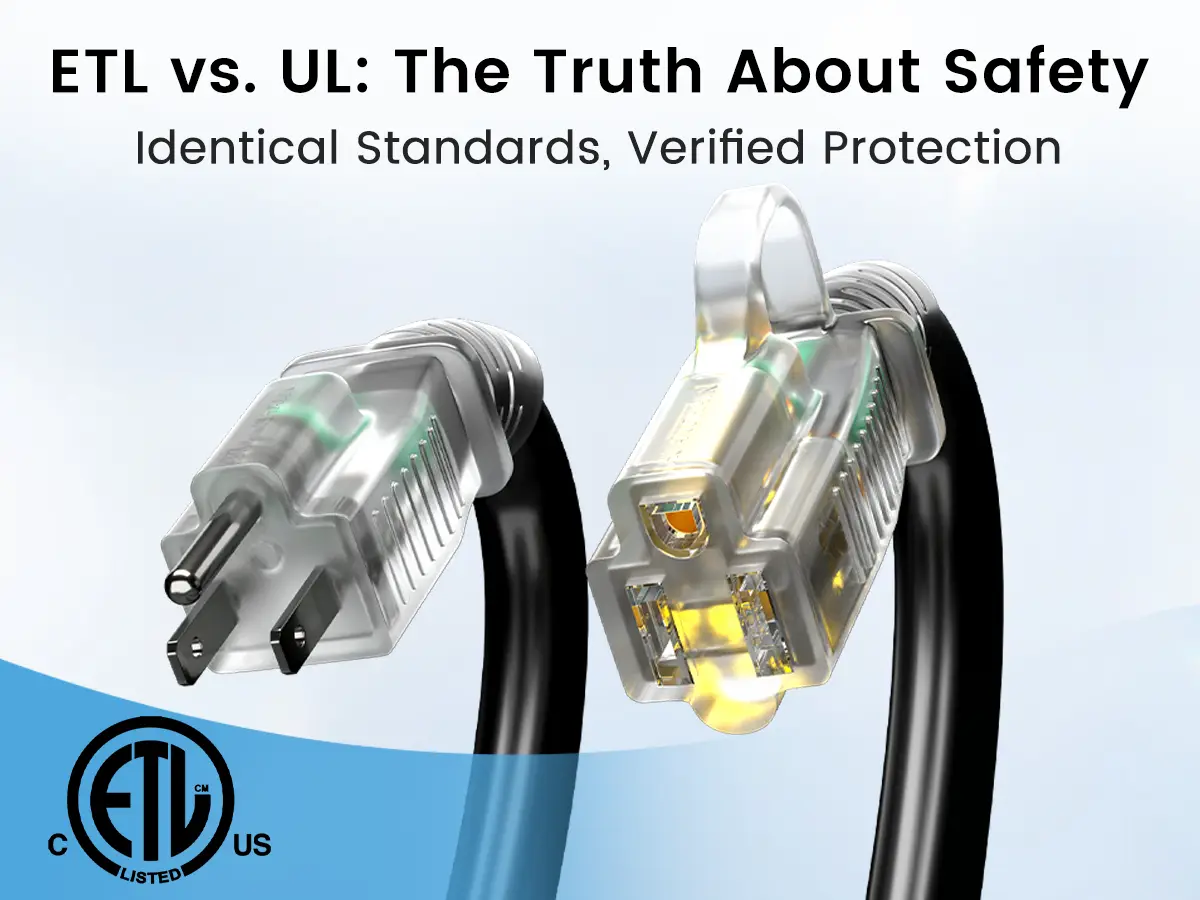
In the U.S. and Canada, you will see two primary marks: UL Listed and ETL Listed. Many buyers ask: "Is ETL as safe as UL?" and "What does Intertek certification actually prove?"
As an industry leader, Vantecable is committed to transparency. This guide explores the hard science of ETL certification, the role of Intertek, and why NRTL recognition is the key to your safety.
Looking for a Cord for Your Setup?
Browse Vantecable’s outdoor and heavy-duty extension cords.
1. What is an NRTL? (The Legal Foundation)
To understand ETL listed meaning, you must first understand the NRTL (Nationally Recognized Testing Laboratory) program.
The Occupational Safety and Health Administration (OSHA) does not test products itself. Instead, it delegates this authority to private labs called NRTLs.
-
Intertek (which issues the ETL mark) and UL are both top-tier NRTLs.
-
Both are legally required to test heavy-duty extension cords against the identical ANSI/UL safety standards.
👉 The Bottom Line: An ETL mark is not "second-tier." It is a federal recognition that the product meets the same safety requirements as any UL-listed alternative.
2. What Actually Is ETL Certification?
When a Vantecable cord carries the ETL Listed mark, it means it has survived a series of "stress tests" designed to simulate the harshest real-world conditions. These tests are conducted under the UL 817 (Cord Sets) and UL 62 (Flexible Cords) standards.
Here is exactly what the ETL laboratory monitors during the certification process:
-
Abnormal Overload Test: The cord is subjected to currents far exceeding its rating to ensure the insulation doesn't ignite or melt.
-
Strain Relief Test: A mechanical pull force (often up to 30 lbs) is applied to the plug-to-cord connection. This ensures the wires won't pull out of the plug even if someone trips over the cord.
-
Dielectric Voltage-Withstand Test: We apply high voltage (thousands of volts) to the insulation to ensure there are no "leaks" or pinholes that could cause an electric shock.
-
Flexing Test: The cord is mechanically bent thousands of times to ensure the copper strands inside won’t break and the outer jacket won’t crack under repetitive use.
-
Temperature Rise Test: We measure exactly how much heat the cord generates under full load. The temperature must stay within a safe limit to prevent fire hazards in enclosed spaces like RV storage compartments.
👉 The Bottom Line: ETL isn't just a "logo." It is a confirmation that the copper purity, insulation thickness (gauge), and plug integrity of your Vantecable cord meet the highest engineering standards in North America.
Is ETL as Good as UL?
Yes, absolutely. Many consumers assume UL is the "gold standard" simply due to its historical name. However, OSHA recognizes both ETL and UL as equal. They both test products against the exact same ANSI/UL standards.
If a cord is ETL listed, it has passed the same rigorous stress tests for heat, voltage, and durability as any UL-listed product.
3. ETL vs. UL: The Professional Comparison
When comparing UL vs ETL, the difference is about the lab, not the safety level.
| Feature | ETL Listed (Intertek) | UL Listed (Underwriters Lab) |
|---|---|---|
| OSHA Recognized | Yes (Official NRTL) | Yes (Official NRTL) |
| Testing Standards | UL 817 / UL 62 | UL 817 / UL 62 |
| Safety Level | 100% Equivalent | 100% Equivalent |
| Follow-up Inspections | Quarterly Unannounced | Quarterly Unannounced |
Why Vantecable chooses ETL: Intertek’s testing efficiency allows us to bring our extreme-weather innovations to market faster, ensuring you get the latest safety technology without the "brand premium" price of UL.
4. Why Certification is Non-Negotiable for Heavy-Duty Use
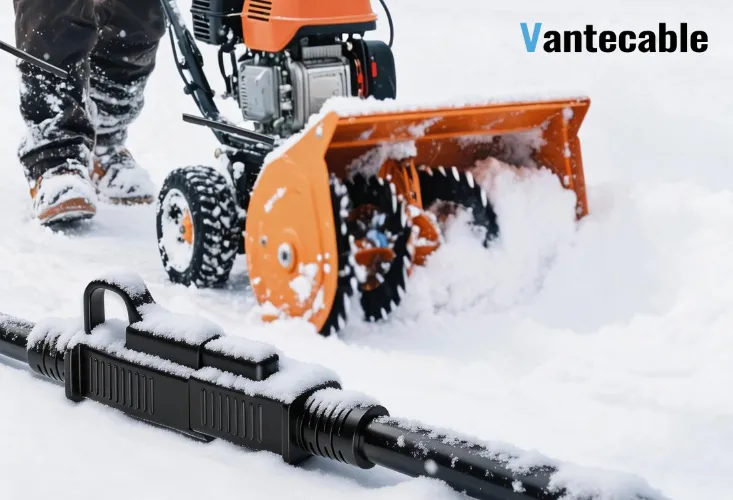
Safety certification isn't just a sticker; it's a guarantee that your wire won't melt under pressure.
-
For Contractors & Job Sites: OSHA compliance is mandatory. Using an ETL-listed extension cord protects you from federal fines and workplace liability.
-
For RV & Generator Owners: High-current loads (30A/50A) generate intense heat. Our certified RV cords and generator cords are built with 99.9% Oxygen-Free Copper, ensuring they stay cool even under maximum load.
-
The "Insurance" Factor: In the U.S., using non-certified electrical products can complicate insurance claims after a fire. Choosing ETL-certified equipment ensures you are fully covered and compliant.
5. How to Spot a Genuine Certified Cord
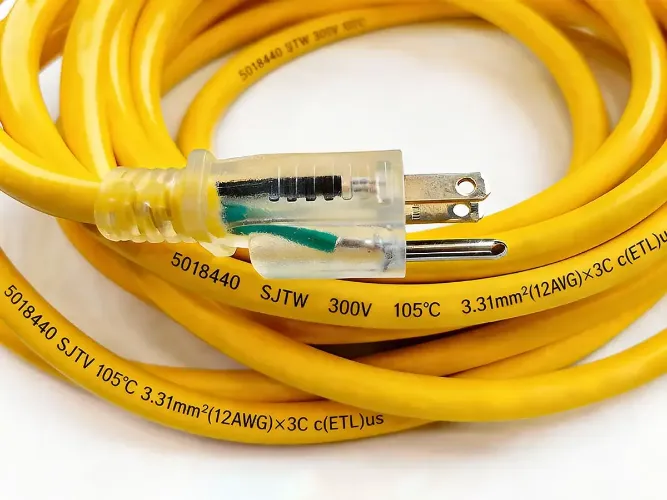
A common search term for savvy buyers is the Intertek Directory. Every legitimate ETL-listed product is logged in a public database.
To verify your Vantecable cord:
-
Find the Control Number: Look for the 7-digit number (e.g., 5012345) next to the ETL logo on the plug.
-
Visit the Intertek Official Site: Go to the "Intertek Product Directory."
-
Search & Confirm: Enter the control number or brand name. This confirms the product is active, tested, and safe for use in the U.S. and Canada.
6. Why Non-Certified Cords Are a Liability
Buying a "cheap" non-certified cord from a random marketplace is a massive risk. Without ETL or UL testing, you face:
-
Incorrect Wire Gauge: "Fake" 10AWG wires that are actually thinner, leading to overheating.
-
Insurance Rejection: Many U.S. insurance companies will deny fire claims caused by non-certified electrical devices.
-
RV Park Bans: Most modern RV parks mandate the use of NRTL-recognized power equipment.
7. Conclusion: Safety Over Branding
In the ETL vs UL debate, the only wrong choice is a cord with no certification at all. Whether you need a 50ft heavy-duty outdoor extension cord for your lawnmower or a 30-amp power solution for your RV, Vantecable’s ETL-certified products deliver industrial-grade safety at a fair price.
Don't risk your gear. 👉Shop our ETL-Certified Heavy-Duty Cords and Power Solutions now!
🏆 FAQ: Everything You Need to Know
Q1: Will an inspector reject an ETL listed product?
A1: No. Electrical inspectors across the U.S. and Canada recognize ETL and UL as identical in terms of code compliance.
Q2: Why are Vantecable cords more durable than generic brands?
A2: Beyond the ETL certification, we use pure copper and SJTW-rated jackets that remain flexible down to -40°F. We don't just meet the standard; we exceed it for outdoor durability.
Q3: Can I use an ETL cord for an EV charger or a portable generator?
A3: Yes, as long as the gauge (AWG) matches your equipment’s power requirements. Always check the ETL label for the maximum wattage rating.
Q4: Is ETL as good as UL?
A4: Yes. Both are NRTLs and use the same UL 817/UL 62 testing standards.
Q5: What does ETL listed mean?
A5: It means the product has been tested by Intertek and complies with North American safety standards.
Q6: Where is the Intertek Directory?
A6: It is an online database where you can verify the safety status of any ETL-listed product using its control number.
Note: Certification requirements and product acceptance may vary by product, applicable standard, local code, and project specifications. Verify the exact product listing and check with the relevant authority or project specifier when needed.