
.png?w=1368&h=240)
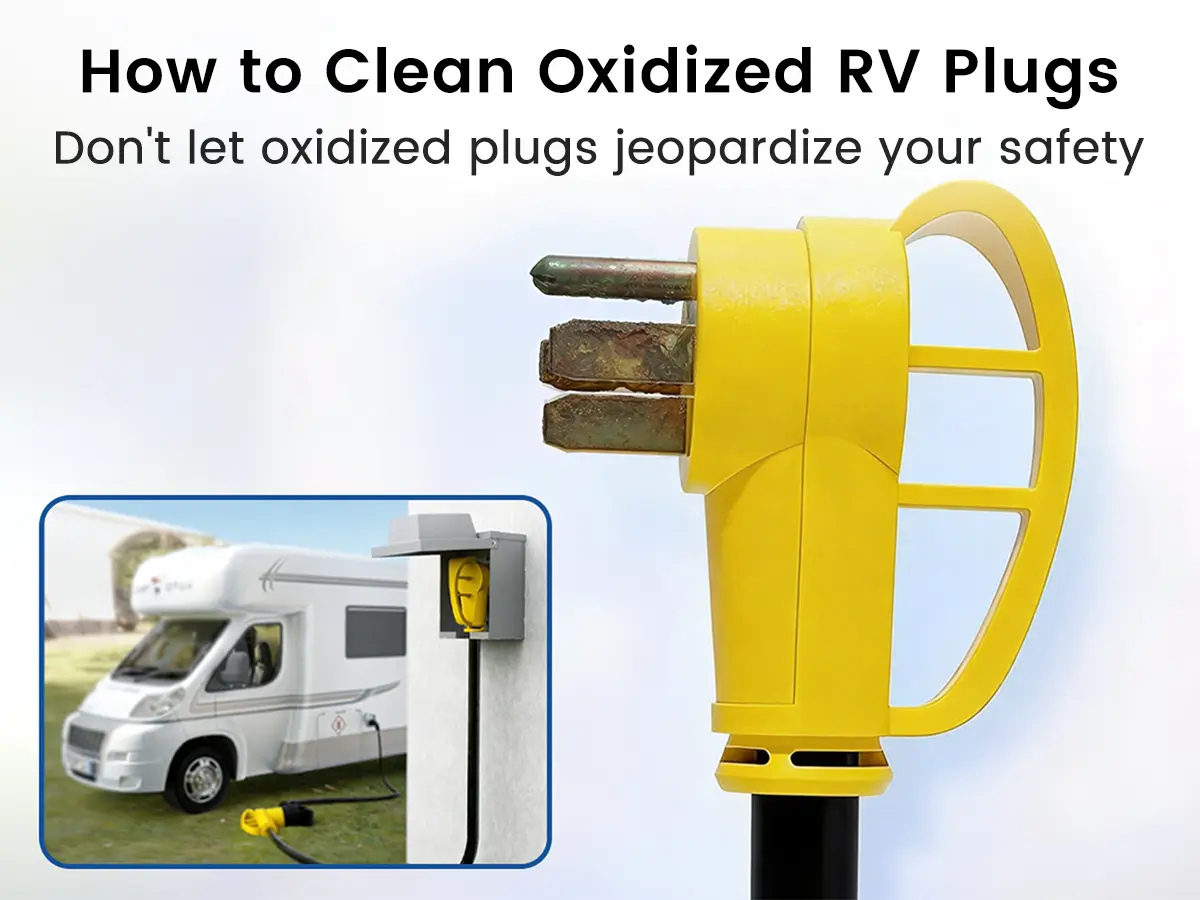
Most RVers meticulously check their tire pressure and engine oil before a trip, yet they completely overlook the very thing powering their mobile lifestyle: the RV power cord connector. Every time you plug into a shore power pedestal, you might be ignoring subtle, dark oxidation marks on your plug blades. This oversight is a silent killer for your electrical system.
Over time, exposure to humidity, salt air, and harsh outdoor elements causes a layer of non-conductive buildup on the brass or copper pins. We’ve seen how even the highest quality outdoor extension lines can suffer from this neglected maintenance. When those blades turn dull, green, or blackened, they develop high electrical resistance. This resistance doesn't just reduce efficiency—it generates intense heat, often enough to melt your plug housing, damage the campground's expensive pedestal, or even fry your RV’s sensitive electronics.
Maintaining your electrical connection is a critical safety requirement, not a suggestion. Ignoring oxidation is a gamble that can lead to a $500 repair bill or a catastrophic fire. In this guide, we provide a professional, no-nonsense approach to safely removing oxidation. Learn how to restore factory-level conductivity and ensure your gear delivers maximum performance on every mile of your journey.
Section 1: Why Oxidation is a Silent Killer for High-Amp Power Cords
To understand why cleaning is non-negotiable, you must understand the physics of high-amperage power delivery. Most RV plug blades are made of brass or copper alloys for their superior conductivity. However, these metals are highly reactive. When exposed to the elements, they undergo a chemical reaction that creates a thin, crusty layer of metal oxide.
This oxidation layer acts as an electrical insulator. While a standard household lamp might still function with a bit of grime, your RV power cord is a different beast entirely. When you’re pulling 30 or 50 amps through a 10/12/14/16 AWG outdoor extension line to power your AC units, that microscopic layer of oxidation creates massive resistance.
According to Ohm’s Law (V=I×R), as resistance (R) increases due to oxidation, the electrical energy doesn’t just disappear—it converts into heat (P=I2R). This is the "Heating Element Effect." Instead of powering your appliances, your plug starts acting like a space heater. This heat leads to Thermal Runaway: the hotter the plug gets, the faster the metal oxidizes, creating a dangerous cycle that eventually melts the plug housing or triggers a fire. The stakes are incredibly high for the RV community. According to data from the National Fire Protection Association (NFPA), electrical failures account for nearly 20% of all RV fires, with poor or corroded connections being a primary ignition factor. Neglecting the maintenance of your outdoor extension lines isn't just an efficiency issue—it’s a major fire risk that puts your entire vehicle and family in jeopardy.
Section 2: Critical Warning Signs: Is Your RV Plug Already in Danger?
Before you grab your cleaning kit, you must diagnose the condition of your connection. Oxidation is a progressive disease for metal; it starts as a nearly invisible film and ends in a catastrophic meltdown. By categorizing these warning signs into Visual and Olfactory (smell) cues, you can determine if your gear needs a simple polish or a total replacement.
I. Visual Indicators: From Mild to Fatal
-
Stage 1: Mild Oxidation (Dullness) In its earliest stage, your plug blades will lose their "factory mirror" shine. Instead of bright, reflective brass, they will appear dull, matte, or slightly brownish. While your RV might still power up normally, this is the best time to clean. At this stage, resistance is low, but the foundation for heating is already being laid.
-
Stage 2: Moderate Corrosion (The "Green Death") If left untreated, moisture and salt air create Verdigris—a crusty green or bluish-green residue. This is a major red flag. This layer is highly non-conductive and is common in high-humidity areas. If you see green, your 10/12/14/16 AWG outdoor extension line is struggling to pull current, and your plug is likely running warm.
-
Stage 3: Severe Damage (Pitting and Arcing) Inspect the surface for tiny black craters or "burnt" jagged edges. This is Pitting. It occurs when electricity is forced to "arc" or jump across gaps created by thick oxidation. This micro-welding process physically erodes the metal.
-
Stage 4: Structural Failure (The Plastic "Tell") Look at the plastic housing surrounding the blades. Any signs of warping, bubbling, or discoloration (turning yellow or charred brown) mean the plug has exceeded its 140°F+ thermal limit.
II. Olfactory Indicators: The "Smell" of Trouble
Your nose is often a faster diagnostic tool than your eyes. Electrical overheating produces distinct chemical odors that should never be ignored:
-
The "Rotting Fish" or Pungent Chemical Odor: Most modern RV power cord coatings and plug housings are made of PVC and specialized polymers. When these start to overheat (but before they actually catch fire), they release a sharp, fishy, or "acidic" smell.
-
The Ozone Scent: A faint "electric" smell, similar to what you might notice after a lightning storm, indicates active arcing inside the connection.
If you notice Stage 3 or 4 visual damage, or if you detect any "hot" smells, cleaning is no longer a viable or safe option. At this point, the structural integrity of the brass has been compromised by extreme heat. For the safety of your family and to protect your RV’s expensive electrical system, we recommend retiring the damaged cord immediately. Replace it with a professional-grade Vantecable Heavy-Duty RV Extension Cord. Our cords feature precision-engineered, oxidation-resistant connectors designed to ensure a 100% secure, cool-running connection for years to come.
Section 3: Professional Tools and Materials: What You Need (and What to Avoid)
Cleaning a high-amperage RV power cord requires precision tools. Using the wrong abrasive or a flammable chemical can lead to premature failure or even a fire once the cord is under load. To maintain the integrity of your 10/12/14/16 AWG outdoor extension lines, prepare the following professional-grade toolkit:
-
Dedicated Electronic Contact Cleaner: Unlike multi-purpose lubricants, a specialized contact cleaner (like WD-40 Specialist Electrical Contact Cleaner or CRC) is non-conductive, leaves zero residue, and evaporates instantly. It is designed to penetrate the microscopic "valleys" in the metal surface to dissolve carbon deposits and light oxidation.
-
Ultra-Fine Abrasives (400-600 Grit Sandpaper): Heavy-duty sandpaper will gouge the metal. You only need to "polish" the surface. We recommend a fine-grit sandpaper or a specialized electrical cleaning pad to remove stubborn Verdigris without thinning the brass blades.
-
Dielectric Grease (Silicone Compound): This is your secret weapon for prevention. It creates an airtight seal that prevents oxygen and moisture from reaching the metal after you’ve cleaned it.
-
Nylon or Small Brass Brush: Perfect for cleaning the debris out of the "seat" where the metal blades meet the molded plastic housing.
-
Microfiber Cloths: To wipe away dissolved contaminants without leaving lint behind.
Critical Warning: What NOT to Use Never use Steel Wool. It may seem effective, but it leaves behind microscopic, highly conductive steel fibers. If these fragments bridge the gap between the hot and neutral pins, they will cause a catastrophic short circuit the moment you plug into the pedestal. Additionally, avoid classic WD-40 (Blue/Yellow can), as its oily residue can attract dust and potentially ignite under extreme electrical heat.
Section 4: The 5-Step Restoration Process: Restoring Your Connection Like a Pro
Now that you have your professional toolkit ready, it’s time to perform the restoration. This process should be done in a well-lit area with plenty of ventilation. To ensure your outdoor extension lines achieve a "zero-resistance" connection, follow these five precise steps.
Step 1: Total Power Isolation
Safety is paramount. Ensure the RV power cord is completely disconnected from the shore power pedestal, the generator, and the RV’s power inlet. Never attempt to clean a "live" cord. Even if the breaker is off, capacitors in your RV's inverter/charger could still hold a residual charge. Double-check that both ends of the cord are free and clear.
Step 2: The Initial Solvent Flush
Begin by spraying a generous amount of Electronic Contact Cleaner onto all the metal blades. Hold the plug so the blades face downward; this allows the liquid to carry away dissolved oils, road salt, and loose grime without seeping deep into the molded plug housing. Use your nylon or brass brush to scrub the base of the pins—this is where moisture-trapping debris often hides.
Step 3: Precision Manual Abrasion
For stubborn Stage 2 or Stage 3 oxidation, take your 400 to 600-grit sandpaper. Cut a small 1-inch strip and wrap it around each blade. Using light, even pressure, slide the sandpaper back and forth.
-
The Pro Secret: Focus on the "contact patches"—the wide, flat sides of the blades. You aren't trying to change the shape of the metal; you are simply removing the non-conductive oxide layer until you see a bright, uniform brass reflection.
Step 4: The Final Debris Rinse
After sanding, the plug will be covered in microscopic metal dust. This dust is conductive and can cause "tracking" or micro-shorts if left behind. Spray the contact cleaner one more time to flush the entire surface. Wipe the blades dry with a clean, lint-free microfiber cloth. The metal should now look as shiny as the day you unboxed your cord.
Step 5: Apply the Protective Dielectric Barrier
Once the blades are dry, apply a very thin, translucent layer of dielectric grease to each pin. You only need a pea-sized amount for the entire plug. Spread it evenly using a clean cloth. This grease creates a hydrophobic (water-repelling) barrier that prevents oxygen from reaching the metal, significantly slowing down future oxidation.
Section 5: Regional Maintenance Strategies: Adapting to the American Climate
A "one-size-fits-all" maintenance schedule doesn't work for the modern RVer. Depending on where you travel in the United States, environmental factors like salt air, extreme heat, or high humidity will dictate how often you need to service your outdoor extension lines. To ensure 100% conductivity, adapt your cleaning routine based on these regional conditions:
I. Coastal and Tropical Regions (Florida, Gulf Coast, California)
Salt air is the primary enemy of brass and copper. Sodium chloride acts as a high-speed catalyst for oxidation, often creating the dreaded "Green Death" (Verdigris) in a matter of weeks.
-
Maintenance Frequency: Inspect your plug every time you move sites or at least every 14 days.
-
Pro Tip: In these areas, a slightly thicker application of dielectric grease is essential to create a waterproof "gasket" around the connection. Consider using a weather-resistant pedestal cover to block direct salt spray.
II. Arid and Desert Regions (Arizona, Nevada, Southern Utah)
In the Southwest, the enemy isn't moisture—it’s "micro-grit." Fine desert sand and dust can infiltrate the shore power connection. If you apply too much grease, it acts as a magnet for this grit, creating an abrasive paste that grinds down your plug blades every time you plug in.
-
Maintenance Frequency: Monthly inspection.
-
Pro Tip: Focus on "Dry" cleaning. After using the electronic contact cleaner, ensure the blades are 100% dry before applying only a very thin, wiped-down layer of grease. Always use a protective dust cap on your RV power cord when it's stored in your RV's basement.
III. High Humidity and "Rust Belt" Regions (Pacific Northwest, Great Lakes)
Constant dampness and road salt (during winter travel) lead to slow, steady oxidation that often looks like a dull brown film. This is Stage 1 oxidation, which is easy to ignore but dangerous under high loads.
-
Maintenance Frequency: Every 30 to 45 days.
-
Pro Tip: Check the "female" end of your extension cords and the RV’s power inlet as well. Moisture often travels up the cord via "wicking," which can corrode the internal terminals of your transfer switch if left unchecked.
IV. High Altitude and Extreme Sun (Colorado, Montana)
UV radiation at high altitudes can degrade the plastic housing of cheaper cords, leading to micro-cracks where moisture can enter. Fortunately, Vantecable cords use UV-stabilized PVC jackets, but the metal blades still require attention due to rapid temperature swings that cause condensation.
-
Maintenance Frequency: Seasonal (Spring and Fall).
Section 6: Frequently Asked Questions & Final Safety Checklist
To wrap up this professional guide, we’ve compiled the most common questions RVers ask about plug maintenance. Following these final tips ensures your Vantecable 10/12/14/16 AWG outdoor extension lines remain the most reliable part of your rig.
Q1: Can I use vinegar or lemon juice to clean my RV plug?
A: While mild acids like vinegar can remove oxidation, we do not recommend them for high-amperage RV plugs. Household acids are water-based and can seep into the molded housing, leading to internal corrosion that you can't see. Stick to a dedicated Electronic Contact Cleaner for a residue-free, fast-drying finish.
Q2: How often should I apply dielectric grease?
A: Think of dielectric grease as a protective seal, not a lubricant. You only need to reapply a very thin layer after you’ve performed a deep clean with abrasives or if you’ve been traveling in heavy rain or salt air. Over-applying can attract road grit, which acts like sandpaper on your terminals.
Q3: My plug is still warm after cleaning. Is it safe?
A: Electrical connections will always be slightly warmer than the ambient air under heavy load (like running two AC units). However, if the plug is painful to touch or smells like plastic, cleaning was not enough. The internal copper strands or the brass-to-wire crimp may be damaged. In this case, immediate replacement is required.
Summary: The Cost of Neglect vs. The Peace of Mind
Maintaining your RV’s power connection isn't just about saving money; it’s about protecting the memories you build on the road. A simple 10-minute inspection can be the difference between a cool, comfortable evening and a $500 emergency repair—or worse, a fire.
At Vantecable, we pride ourselves on engineering the toughest RV power cords on the market. Our mission is to provide you with a connection you never have to worry about. However, even the best gear deserves a little professional care.
Is your current power cord showing signs of Stage 3 or 4 damage? Don’t gamble with your safety. Upgrade to a Vantecable Pro-Series RV Extension Cord today and experience the difference that high-purity copper and oxidation-resistant engineering make.
Stay Cool. Stay Powered. See You on the Road.