
.png?w=1368&h=240)
The Hidden Jobsite Killer
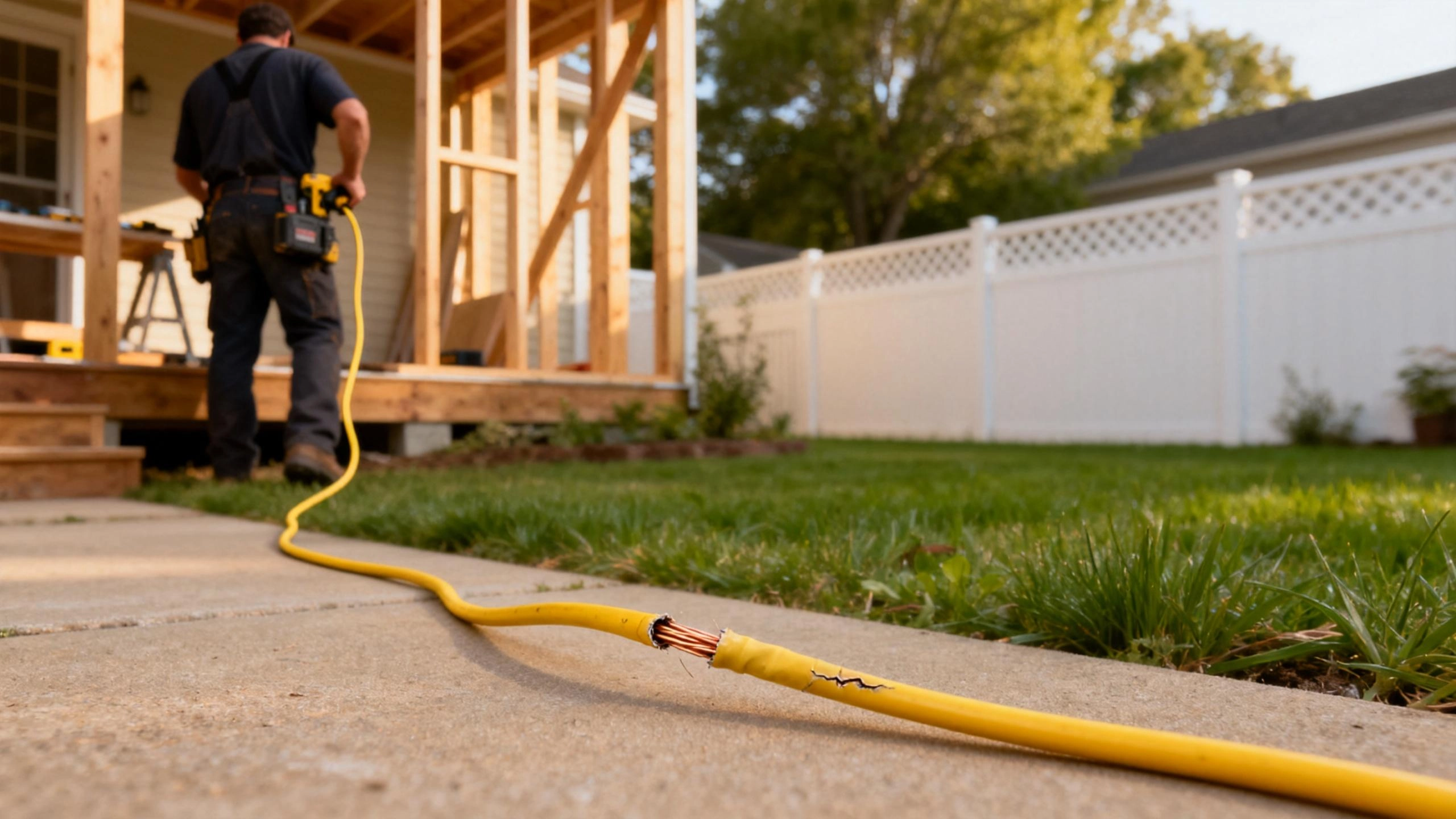
When you have a rush job, final boarding stage of the garden gazebo. Two circular saws and an industrial vacuum running all at once. Then, just as we were wrapping up—a faint buzz of an overloaded circuit, and the whole worksite went dead silent. Not because of a broken blade or a stalled engine, but because of a failure in the one piece of gear you probably thought about the least: an extension cord that failed due to the wrong choice.
For anyone working outdoors—whether you’re a professional landscaper, a contractor, or a DIY homeowner, the most expensive cost isn’t the tools. It’s the time lost when things come to a halt. An unexpected rain might pause you, but a preventable power failure derails your entire workflow, and can even create real safety hazards.
We invest thousands in brushless motor saws, we geek out over drill bit materials, yet we often hand over the power supply, the lifeblood of every tool, to a cord never designed for the job.
Let's change that narrative. What you need isn't just an extension cord outdoor. It’s a Portable Power Station—a rugged, reliable core component of your professional toolkit.
Three Real-World Battles Your Cord Must Win
Battlefield 1: The Construction & Woodworking Zone
The Scene: Simultaneously running a table saw (15A), a dust collector (8A), and a jobsite radio.
The Enemy: Sawdust infiltration, heavy lumber crushing cords, massive in-rush currents from motors starting up.
How a Professional Outdoor Extension Cord Fights Back:
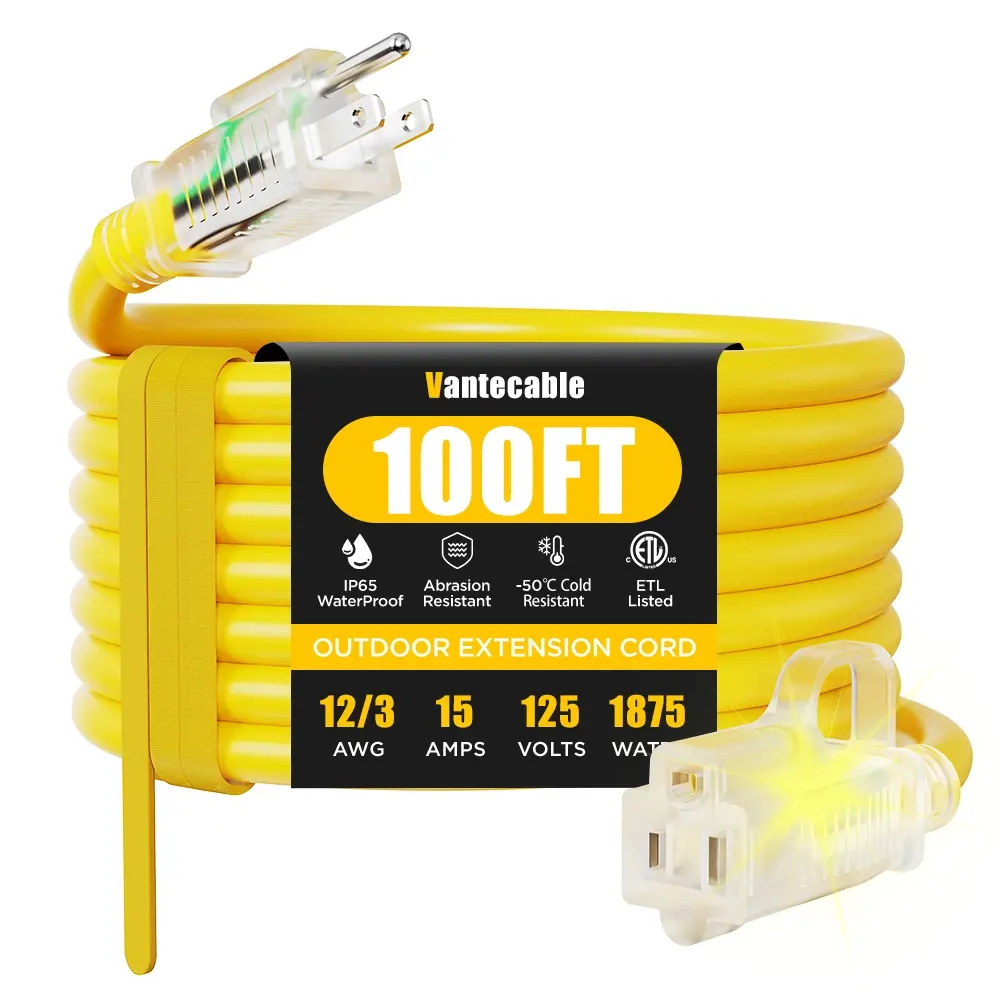
1. Heavy-Duty Gauge: A 12-gauge “power highway” is designed to minimize voltage drop over long distances, ensuring your saw receives full, stable power—even at the end of a 100-foot run—for clean and safe cuts.
2. Sealed for Battle: A rugged, molded-on plug and outlet covers provide essential protection against dust and moisture (rated NEMA 3R or similar), keeping connections clean and safe.
3. Armored Jacket: The thick, oil-resistant rubber jacket resists cuts, abrasion from concrete, and crushing. Look for a cord rated for "hard service" (type SJ) or "extra hard service" (type S).
The Bottom Line: Vantecable 12/3outdoor extension cord delivers stable, full voltage so your tools perform as engineered, from the first cut to the last.
Battlefield 2: Garden & Yard: The Battleground Against Water & Mud
The Scene: Powering a pressure washer (13A), hedge trimmer (4A), and work lights.
The Enemy: Soaking wet grass, constant dragging across rough terrain, UV degradation, and piercing debris.
How a Professional Outdoor Extension Cord Fights Back:
-
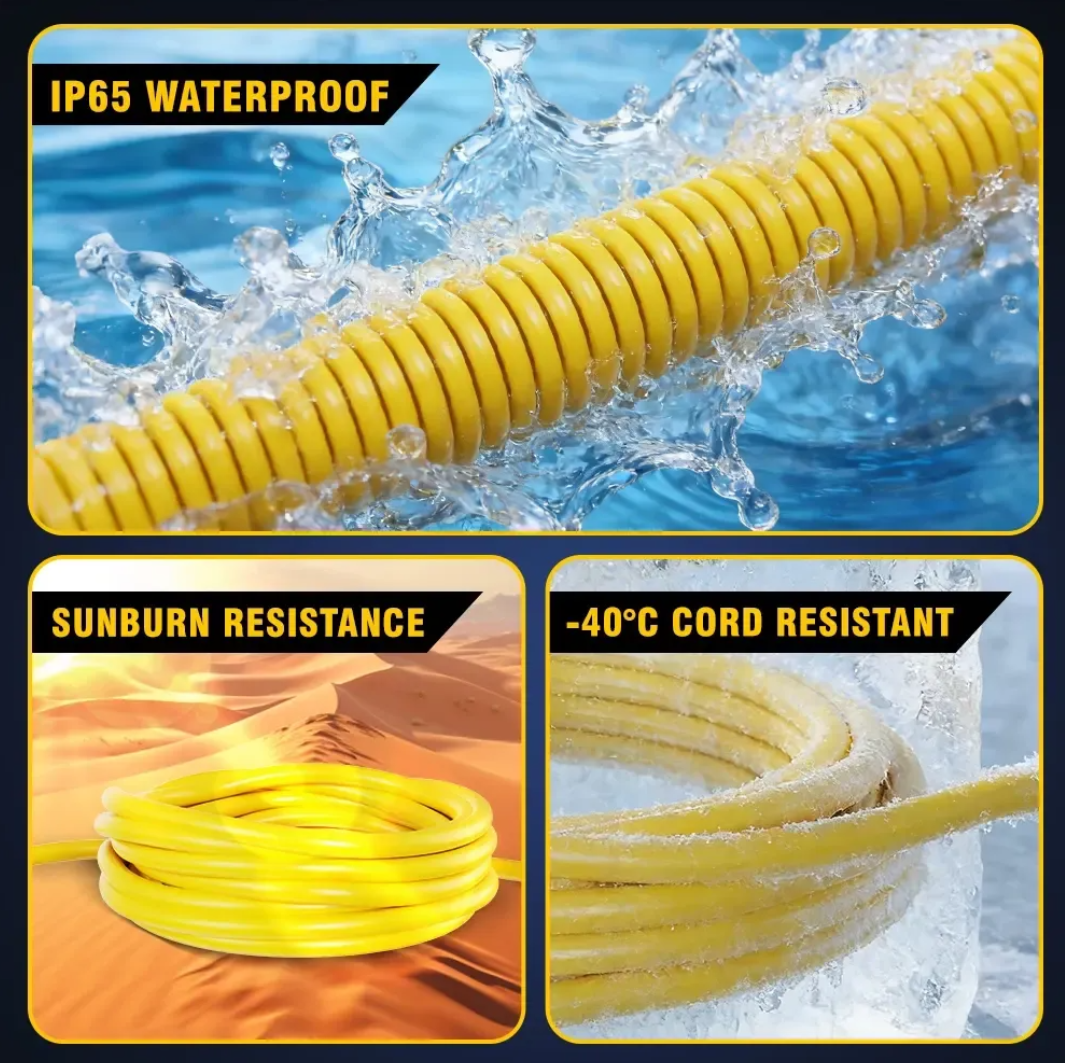
Weatherproof to the Core: A true outdoor extension cord carries a W-A rating on its jacket, meaning it's designed for all-weather use. For wet conditions, a GFCI (Ground Fault Circuit Interrupter) built into the plug is non-negotiable—it can prevent a lethal shock in milliseconds if the cord is compromised.
-
Built to Be Dragged: A bright yellow, highly visible jacket helps you see and avoid it. A robust construction with reinforced terminals prevents internal damage from constant tugging.
-
UV-Resistant Formula: The jacket is compounded to withstand prolonged sun exposure without cracking, ensuring longevity season after season.
The Bottom Line: The extension cord is a tough, visible, and intelligent partner that keeps you working safely in damp, demanding conditions.
Battlefield 3: The Garage & Automotive Bay
The Scene: Running a polisher/buffer (10A), a battery charger (5A), and trouble lights.
The Enemy: Oil, grease, chemical spills, sharp metal edges, and tight spaces where cords get pinched.
How a Professional Outdoor Extension Cord Fights Back:
-
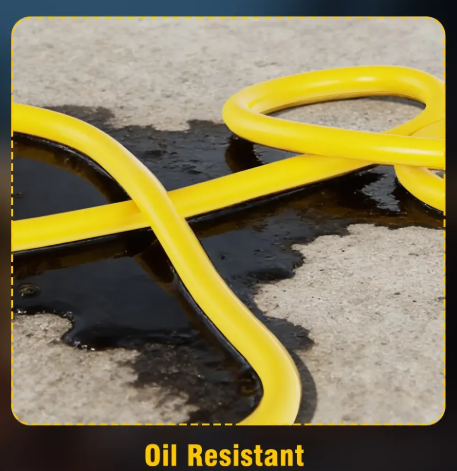
Oil-Resistant Jacket: Look for cords with an OIL suffix (e.g., STO, SJO). This specially formulated rubber resists degradation from petroleum products, a must for garage environments.
-
Secure Connections: Molded ends with extended strain relief collars protect the critical connection point between the wire and the plug from bending and pulling forces.
-
Right-Angle Plugs: A 90-degree plug lays flat against the wall, preventing it from being a trip hazard or getting snapped off in a busy workspace.
The Bottom Line: It brings order, durability, and chemical resistance to the messy, precise world of automotive work.
Choose Your Cord Like a Pro
Calculate Your TRUE Ampacity Needs
This is critical. Add up the amperage (A) of the tools you run simultaneously. Do not exceed the cord's rating.
- Light Duty (Up to 13A): 16-gauge, 25-50 ft max. Good for a single light or small tool.
- Medium Duty (Up to 15A): 14-gauge. The minimum for most power tools over 25 feet.
- Heavy Duty (Up to 20A): 12-gauge or 10-gauge. The professional standard for running multiple tools or any high-draw equipment (compressors, large saws) over distance. When in doubt, go thicker.
Decode the Jacket—Your First Line of Defense
-
"SJTW-A": The gold standard for outdoor extension cords.
-
S : Hard Service (600V)
-
J : Junior (300V, but standard for cords)
-
T : Thermoplastic (oil-resistant)
-
W : Rated for Outdoor Use
-
A : All-Weather
-
-
Look for GFCI: For any work with water or on damp ground, a cord with a built-in GFCI plug is essential safety equipment.
Inspect the Build Quality
- Feel the Jacket: It should be thick, supple, and durable—not thin and stiff.
- Examine the Ends: Plugs and connectors should be solidly molded to the cord with no loose parts. Metal parts should feel substantial.
- Check for Certification: Look for the UL Listed or ETL Listed mark, indicating independent safety testing.
Choose the Right Length Wisely
-
Buy only what you need. A 100-foot cord coiled up creates heat and voltage drop.
-
Rule of Thumb: For every 50 feet of 16-gauge cord, voltage drop becomes significant. For 100-foot runs, 12-gauge is the practical minimum for tool performance.
The Professional's Safety Commandments
Your gear is only as good as your practices. Follow these always:
-
The Pre-Use Scan: Before plugging in, run your hand along the cord. Look and feel for cuts, abrasions, or heat damage. Check plugs for cracks or bent prongs.
-
Practice Safe Routing: Never run a cord through water, mud, or doorways where it can be pinched. Use cord protectors over walkways.
-
Master the Coil: Never wrap the cord tightly around your elbow and hand. This stresses internal wires. Use the "over-under" coiling method for tangle-free, damage-free storage.
Conclusion: The Cord That Works as Hard as You Do
In the world of professional results, every component matters. You demand reliability from your tools. It's time to demand the same from your power source.
A true professional-grade outdoor extension cord is not an accessory; it's the foundation of a safe, efficient, and productive worksite. It protects your investment in tools, safeguards your time, and, most importantly, ensures you go home safely at the end of the day.
Stop compromising your workflow. Power it right.