

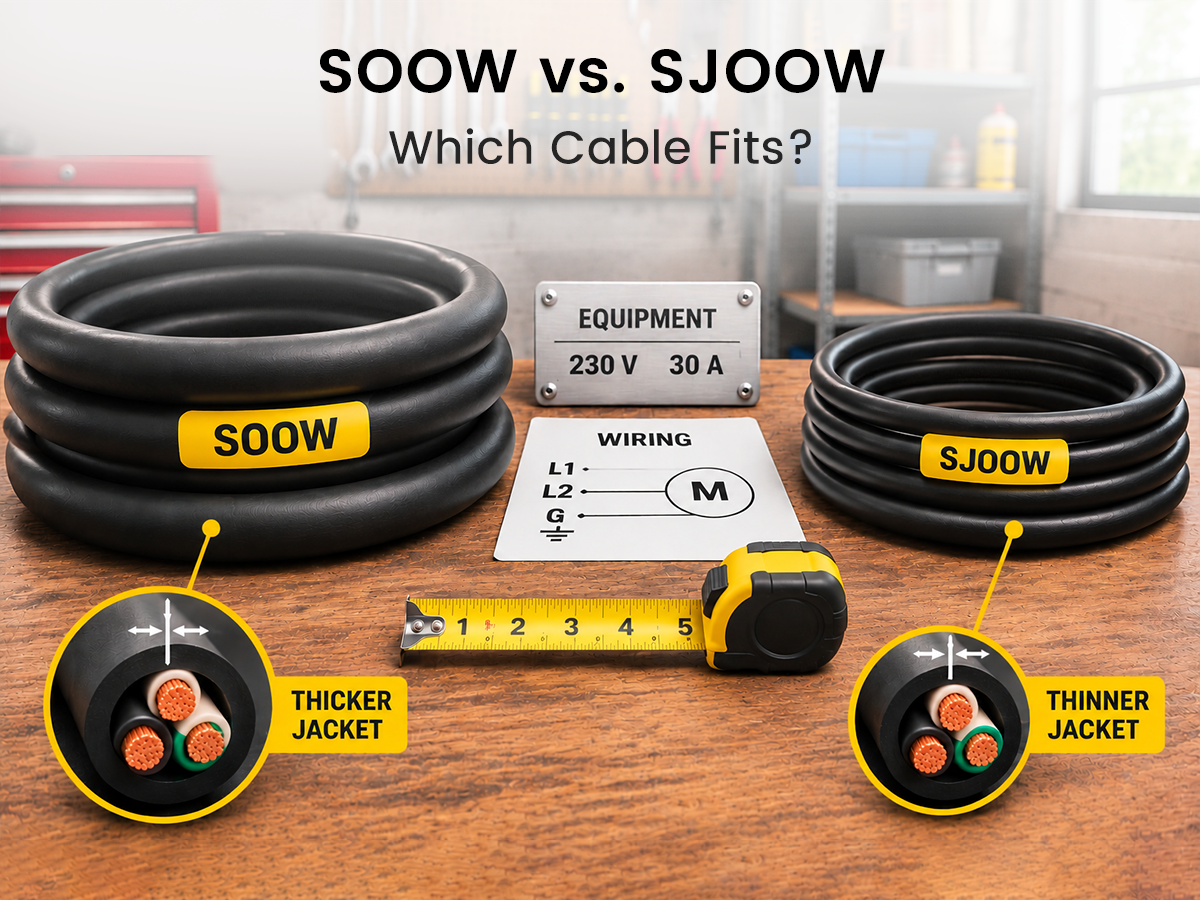
The difference between SOOW and SJOOW is the J. SOOW is a 600V cord type and SJOOW is a 300V junior-service cord type. The choice starts with the voltage class your equipment requires, then moves to conductor size and count, cable dimensions, connector compatibility and operating conditions. Frequent movement may affect handling, but it does not override the equipment or cord requirements.
Electrical Wire
Shop wire and cable for home wiring, landscape lighting, and equipment connections.
Shop Electrical WireWhat the J Changes
The J identifies a 300V junior-service cord, while SOOW is the 600V type. SJOOW products are often smaller and lighter than comparable SOOW products, but outside diameter, weight and bend characteristics depend on the manufacturer, gauge and conductor count, so compare the exact product specifications.
Both designations include OO, indicating oil-resistant conductor insulation and an oil-resistant outer jacket. This does not make a damaged cord acceptable for continued use; cuts, splits or exposed inner insulation call for removal from service.
Both also include W, which identifies a cord evaluated for outdoor use according to UL’s wire and cable guide . It does not make the cord waterproof or submersible, and it does not establish that an attached plug connection is watertight. For more, see outdoor cord weather ratings.
Where SOOW Fits
SOOW fits specifications that require a 600V extra-hard-usage cord. It is also the usual choice for heavier equipment and rougher duty, where the equipment or site requirements call for that construction. It suits portable equipment connections that are moved less frequently, as long as the connection stays a flexible equipment cord and not fixed wiring.

Where SJOOW Fits
SJOOW fits equipment that permits a 300V junior-service cord, such as lighter tools and equipment. When a listed SJOOW product has a smaller outside diameter or lower weight than the SOOW option being considered, it may be easier to coil and reposition. Compare the two product specifications rather than relying on the letter designation alone.
Diameter also affects hardware. Plugs, connectors and strain-relief bushings are listed for a specific cord-diameter range, and a cord outside that range may pull out under tension or crack the bushing. Check the connector’s listed cord range against the cable’s actual outside diameter.
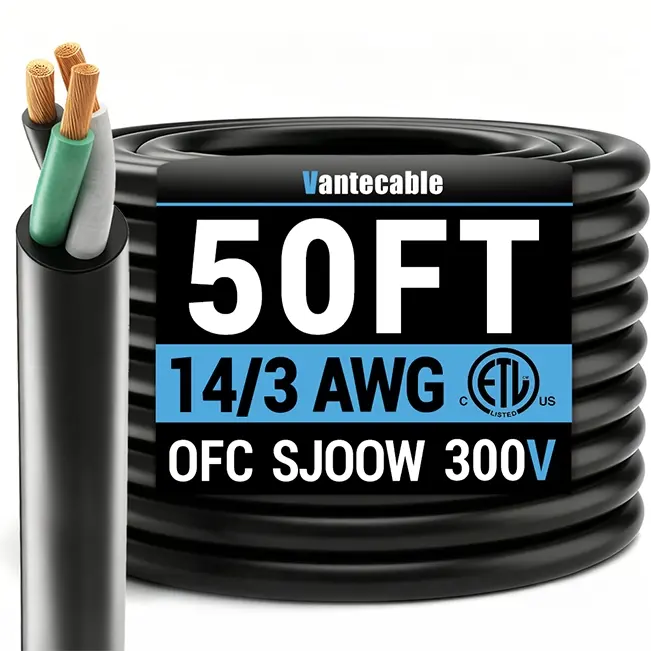
14 AWG SJOOW Cable
14/3 or 14/4 AWG · 300V · 50–100 ft · ETL Listed (Intertek)
View 14 AWG SJOOW CableHow to Check Your Equipment Before Choosing
Read the equipment nameplate and manual for voltage, current, phase, conductor requirements and the permitted cord type. Voltage separates the 300V and 600V classes, while current, conductor count and length determine whether a specific cable size fits the equipment. A higher voltage class does not mean more current capacity, which depends on conductor size, construction and operating conditions.
Every part of a finished cord assembly must meet its applicable requirement. The plug and connector must support the required voltage and current, the cable must provide the required conductors and ampacity, and exposed connections must suit the operating environment. A wet or damp connection point carries a leakage risk; OSHA covers this in its guidance on flexible cord hazards.
Which Cord Fits Your Setup?
Portable generator. Start with the generator outlet configuration and the equipment or transfer inlet being supplied. A listed ready-made generator cord is the direct choice when compatible connectors are required; see the emergency generator cords. Use bulk SOOW or SJOOW only as part of a properly specified assembly, since frequent packing alone does not determine the cable type.
RV shore power. Use a listed RV cord assembly that matches the pedestal and RV inlet; do not select bulk SOOW or SJOOW from service voltage alone.
Jobsite tools and equipment. Follow the equipment, site and connector requirements. SOOW fits specifications that require a 600V extra-hard-usage cord, and SJOOW may fit equipment that permits a 300V junior-service cord. Compare the actual diameter, temperature rating and handling characteristics of the available products before choosing.
FAQ
Is SOOW thicker than SJOOW?
Often, but not automatically. Comparable SOOW products may have a larger outside diameter because of their 600V construction, but diameter also changes with gauge, conductor count and manufacturer. Check the published outside diameter of the exact cables.
Can SOOW cord be direct buried?
Not from the SOOW designation alone. SOOW and SJOOW are portable-cord designations, not direct-burial markings. Use a cable specifically identified for direct burial and follow the applicable installation requirements; the UF-B buying guide covers that cable.
Is Type W cable the same as SOOW?
No. Type W is a separate flexible power-cable designation. The W in SOOW forms part of the SOOW designation and should not be read as Type W cable.
Conclusion
Start with the voltage class the equipment requires: SOOW for 600V specifications, SJOOW where 300V is permitted. Then compare exact outside diameter, conductor count, connector range and operating conditions before choosing a gauge and length.