
.png?w=1368&h=240)
-
-
-
-
-
12/3 Gauge Outdoor Extension Cord with LED Lighted End, SJTW, ETL Listed, 6-500 ft$19.99 USD$27.99 USD
![[10ft to 100ft]10 gauge 30 Amp Generator Power Extension Cord with Twist Lock Connector,L5-30P/R,L14-30P/R,125V/250V,ETL Listed](https://img-va.myshopline.com/image/store/1754964108957/-3-WH-651x651px-5.webp?w=651&h=651)
![[10ft to 100ft] NEMA 14-50P to SS2-50R Extension Cord with Twist Lock, 50 Amp,for RV Generators and Yachts,Heavy Duty,STW Wire,yellow](https://img-va.myshopline.com/image/store/1754964108957/10-WH-651x651px-2.webp?w=651&h=651)
![[10ft to 100ft] NEMA 14-50P to SS2-50R Extension Cord with Twist Lock, 50 Amp,for RV Generators and Yachts,Heavy Duty,STW Wire,green](https://img-va.myshopline.com/image/store/1754964108957/10-WH-651x651px-3.webp?w=651&h=651)
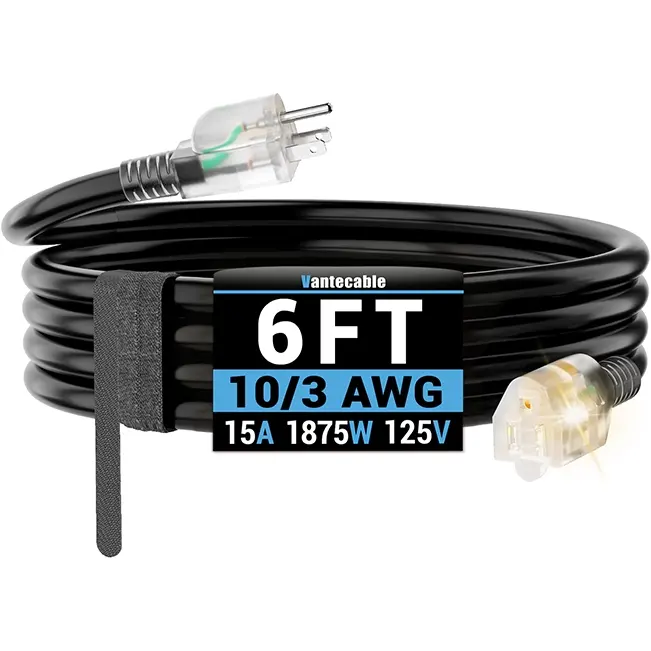
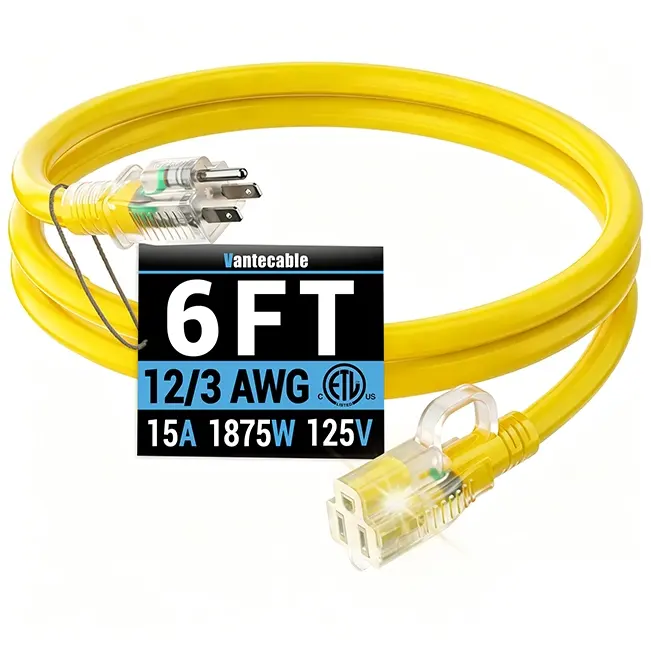
When a hurricane hits the Gulf Coast or Atlantic seaboard and the grid goes down, your generator is only as good as the cord connecting it. Vantecable's hurricane season power cord collection covers every link in your emergency power chain — 30A and 50A generator cords to connect your portable generator to a transfer switch, plus 10/3 and 12/3 heavy-duty extension cords to distribute power from your generator or portable power station to your refrigerator, sump pump, fans, and essential appliances across your home.
All cords are ETL listed, rated for outdoor use, and built for the heat, humidity, and storm conditions that define hurricane season along the Gulf Coast and Atlantic seaboard. Don't wait until 48 hours before landfall — these sell out fast. Order now and have your full setup ready before hurricane season peaks.
What Is a Generator Extension Cord and Why Does It Matter
A generator extension cord is a heavy-duty power cable specifically designed to carry the full amperage output of a portable generator to your home appliances or transfer switch. Unlike standard household extension cords, generator cords use thick 10 AWG wire, locking connectors that won't pull loose in wind or rain, and outdoor-rated jackets built to handle sustained high-current load.
Using an undersized cord — or a standard extension cord — with a generator is one of the leading causes of electrical fires during hurricane season. The wire overheats under sustained amperage draw, often with no visible warning before the jacket fails. A properly rated 10 AWG generator cord eliminates this risk and protects both your generator and your connected appliances.
How to Choose the Right Generator Cord for Emergency Power
Matching your cord to your generator's outlet before the storm is the most important decision you'll make in your hurricane prep:
- 30 Amp (L14-30, 125/250V) — the standard cord for portable generators rated 3,000W–7,500W. Connects your generator to a manual transfer switch or runs directly to your most critical appliances. This is what most Florida and Gulf Coast homeowners use for whole-home emergency backup.
- 50 Amp (125/250V) — required for high-output generators above 7,500W. Handles central AC units, electric water heaters, and multiple large appliances running simultaneously. Essential for larger homes or extended outages.
- 10/3 Heavy-Duty Extension Cord — once your generator is connected, use a 10/3 cord to distribute power to high-draw appliances like refrigerators, window AC units, and sump pumps. Also works with portable power stations for heavy appliance use. Weatherproof SJTW jacket rated for outdoor storm conditions.
- 12/3 Extension Cord — the right choice for medium-load devices during an outage: fans, lights, phone chargers, and small appliances. Lighter and easier to run through the home than 10/3, while still rated for sustained outdoor use.
Always use 10 AWG minimum for any generator extension cord. Keep cord runs under 50 feet to avoid voltage drop. Confirm your connector type — L14-30 (4-prong) is the most common for home transfer switch setups, L5-30 (3-prong) for smaller single-voltage generators.
Generator Cord vs Regular Extension Cord — What's the Difference
This is one of the most common questions during hurricane season, and the answer matters for your safety:
A standard heavy-duty extension cord (12 AWG or 14 AWG) is rated for 15 amps at 125V. A portable generator outputs 30–50 amps at 125/250V. Running a generator through a standard extension cord means the wire is carrying double or triple its rated load — it will overheat, and it can catch fire.
Generator cords are purpose-built: thicker wire gauge (10 AWG or heavier), higher voltage and amperage ratings, locking connectors that can't accidentally disconnect under load, and weatherproof jackets rated for outdoor storm conditions. Never substitute a standard extension cord for a proper generator cord.
Safety Tips for Using Generator Cords During a Hurricane
- Keep your generator at least 20 feet from windows, doors, and vents at all times — carbon monoxide from generator exhaust kills within minutes indoors.
- Always start the generator and let it stabilize before plugging in the cord.
- Plug the generator cord into the generator first, then connect to your transfer switch or appliances.
- Never run generator cords through windows or under doors — pinched cords are a fire and shock hazard.
- Inspect the full length of the cord before every use — any cut, crack, or heat discoloration in the jacket means replace it before use.
- Do not exceed the cord's rated amperage — running a 30A cord on a 50A generator outlet will damage the cord and create a fire risk.
- Use 10/3 or 12/3 heavy-duty extension cords for post-generator power distribution — never use 14 AWG or 16 AWG household cords with a generator or power station running near full load.
Why Homeowners Across Florida, Texas, and Louisiana Choose Vantecable
Hurricane season runs June through November, and for homeowners along the Gulf Coast and Atlantic seaboard, being prepared isn't optional. Vantecable generator cords are engineered for the conditions that define storm season — sustained high-current load, high humidity, heat, and repeated outdoor use.
Every cord in this collection features heavy-gauge copper conductors, ETL-listed construction tested to UL standards, and locking connectors rated for reliable repeated connection and disconnection. Whether you're prepping for your first hurricane season in Florida or you've been through enough storms in Louisiana to know what fails and what doesn't, Vantecable gives you the cord that holds up when it matters.
FAQ
Q1: What size generator extension cord do I need for my home?
For most portable home generators (3,000W–7,500W), a 30 Amp L14-30 cord in 10 AWG is the correct choice. If your generator is rated above 7,500W or you need to run central AC and multiple large appliances at the same time, you need a 50 Amp cord. Check the outlet panel on your generator — the outlet shape and label will tell you exactly which cord you need.
Q2: What gauge wire do I need for a generator extension cord?
Always use 10 AWG for generator cords carrying 30 amps or more. 12 AWG and 14 AWG wire cannot safely carry sustained generator output — they overheat under load and create a serious fire hazard. All generator cords in this collection are 10 AWG or heavier.
Q3: What is the difference between a 30 Amp and 50 Amp generator cord?
30 Amp cords (L14-30) handle up to 7,500 watts and are compatible with most portable generators used for home emergency backup. 50 Amp cords handle up to 12,500 watts and are required for larger whole-home generator setups. Always match the cord amperage to your generator's outlet — never connect a 30A cord to a 50A outlet.
Q4: Can I use a generator cord in rain or wet conditions during a hurricane?
Yes. All cords in this collection feature SJTW or STW weatherproof jackets rated for outdoor wet conditions. However, always keep the plug connection points as dry as possible — cover connections when not actively in use, and never operate your generator or handle electrical connections while standing in water.
Q5: How long of a generator cord do I need?
25 feet is sufficient for most setups where the generator is positioned at a safe distance from the home. 50 feet provides more flexibility for larger properties or when the transfer switch inlet is farther from the generator's outdoor position. Do not exceed 50 feet with a 10 AWG cord under full load — longer runs increase resistance and cause voltage drop that can damage your generator and connected appliances.
Q6: Do these generator cords work with a manual transfer switch?
Yes. The 30 Amp L14-30 cord is the standard connection between a portable generator and a manual transfer switch inlet box. Confirm your transfer switch inlet connector type before ordering — most residential manual transfer switches use an L14-30 inlet, but some older installations may differ.
Q7: What's the difference between a generator cord and a generator extension cord?
A generator power cord connects directly from the generator outlet to a transfer switch or appliance inlet — typically 10–25 feet. A generator extension cord extends that reach when the generator needs to be placed farther from the home. Both must be rated for the generator's full amperage output. Never daisy-chain two cords together to add length — use a single properly rated cord of the length you need.