
.png?w=1368&h=240)
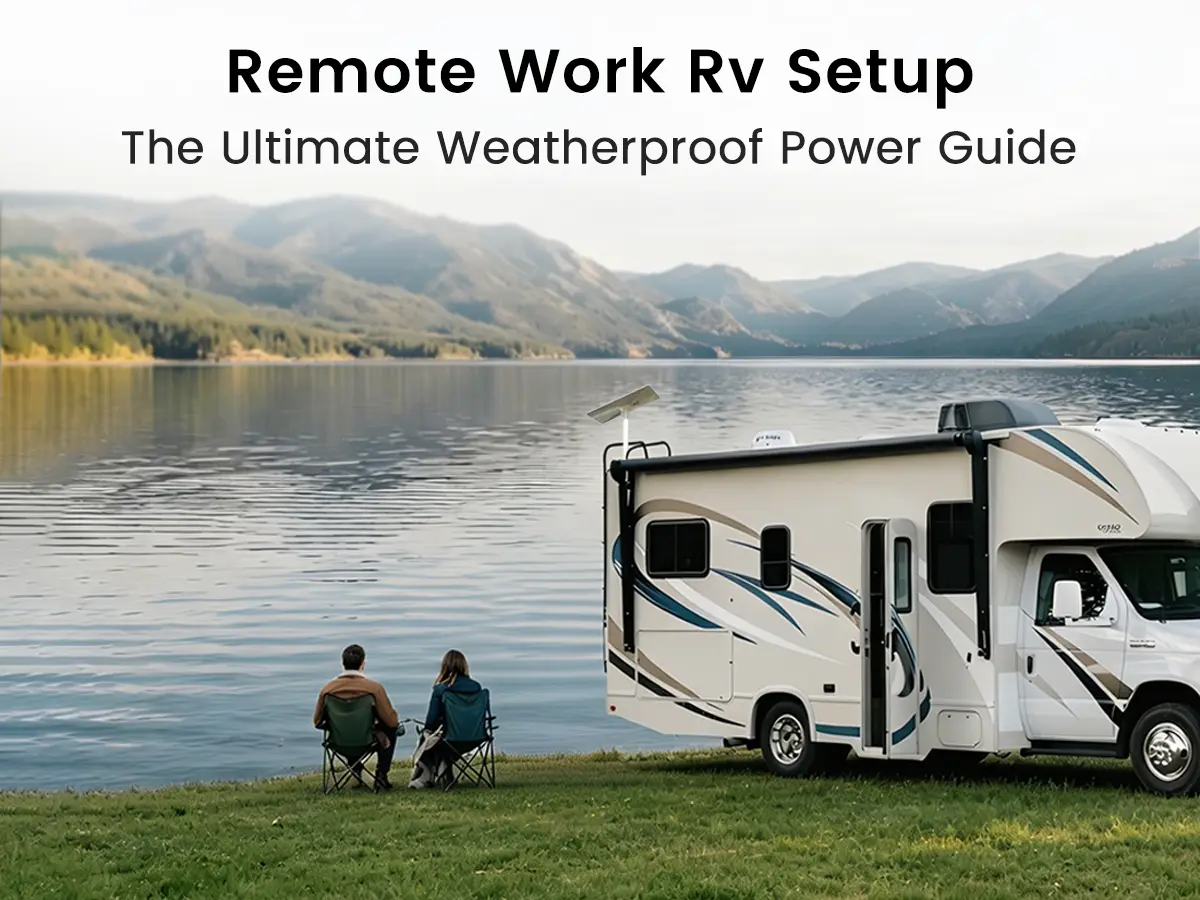
The dream of "working from anywhere" has evolved from a niche digital nomad trend into a sustainable lifestyle for thousands of Americans. At the heart of this revolution is Starlink, SpaceX’s satellite internet constellation that has finally made high-speed, low-latency internet a reality in the most remote corners of the wilderness. Whether you are boondocking in the Mojave Desert or parked under the towering pines of the Pacific Northwest, a reliable connection is your lifeline to your career.
However, remote work from an RV isn't just about having the dish; it’s about maintaining a robust power infrastructure that can withstand the elements. When the sky opens up or the temperature drops, your connection is only as strong as your weakest link—usually your power cable and its supply source. To ensure your "office" never goes offline, you need a professional, weatherproof setup designed for heavy-duty outdoor use.
The Foundation of a Reliable Remote Office
To successfully run a Starlink system alongside laptops, external monitors, and RV appliances, you must understand the power draw and the physical demands of an outdoor setup. Starlink dishes (especially the high-performance models) and their routers require consistent AC power. While the dish itself is weather-resistant, the RV extension cords and power sources feeding it are often the primary points of failure during a storm.
Most standard household extension cords are not rated for the sustained, heavy-duty use required by an RV lifestyle. They degrade quickly under UV exposure and can overheat if they aren't the correct gauge. A professional setup begins with choosing the right conductor. For RVers, choosing between a 10AWG extension cord (for 30A systems) and a 6/8AWG cord (for 50A systems) is the foundational decision for long-distance power runs from a pedestal or a generator to your rig.
Why 6/8AWG vs 10AWG Matters: Preventing Voltage Drop in Your Starlink RV Setup
When selecting power cables, "bigger is better" is a literal rule. The American Wire Gauge (AWG) system is inverse, meaning a lower number indicates a thicker wire. Voltage drop is the enemy of electronics. If you use a thin, low-quality cord over a 50-foot or 100-foot distance, the voltage reaching your Starlink power supply may dip below its operating threshold. This results in intermittent reboots, slower speeds, or even permanent hardware damage.
Technical Note: At a 100ft distance, even a 10AWG cord carrying a 30A load will experience a significant voltage drop (approx. 3-5%). This is critical when your Starlink dish is positioned far from your RV to avoid "obstructions" like trees. For absolute voltage stability at 100ft+, Vantecable recommends upgrading to our 6/8AWG 50A RV extension cords to ensure zero interference for sensitive electronics.
| Cable Gauge | Best Use Case | Amperage Rating | Durability | Voltage Drop Risk |
|---|---|---|---|---|
| 6 + 8 AWG | 50A RV Main / Long Distance | 50A | Ultimate Industrial | Zero/Minimal |
| 10 AWG | 30A RV / Generators / Starlink | 30A | Extreme Industrial | Low (Best under 50ft) |
| 12 AWG | Heavy-duty tools / Appliances | 20A | High | Moderate |
| 14 AWG | Standard outdoor lighting | 15A | Medium | High (Over 50ft) |
Achieving a 100% Weatherproof Setup for Starlink in Heavy Rain
Nature is unpredictable. A sudden thunderstorm or heavy morning dew can create short circuits if your connections aren't properly shielded. For a professional Starlink setup, every junction must be "weatherproofed." This involves more than just throwing a tarp over your wires; it requires specialized gear designed for moisture exclusion.
-
Use NEMA Rated Connectors: Our 30A and 50A RV power cords feature molded-on plugs with weather-resistant jackets (like SJTW or STW ratings). These materials remain flexible in freezing temperatures and resist cracking under the hot sun.
-
In-Line Connection Seals: If you must daisy-chain your RV extension cords, use a "weatherproof connection box." These are hard-shell capsules with silicone gaskets that lock around the male and female ends of your cords.
-
Drip Loops: Always implement a "drip loop" where the power cable enters your RV or the Starlink router box. A drip loop is a simple U-shaped curve in the wire that allows gravity to pull water down and off the cable before it can reach the connector.
Strategic Placement: Avoiding Obstructions and Interference
Starlink requires a clear view of the sky. Often, the best outdoor extension cord for Starlink Gen 3 is needed because the dish must be 50 to 100 feet away from your RV to clear the canopy of trees. This creates a logistical challenge: how do you get power out there safely? This is where a heavy-duty extension cord matched to the distance becomes indispensable.
Avoid placing your power cables in standing water or high-traffic areas where they could be driven over. Even "heavy-duty" cables can suffer internal fractures if crushed by a 10,000lb RV. Keeping your power lines organized not only prevents trips but also reduces electromagnetic interference (EMI) that could theoretically impact your data speeds.
Pro Tip: The Generator Connection
If you are boondocking and relying on a portable generator to power your Starlink and AC, ensure you are using a high-gauge generator cord. Generators produce "dirty" power compared to the grid; using a high-quality, thick-gauge power cable helps stabilize the delivery. According to the National Electrical Code (NEC), using the correct gauge for the rated load is a primary safety requirement to prevent electrical fires.
Common Mistakes in RV Remote Work Setups
Many RVers attempt to save money by using "orange" hardware store extension cords. These are rarely rated for the continuous 24/7 load of a mobile office. Over time, the UV rays from the sun break down the PVC jacket, leading to "jacket rot," which exposes live wires to the rain—a recipe for disaster.
Another mistake is neglecting the "Amperage Math." If you are running your Starlink, a laptop, an air conditioner, and a microwave on a single 15-amp circuit via a thin 14AWG cord, you will trip breakers or, worse, melt the plug. Investing in a Vantecable heavy-duty RV extension cord (10AWG for 30A or 6/8AWG for 50A) provides the headroom needed to run multiple high-draw devices simultaneously.
Build Your Bulletproof Remote Office: Vantecable High-Gauge Series
Don't let an inferior cable bottleneck your Starlink’s performance. Protect your connection, your hardware investment, and your career with professional-grade power solutions.
![[15ft to 100ft] 10/3 Gauge 30 Amp RV Extension Cord, NEMA TT-30P to TT-30R,with Easy Grip Handle, Yellow/Green,Waterproof,ETL,flexible](https://img-va.myshopline.com/image/store/1754964108957/50ft-WH-651x651px.webp?h=651&q=70&w=651) 30A Heavy-Duty RV Series (10AWG)
30A Heavy-Duty RV Series (10AWG)
Professional Grade | 100% Pure Copper | NEMA TT-30 | ETL Listed
The gold standard for standard 30A RV systems and portable generators. Recommended for runs under 50ft to ensure minimal voltage drop for sensitive gear like Starlink.
Shop 10AWG Now![[10英尺至100英尺] NEMA 14-50P 转 SS2-50R 延长线,带旋锁,50安培,适用于房车发电机和游艇,重型,STW线,黄色](https://img-va.myshopline.com/image/store/1754964108957/50-WH-651x651px-1.webp?h=651&q=70&w=651) 50A Ultimate Industrial Series (6+8AWG)
50A Ultimate Industrial Series (6+8AWG)
Ultimate Industrial | 100% Pure Copper | NEMA 14-50 | ETL Listed
The absolute best solution for 50A systems or extreme long-distance runs (100ft+). Guarantees zero measurable voltage drop for high-draw High-Performance dishes.
Shop 6/8AWG NowFrequently Asked Questions (FAQ) - Starlink RV Power
Q: Can I use a regular extension cord for Starlink on my RV?
A: While a standard cord might work, it often leads to significant voltage drop over 50 feet. For a stable Starlink remote work setup, a 10AWG RV extension cord (or our 6/8AWG series for higher loads) is the best way to prevent reboots and hardware damage.
Q: How do I power my Starlink dish 100 feet away from my RV?
A: At a 100ft distance, even a 10AWG power cable will experience a measurable voltage drop under 30A load, which can interfere with High-Performance dishes. To guarantee zero-risk performance at 100ft+, upgrading to a 50A 6/8AWG RV extension cord is the professional recommendation.
Q: Is the Starlink power supply waterproof for outdoor use?
A: The dish is weather-resistant, but the AC connection is not. You must use a weatherproof setup involving a sealed junction box and a NEMA-rated outdoor extension cord to ensure safety during heavy rain.