
.png?w=1368&h=240)
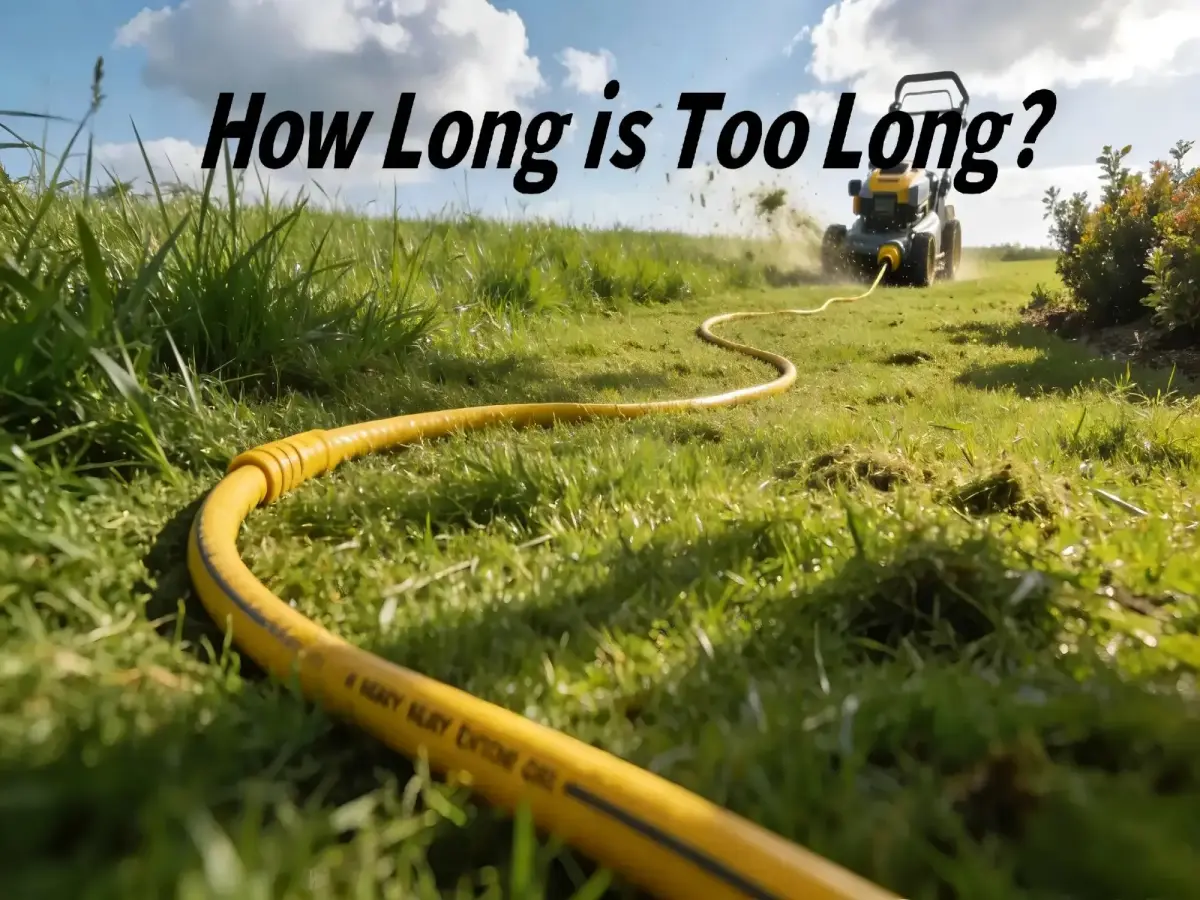
When you use outdoor tools, lighting, or power your equipment, have you ever considered how long an extension cord should be? Is longer always better? Will the length of the extension cord affect your electricity usage?
In fact, longer extension cords are not necessarily better. On the contrary, excessively long extension cords often lead to greater voltage drops, more heat generation, lower performance, and even more safety hazards.
So what is the ideal length for an outdoor extension cord?
This article will explain the causes of voltage drop, the impact of extension cord length on performance, and how you should choose the right extension cord length for your outdoor activities.
Causes of Voltage Drop
Voltage drop is the reduction in electrical potential along the path of a current flowing in an electrical circuit. Excessive voltage drop can lead to equipment malfunction, overheating, and energy inefficiency. National standards (such as NEC Section 210.19) generally recommend keeping total voltage drop under 3% to 5% for optimal efficiency.
1. Conductor Material and Resistance
- Material Properties: Copper (ρ ≈ 1.72 × 10⁻⁸ Ω·m at 20°C) has lower resistance than aluminum (ρ ≈ 2.82 × 10⁻⁸ Ω·m). Utilizing aluminum without properly adjusting the wire gauge increases resistance, directly accelerating voltage drop.
- Temperature Coefficient: As current flows, conductor temperature rises due to I2R losses. For copper, resistance increases by approximately 0.393% per °C rise. This creates a thermal loop that further degrades voltage stability.
2. Circuit Geometry (Length and Cross-Sectional Area)
The physical dimensions of the cable are critical determinants of overall resistance (R = ρ * (L / A)).
- Conductor Length (L): Voltage drop is directly proportional to the length of the run. In long-distance distributions (e.g., over 100 feet or 30 meters), cumulative resistance becomes significant.
- Cross-Sectional Area (A): Undersized wires (lower AWG numbers or smaller mm2 ratings) restrict electron flow. Choosing an inadequate wire gauge for the target amperage is the most common engineering cause of excessive drop.
3. Poor Connections and Contact Resistance
- Termination Quality: Loose terminals, corroded splices, or poorly crimped lugs introduce localized contact resistance.
- Thermal Stress: These high-resistance connections generate localized heat, causing oxidation, which further worsens the contact resistance and risks localized circuit failure.
Why Extension Cord Length Affects Power Performance
Electricity encounters natural resistance as it travels through a wire. Every extension cord possesses inherent electrical resistance, which scales proportionally with the cord's length—meaning the longer the cord, the higher the resistance.
This cumulative resistance triggers a voltage drop, which reduces the actual electrical potential reaching your connected equipment compared to the raw output from the wall outlet.
What Happens When Voltage Drops?
When your devices operate under suboptimal voltage, several performance and safety issues can occur:
-
Decreased Performance: Power tools and machinery may run noticeably weaker, slower, or lose torque.
-
Component Overheating: Electric motors can experience severe thermal stress, leading to overheating and premature failure.
-
Lighting Instability: Connected lights and fixtures may dim, flicker, or fail to reach full brightness.
-
Startup Failures: Heavy-duty equipment or compressors may fail to turn on entirely due to insufficient initial voltage.
-
Fire Hazards: The electrical energy lost to resistance manifests as heat. This can cause the cord's internal temperature to rise dangerously, significantly increasing the risk of fire.
Pro Tip: Managing voltage drop is particularly critical for outdoor applications—such as operating power tools, setting up extensive lighting systems, or powering seasonal decorations—where equipment is routinely placed far from a primary power source.
How Long Is Too Long for an Outdoor Extension Cord?
There’s no single “maximum” length that works for every situation. The safe and effective length depends on what you’re powering and the wire gauge (AWG) of the cord.
However, we generally categorize extension lengths into short distances: within 25 feet; medium distances: 25-50 feet; long distances: 50-100 feet; and extra-long distances: over 100 feet.
Our other article, "What Gauge Extension Cord Do I Need for Outdoor Use?", contains a comparison table of length, current, and wire gauge, which you can refer to.
Short Distances: Within 25 Feet (Light-Duty Applications)
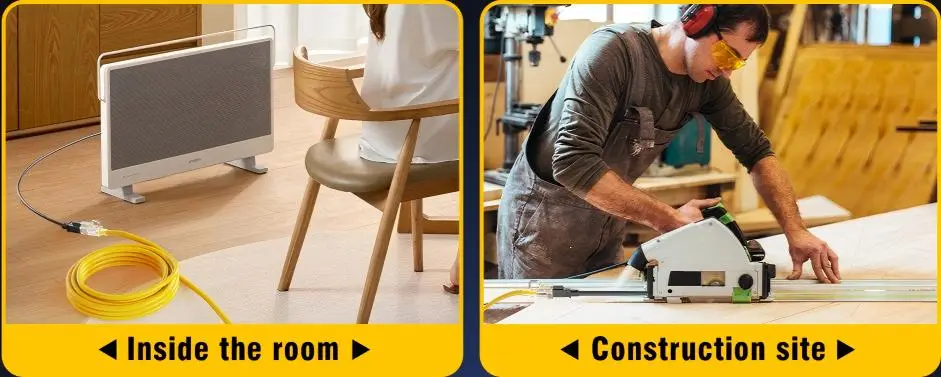
When your power source is close by and the extension cable length stays within 25 feet (approx. 7.5 meters), cumulative line resistance remains exceptionally low. Consequently, the resulting voltage drop is virtually negligible, ensuring your equipment operates at peak efficiency with minimal power loss.
Ideal Applications & Use Cases
This distance profile is perfectly suited for low-to-medium power demands both indoors and outdoors, including:
-
Seasonal & Ambient Lighting: Outdoor string lights, patio Edison bulbs, and intricate holiday light displays.
-
Low-Wattage Garden Utilities: Small pond pumps, garden fountains, and decorative water features.
-
Residential & Light Electronics: Indoor space heaters (on lower settings), desktop fans, and portable charging stations.
-
Light-Duty Power Tools: Small detail sanders, glue guns, or soldering iron stations on domestic or construction site workbenches.
Engineering Standards & Recommended Wire Gauge
To ensure safety and maintain structural integrity under continuous load, pay close attention to the wire gauge:
-
Recommended Gauge: 16AWG or thicker (such as 14 AWG for slightly heavier current loads).
-
Why it matters: At a 25-foot threshold, a 16 AWG conductor easily carries typical light-duty currents without generating noticeable heat, making voltage drop a non-issue for standard consumer applications.
Medium Distances: 25 to 50 Feet (Medium-Duty Applications)
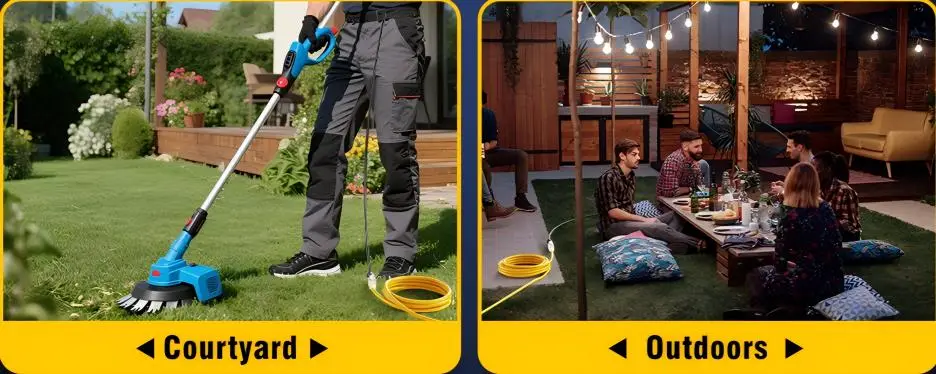
As the extension cable length increases to 25 to 50 feet (approx. 7.5 to 15 meters), cumulative resistance begins to scale. While the voltage drop is still manageable, it can no longer be ignored. Selecting the proper wire gauge is crucial here to prevent performance degradation in your equipment.
Ideal Applications & Use Cases
This distance range is typical for workshop layouts, larger backyard setups, and standard job sites, suitable for:
-
Mid-Range Power Tools: Circular saws, drills, reciprocating saws, and bench grinders.
-
Lawn & Garden Machinery: Electric lawnmowers, hedge trimmers, and leaf blowers.
-
Home Utilities: Mid-sized portable air conditioners, large dehumidifiers, and high-pressure washers.
-
Commercial Event Equipment: Standard sound systems, DJ gear, and medium-scale outdoor catering equipment.
Engineering Standards & Recommended Wire Gauge
To counteract the increasing resistance over this length, you must upgrade to a thicker conductor:
-
Recommended Gauge: 14AWG or thicker (such as 12 AWG for high-draw appliances).
-
Why it matters: A 14 AWG wire provides a larger cross-sectional area, successfully minimizing voltage drop to safe levels and preventing the cord from overheating during continuous medium-duty operations.
Long Distances: 50 to 100 Feet (Heavy-Duty Applications)
Spanning a distance of 50 to 100 feet (approx. 15 to 30 meters) creates a high-resistance pathway. At this length, voltage drop becomes significant and highly noticeable. If the cable wire is too thin, it will cause severe voltage loss, starving your tools of power and introducing severe safety risks.
Ideal Applications & Use Cases
This range is common on large construction job sites, agricultural farms, and extensive outdoor venues, including:
-
Heavy-Duty Construction Equipment: Large air compressors, table saws, concrete mixers, and rotary hammers.
-
High-Amperage Job Site Utilities: Portable generators, temporary distribution boxes, and industrial work lights.
-
Substantial Outdoor Power: Large RV (Recreational Vehicle) power hookups and heavy agricultural water pumps.
Engineering Standards & Recommended Wire Gauge
Standard household extension cords are strictly prohibited at this distance; heavy-duty industrial-grade cables are mandatory:
-
Recommended Gauge: 12AWG or thicker (10AWG is highly recommended for tools drawing over 12 Amps).
-
Why it matters: A heavy 12 AWG or 10 AWG cable ensures that despite the long physical distance, the cross-sectional area is wide enough to deliver stable voltage, protecting heavy-duty motors from burning out due to low voltage.
Extra-Long Distances: Over 100 Feet (Specialized / Industrial Applications)
Operating electrical equipment over distances exceeding 100 feet (over 30 meters) represents an extreme electrical environment. Standard voltage drop equations show that cumulative resistance at this threshold will degrade power exponentially, threatening both device survival and operator safety.
Ideal Applications & Use Cases
Reserved for specialized, large-scale, or infrastructure-level deployments, such as:
-
Remote Job Sites & Infrastructure: Supplying power to remote perimeters, deep trenching sites, or highway construction zones.
-
Large-Scale Outdoor Events: Powering professional concert main stages, festival grounds, and remote broadcast trailers.
-
Emergency & Disaster Relief: Deploying emergency power networks across disaster zones from centralized generator hubs.
Engineering Standards & Recommended Wire Gauge
Standard consumer-grade extensions cannot be coupled to reach this distance. Specialized, ultra-thick industrial cables are required:
-
Recommended Gauge: 10 AWG or 8 AWG (Ultra-Heavy Duty).
-
Why it matters: At over 100 feet, only a 10 AWG or thicker conductor has a low enough internal resistance to keep the total voltage drop within the internationally mandated under 5% threshold for heavy continuous industrial loads.
How to Reduce Power Loss When Using Long Outdoor Extension Cords
If you must use a long cord outdoors, follow these best practices.
- Use the Shortest Cord Possible: Excess length increases resistance. Avoid “just in case” extra footage.
- Choose a Thicker Wire Gauge: Upgrading from 16 AWG to 12 AWG can dramatically reduce voltage drop.
- Avoid Daisy-Chaining Multiple Cords: Connecting cords together increases resistance and creates weak connection points.
- Fully Uncoil the Cord: Coiled cords trap heat, which can worsen power loss and lead to overheating.
- Match the Cord to the Load: Always check your device’s wattage and amperage requirements.
Choosing the Right Outdoor Extension Cord for Long Distances
Selecting the ideal outdoor extension cord for extended runs requires balancing several critical performance and safety factors.
To minimize voltage drop, you should choose a cord that is only as long as necessary, paired with a thicker wire gauge capable of sustaining current over that distance.
Beyond electrical capacity, environmental resilience is paramount; look for cords featuring an official outdoor rating for weather or waterproof resistance, wrapped in a heavy-duty, abrasion-resistant jacket to withstand tough terrain.
Finally, maximizing job site safety means opting for high-visibility designs, such as cords in bright colors or those equipped with lighted ends, ensuring consistent power delivery and total peace of mind.
Conclusion
Understanding the relationship between distance, wire gauge, and voltage drop is the key to protecting your equipment and ensuring job site safety. Whether you are running light-duty lighting within 25 feet or deploying heavy-duty industrial machinery across 100 feet, matching the right cable specs to your distance requirements prevents dangerous overheating and costly power loss.
Don't let the wrong cord compromise your performance. Upgrade your power setup today with Vantecable’s premium, heavy-duty outdoor extension cords—engineered for maximum conductivity, ultimate weather resistance, and absolute peace of mind. [Explore Our Full Catalog Now ] and experience uninterrupted power wherever duty calls.