
.png?w=1368&h=240)
Introduction
When it comes to powering outdoor equipment, choosing the right extension cord is more than just a matter of convenience—it is a critical safety decision. Whether you are setting up a professional job site, plugging in a heavy-duty RV, or simply maintaining your garden, the wire gauge you select determines how efficiently and safely electricity flows to your devices.
Using extension cords that are too thick is too expensive and difficult to store, while using cords that are too thin can cause overheating, damage to equipment, or even fire. In this guide, we will break down everything you need to know about extension cord gauges (AWG), how to interpret cable markings like SJTW, and how to choose the perfect cord based on your specific power needs and distance requirements.

What is Extension Cord Gauge (AWG)?
American Wire Gauge (AWG) is the standard system used in North America to measure the diameter of electrically conducting wires. Understanding this measurement is essential for selecting a cord that can handle the specific electrical load of your outdoor equipment without compromising safety or performance.
How Wire Gauge Numbers Work
The most critical aspect of the AWG system is its inverse relationship: the smaller the gauge number, the thicker the wire. For example, a 10-gauge (10 AWG) wire is significantly thicker and has a larger cross-sectional area than a 16-gauge (16 AWG) wire.
This numbering system originates from the manufacturing process, where the gauge number represented the number of times a wire had to be drawn through a sizing die to reach its final diameter. Therefore, a wire drawn 16 times is much thinner than one drawn only 10 times. In practical terms, a lower AWG number indicates a higher capacity to carry electrical current over longer distances.
Why Thicker Wires are Safer
Safety in electrical transmission is primarily a battle against electrical resistance. When electrons flow through a wire, they encounter resistance, which generates heat. A thicker wire (lower AWG) has more surface area and less resistance, allowing current to flow more freely with minimal heat buildup.
Using a wire that is too thin for the required load causes excessive resistance, leading to a significant voltage drop. This not only starves your tools of the power they need to operate efficiently—potentially burning out motors—但 also causes the cord's insulation to degrade or melt due to extreme heat. By choosing a thicker wire, you ensure the cord remains cool during operation and that your equipment receives the stable voltage required for peak performance.
Identifying Outdoor SJTW & STW Ratings
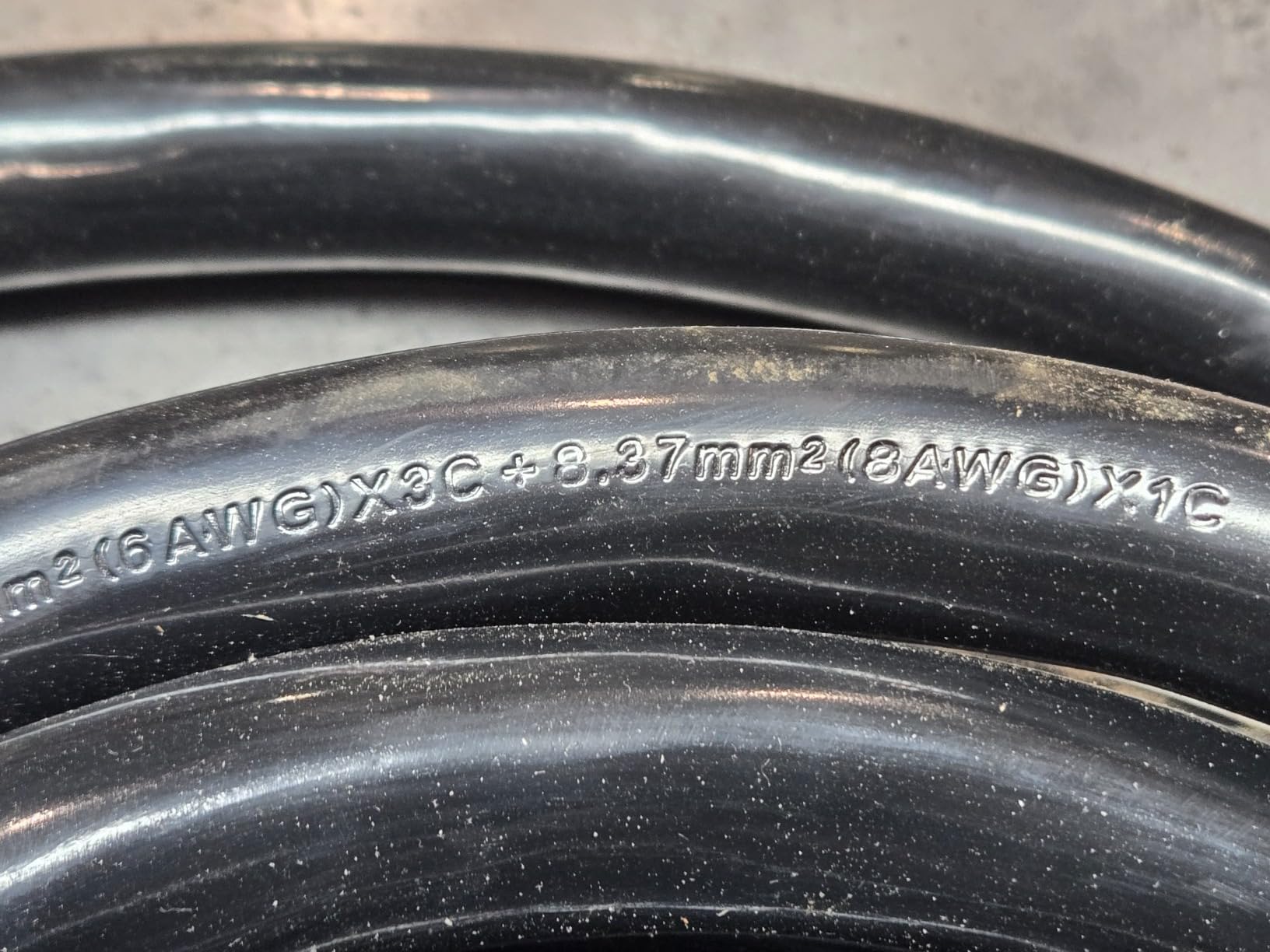
While the gauge determines the wire's thickness, the letters printed on the cable jacket indicate the insulation’s durability and environmental resistance. Understanding these ratings is essential to ensuring that your extension cord can withstand the rigors of outdoor exposure.
Meaning of Cable Jacket Letters
The industry uses a standardized coding system to describe the construction of an extension cord. Here is a breakdown of the most common letters you will encounter:
- S (Service Grade): Indicates a general-purpose cord designed for heavy-duty use.
- J (Junior Service): Rated for 300 volts. These are standard for most household and light commercial applications. Cords without a "J" are typically rated for 600 volts (Heavy Duty).
- T (Thermoplastic): The jacket is made of thermoplastic materials, which are durable and flexible.
- W (Weather/Outdoor): This is the most critical rating for outdoor use. It signifies that the jacket is moisture-resistant and treated to withstand sunlight (UV) exposure.
Why Use "W" Rated Cords Outdoors
Standard indoor cords lack the chemical stabilizers required to endure environmental stressors. Using a non-W rated cord outdoors can lead to rapid degradation:
- UV Damage: Without UV resistance, sunlight makes the plastic jacket brittle, leading to cracks that expose live wires.
- Moisture Ingress: "W" rated cords like SJTW or STW feature specialized insulation that prevents water from seeping into the conductor, reducing the risk of short circuits or electric shocks in damp conditions.
- Temperature Flexibility: Outdoor-rated jackets are engineered to remain flexible in freezing temperatures, preventing the insulation from snapping when coiled or moved in winter.
Common Gauges: 8, 10, 12, 14, 16 AWG
In common daily applications, extension cords ranging from 8 to 16 AWG are sufficient to cover everything from simple household tasks to heavy-duty industrial projects. Understanding the capacity of each specific gauge allows you to quickly identify the most suitable cord for your current task, ensuring both efficient power delivery and absolute electrical safety.
16 Gauge (Light-Duty)
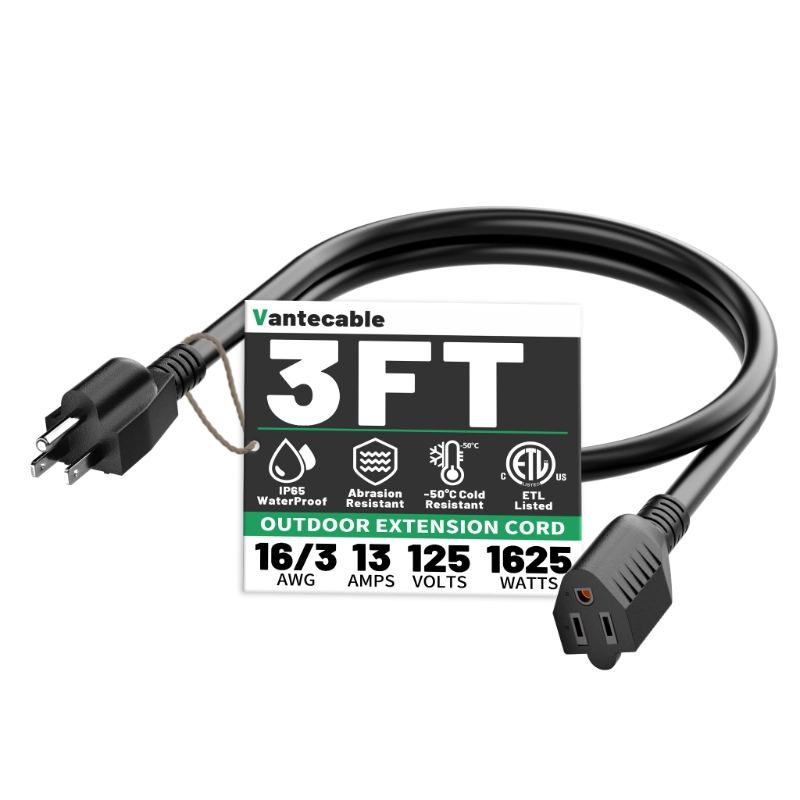
Rated for up to 13 Amps, 16-gauge cords are the standard choice for basic household needs. They are highly flexible and easy to store, making them perfect for low-power electronics.
- Best for: Holiday lights, portable fans, small hedge trimmers, and indoor lamps.
- Limit: Should not be used with high-wattage appliances or heating elements.
14 Gauge (Medium-Duty)
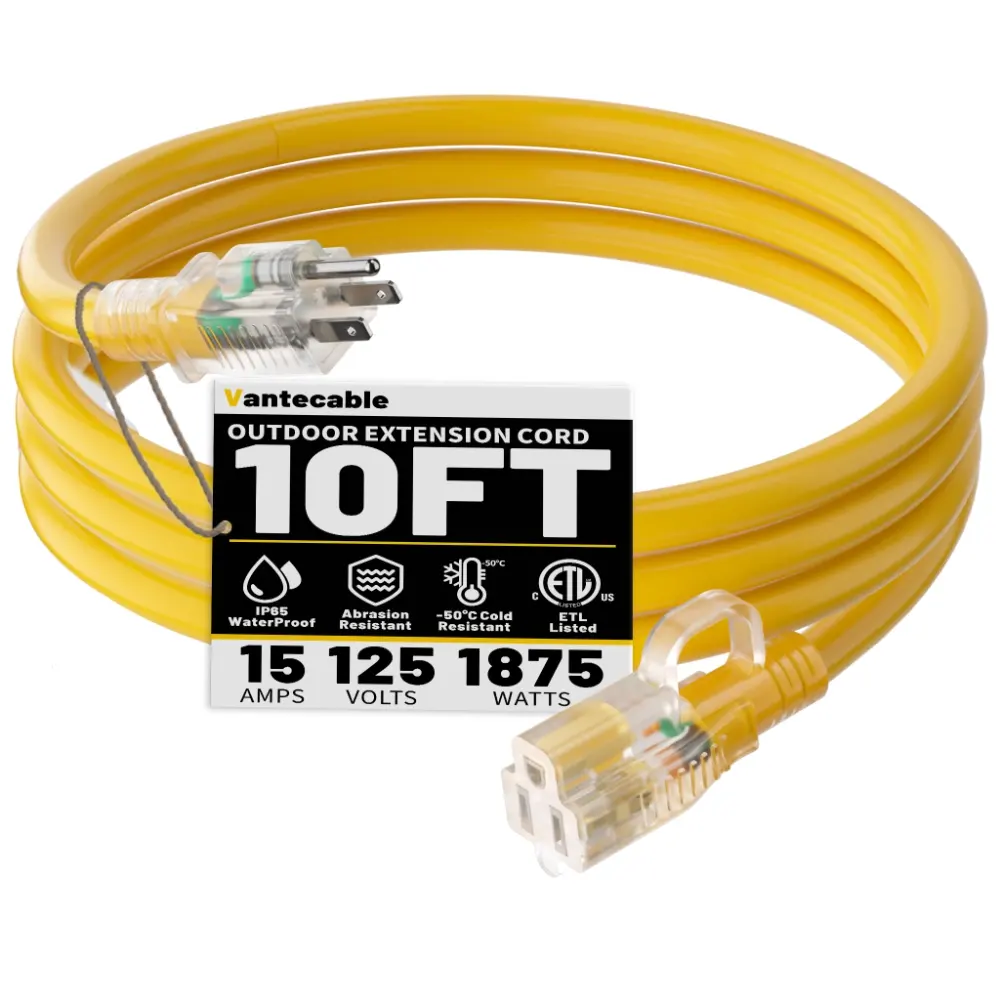
Rated for up to 15 Amps, 14-gauge cords are the "workhorse" for most DIY projects and yard maintenance. They provide a stable power supply for standard household power tools.
- Best for: Lawn mowers, leaf blowers, drill presses, and standard wet/dry vacuums.
- Pro Tip: This is the reliable baseline for most outdoor tasks within 50 feet.
12 Gauge (Heavy-Duty)
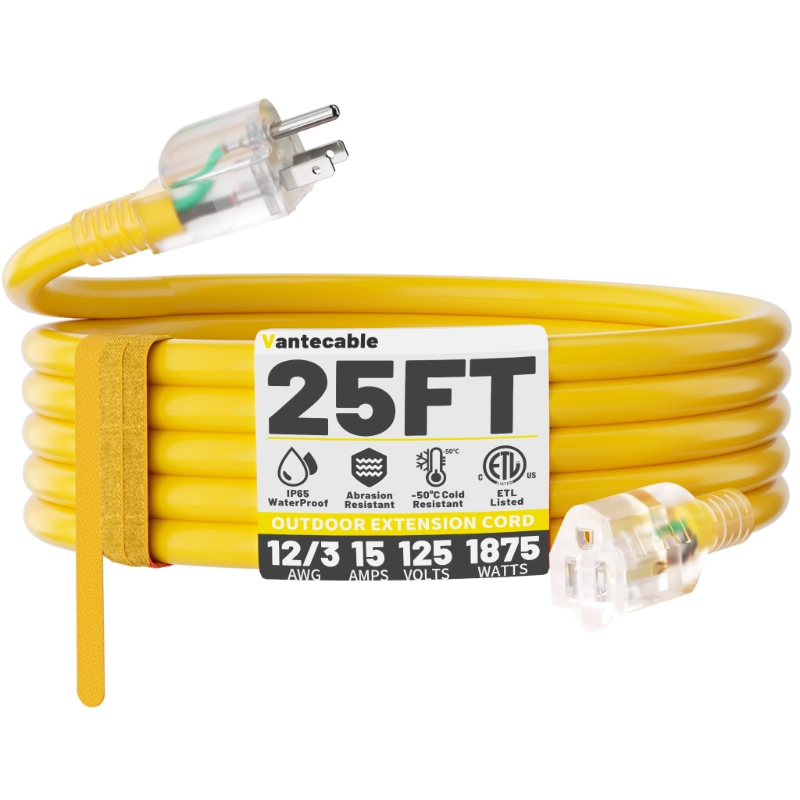
Rated for up to 20 Amps, 12-gauge cords are preferred by professionals for their high conductivity and durability. They are thick enough to handle motor-driven tools that draw significant power.
- Best for: Circular saws, air compressors, table saws, and large shop vacuums. A 50 ft 12 AWG outdoor extension cord offers lower resistance and voltage drop than a thinner cord of the same length under the same load, making it useful for compatible power tools that need extra reach.
- Benefit: Ideal for preventing power loss during the high-current startup phase of heavy machinery.
10 Gauge (Extra Heavy-Duty)
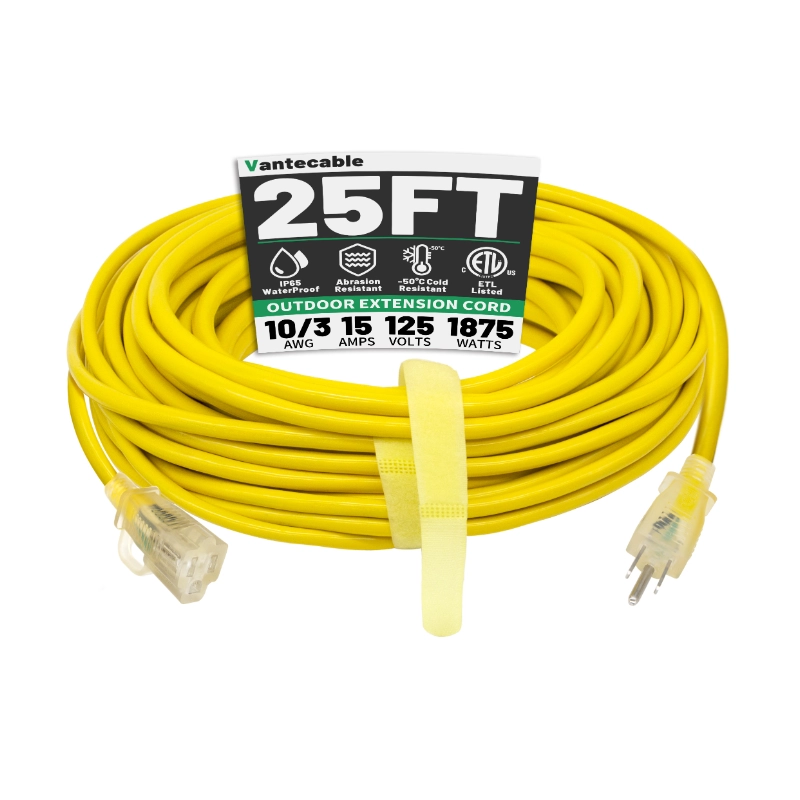
Rated for up to 30 Amps, 10-gauge cords are the premium solution for high-load equipment and critical outdoor power needs. Their low resistance ensures maximum performance even over long distances.
- Best for: 30-Amp RV power supply, portable space heaters, large air conditioners, and high-output generators.
- Expert Choice: For applications requiring 100 feet or more, 10 AWG can help reduce voltage drop, depending on the load.
8 Gauge (Industrial-Duty)
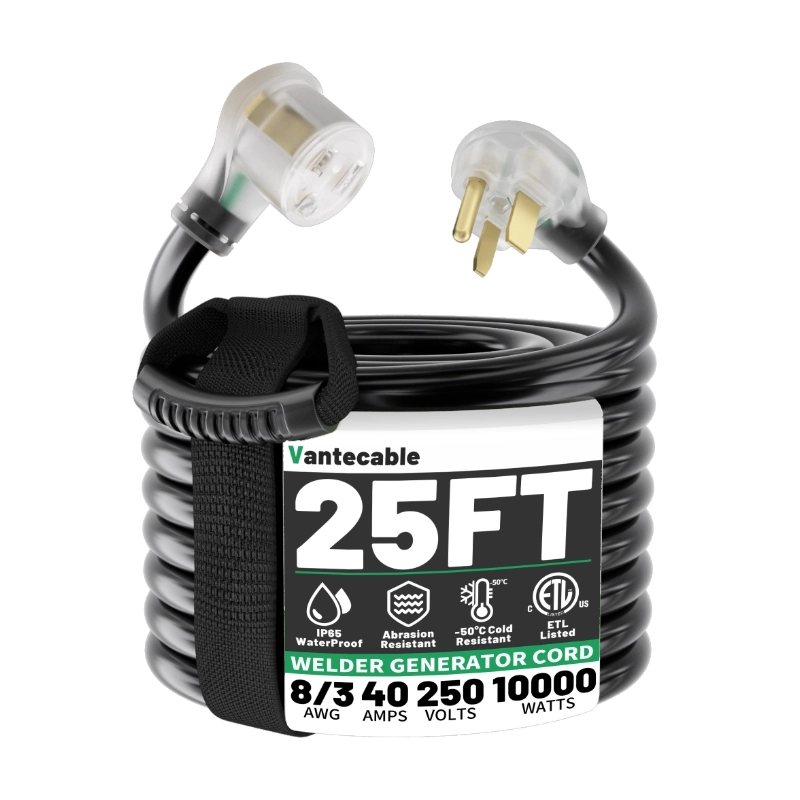
Rated for 40 to 50 Amps, 8-gauge cords are specialized heavy-duty cables designed for industrial power distribution.
- Best for: 50-Amp RV connections, industrial welders, and temporary power distribution boxes at job sites.
- Note: These are professional-grade cables used where massive current flow is a requirement.
Indoor vs. Outdoor Extension Cords
While all extension cords serve the same basic purpose, the environments they are designed for are vastly different. Using an indoor-rated cord outdoors is one of the most common electrical safety mistakes. Understanding the structural differences between these two types is essential for protecting your equipment and your home.
Key Differences in Insulation
The primary difference lies in the insulation material and thickness of the outer jacket. Indoor extension cords are typically designed for light use and are encased in a thin, flexible plastic jacket that is easy to maneuver around furniture. However, this insulation lacks the chemical stabilizers needed to resist environmental stressors.
In contrast, outdoor-rated cords feature a much thicker, rugged insulation—often indicated by the "W" rating in the SJTW or STW code. This jacket is engineered to be moisture-resistant and specifically treated to prevent the insulation from becoming brittle or cracking when exposed to direct sunlight or freezing temperatures.
Benefits of Weather-Resistant Cords
Choosing a high-quality, weather-resistant cord offers several critical advantages:
- UV Protection: Outdoor jackets are UV-stabilized, meaning they won't degrade or lose their protective properties under intense sun exposure.
- Moisture and Oil Resistance: These cords are designed to repel water, preventing moisture from reaching the copper conductors, which reduces the risk of short circuits in damp grass or rain.
- Low-Temperature Flexibility: A professional-grade outdoor cord remains pliable in cold weather, whereas indoor cords can become stiff and snap, creating dangerous exposed wiring.
- Abrasion Resistance: The outer jacket is toughened to withstand being dragged across rough surfaces like concrete, gravel, or through garden soil without tearing.
Distance and Voltage Drop Factors
One of the most overlooked aspects of choosing an extension cord is the relationship between distance and power delivery. Even if you have a high-quality cord, the physical laws of electricity dictate that the further power has to travel, the more energy is lost along the way.
How Cord Length Affects Power
When electricity flows through a copper wire, it encounters internal resistance. As the length of the cord increases, so does the cumulative resistance. This leads to a phenomenon known as Voltage Drop—the reduction in voltage from the source to the device.
If the voltage drops significantly (typically more than 5%), your equipment’s motor may struggle to start or run at a higher temperature than designed. This is particularly dangerous for power tools and appliances with motors, as constant low voltage can lead to premature motor burnout or permanent circuitry damage.
Choosing Gauges for Long Distances
To compensate for voltage drop over long distances, you must decrease the resistance by increasing the thickness of the wire (using a lower AWG number). This ensures that the "pipe" is large enough to maintain a stable flow of electricity over the entire length.
- Up to 50 Feet: Standard gauges like 14 AWG are generally sufficient for most medium-duty tools.
- 50 to 100 Feet: It is highly recommended to "gauge up." For example, if a 14 AWG cord works at 25 feet, you should switch to a 12 AWG cord if the distance increases to 100 feet.
- Over 150 Feet: For extreme distances, a 10 AWG cord is often the only safe choice to ensure that high-draw equipment, such as an RV or a large heater, receives the 110V-120V it requires to operate safely.
Gauge Selection Chart by Application
To ensure safety and peak performance, you must match the cord’s gauge to both the device's amperage and the total distance required. Use the chart and breakdown below as a quick reference to find the perfect match for your equipment.
Recommended Gauges (AWG) by Length
The following table shows the minimum gauge required to limit voltage drop based on current load and distance.
| Amperage (Amps) | 25' | 50' | 75' | 100' | 150' | 200' |
|---|---|---|---|---|---|---|
| < 5A | 16 | 16 | 16 | 14 | 12 | 12 |
| 5A to 8A | 16 | 16 | 14 | 12 | 10 | NR |
| 8A to 12A | 14 | 14 | 12 | 10 | NR | NR |
| 12A to 15A | 12 | 12 | 10 | 10 | NR | NR |
| 15A to 20A | 10 | 10 | 10 | NR | NR | NR |
| 21A to 30A | 10 | NR | NR | NR | NR | NR |
*NR: Not Recommended. For these distances and loads, consider a permanent wiring solution or a high-capacity generator.
Matching Equipment to Distance
Depending on how far you are from the power source, the required gauge for the same tool may change:
-
For 25-Foot Reach:
- 16 AWG: Hedge trimmers, jigsaw, or holiday lights (Up to 12A).
- 14 AWG: Standard lawn mowers and power drills (12A-15A).
- 12 AWG: Circular saws and table saws (15A-20A).
-
For 50-Foot Reach:
- 16 AWG: Portable fans or small space heaters (Up to 12A).
- 12 AWG: Grinders and heavy-duty circular saws (15A-20A).
- 10 AWG: Industrial machinery and high-torque impact drills.
-
For 100-Foot Reach:
- 14 AWG: Routers or sanders (Limited to 6A-12A).
- 12 AWG: Bench grinders and table saws (12A-15A).
- 10 AWG: Air compressors and heavy-duty electric saws (15A-20A).
Outdoor Extension Cord Safety Tips
Choosing the right gauge is the first step, but practicing proper safety and maintenance is what ensures your extension cord remains a reliable power source for years. Outdoor environments are unforgiving; moisture, heat, and physical wear can degrade even the highest quality cables.
Using GFCI and ETL Certified Cords
Safety starts with certification and circuit protection. Never compromise on these two elements:
- Look for ETL/UL Certification: Always ensure your cord is ETL or UL listed. This means the product has been rigorously tested to meet North American safety standards for fire and electrical shock resistance. For Vantecable users, this certification is your guarantee of quality.
- Always Use GFCI Outlets: When working outdoors, plug your extension cord into a GFCI (Ground Fault Circuit Interrupter) outlet. GFCIs are designed to shut off power instantly if a current leak is detected (e.g., if the cord gets wet), preventing fatal electric shocks. If your outlet isn't GFCI-protected, use a portable GFCI adapter.
Maintenance and Proper Storage
How you treat your cord after use determines its lifespan and safety:
- Regular Inspection: Before every use, run your hand along the cable to check for cuts, nicks, or frayed insulation. Check the plug prongs for signs of discoloration or bending, which indicate overheating.
- Avoid "Daisy Chaining": Never plug one extension cord into another. This creates excessive resistance and increases the risk of a fire at the connection points.
- Proper Coiling and Storage: Avoid tight knots or kinks. Coil the cord loosely and store it in a cool, dry place away from direct sunlight when not in use. Even "W" rated cords will last significantly longer if they aren't left in the rain or sun for months at a time.
What are RV Extension Cords?
RV extension cords are specialized power cables designed to connect your recreational vehicle to a campsite's electrical pedestal. Unlike standard cords, they feature heavy-duty 10 AWG to 6 AWG wires to handle high-amperage loads (30-50 Amps) required by AC units and appliances. These cords are built with rugged, weather-resistant insulation and ergonomic handles to ensure safe, reliable power during long-term outdoor exposure.
What are Generator Extension Cords?
Generator extension cords are high-capacity cables used to link essential appliances directly to a portable generator. These cords typically use low-gauge (6 to 10 AWG) wires rated for 30 to 50 Amps to prevent overheating under heavy loads. Many models feature specific plug configurations, such as twist-lock designs, to ensure a secure and stable connection to the high-amp receptacles found on professional generators.
Conclusion
To help you make the most informed decision for your specific needs, explore our detailed guides on various gauge comparisons and technical factors: