
.png?w=1368&h=240)
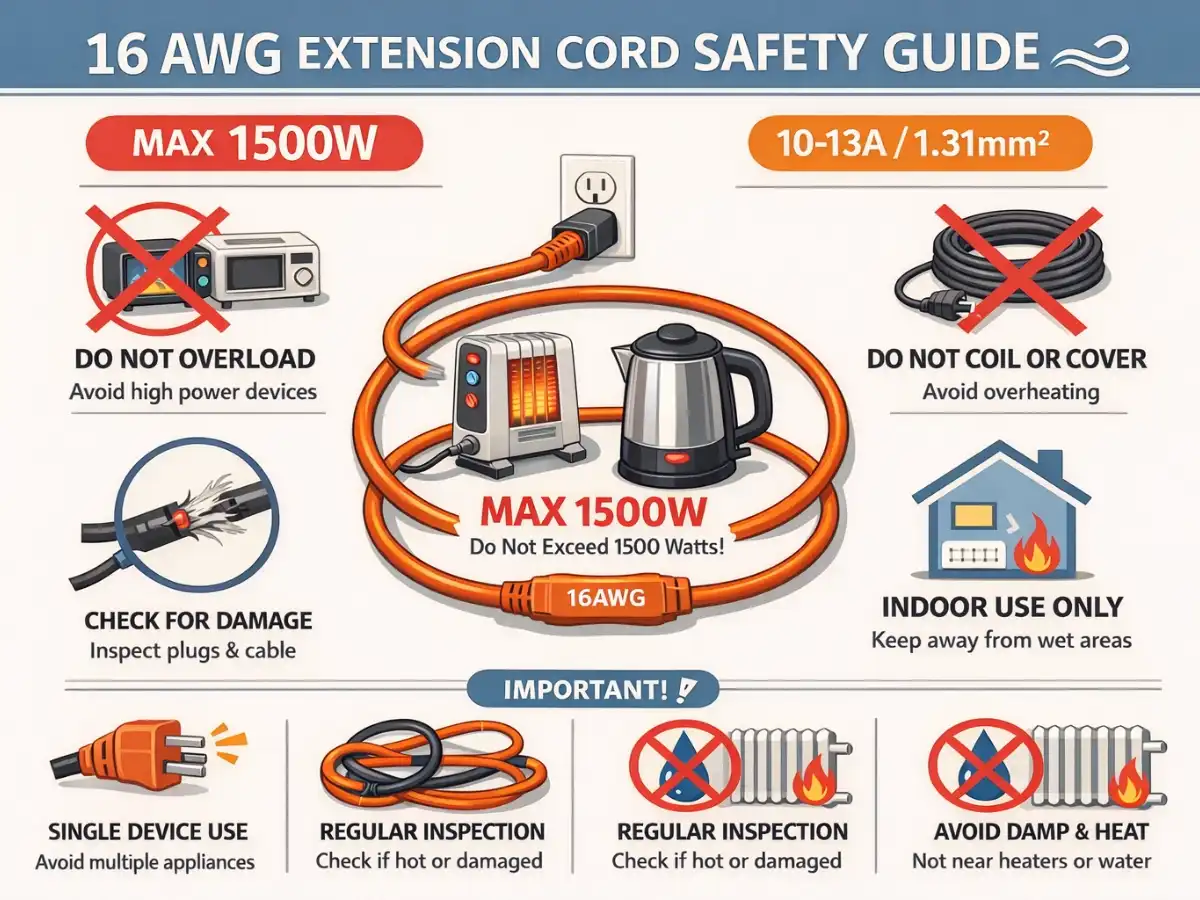
16AWG extension cords are common in homes and offices, providing flexible power for lighting, electronics, and other medium- to low-power devices. However, using them incorrectly can lead to overheating, damage, or even fire hazards. Understanding the proper specifications, safe usage, and practical tips will ensure your 16AWG extension cord works efficiently and safely.
Understanding 16AWG Extension Cord Specifications
An extension cord is designed to extend the reach of electrical power from a fixed outlet to a device. 16AWG indicates a wire gauge with a cross-sectional area of 1.31 mm², which directly determines the current-carrying capacity and safe power limit of the cord.
-
Rated Current: Typically 10–13A, depending on the cord length, material, and environmental temperature.
-
Rated Voltage: Most 16AWG cords are suitable for 125V or 250V.
-
Maximum Power: For typical 120V household outlets, safe power is about 1500W.
⚡ Power Calculation Example (Shopline Compatible):
Maximum Power = Voltage × Current
For a standard 120V outlet and maximum current of 13A:
Maximum Power = 120 V × 13 A ≈ 1560 W
This means you should not connect devices that exceed approximately 1500W, as it may overheat the cord.
-
Length Matters: Longer cords have higher resistance and reduced current capacity. Always choose the shortest cord that meets your needs.
Key Safety Considerations
-
Do Not Exceed Rated Power
High-power devices like space heaters, electric ovens, or air conditioners should use higher gauge cords separately. Always calculate total device power before plugging into a 16AWG cord. -
Avoid Daisy-Chaining Cords
Connecting multiple extension cords increases resistance and heat. If you need extra length, use a thicker cord such as 14AWG or 12AWG. -
Inspect Cord and Plugs
Check the cord for cracks, fraying, or exposed wires. Ensure plugs fit securely in outlets to prevent heat buildup. -
Avoid Coiling or Covering the Cord
Coiled or covered cords can trap heat. Lay cords flat or slightly curved to allow airflow. -
Indoor Use Only
Standard 16AWG cords are not waterproof. Outdoor use requires cords designed for moisture, UV, and temperature resistance. -
Keep Away from Heat and Moisture
Avoid placing cords near heaters or in damp locations to prevent electrical hazards.
Proper Usage Tips
-
Prefer Short Cords: Choose a cord slightly longer than necessary, but avoid excessively long cords to minimize voltage drop.
-
Single Device Use: Plug in only one high-power device per cord.
-
Regular Inspections: Periodically check for signs of heat, wear, or damage.
-
Safe Storage: Coil cords loosely when not in use to prevent internal wire damage.
Additional Professional Tips
-
For household small appliances such as lamps, computers, or fans, 16AWG cords are typically sufficient.
-
If your devices approach 1500W, consider upgrading to 14AWG or 12AWG extension cords for safety margin.
-
Using cords with built-in overload protection can automatically cut power in case of overcurrent, reducing fire risks.
-
Keep cords visible and easily accessible to quickly spot potential hazards.
By following these guidelines, your 16AWG extension cord will provide safe and reliable power in both home and office settings, extending the cord's lifespan while minimizing the risk of electrical accidents. If you are unsure whether 16AWG is sufficient for your application, our detailed 14AWG vs 16AWG extension cord comparison can help you choose the right option.Remember: proper selection, usage, and maintenance of extension cords is essential for electrical safety.