
.png?w=1368&h=240)
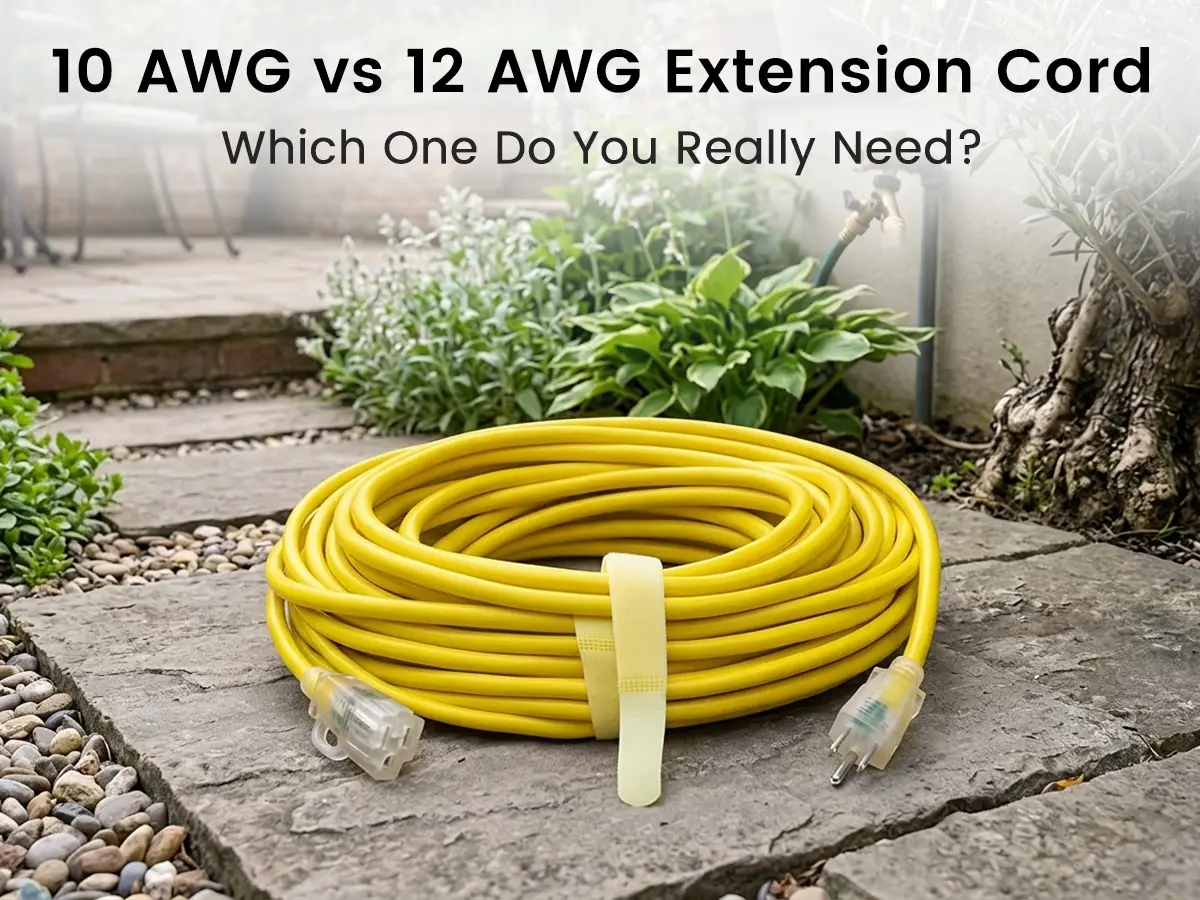
Choosing the best extension cord is critical for power safety, performance, and long-term reliability. Two of the most commonly compared options are 10 gauge (10 AWG) and 12 gauge (12 AWG) extension cords. A common question is: 10awg vs 12awg, which is better?
The short answer is: "10 AWG extension cord is better because its thicker wire offers lower resistance, resulting in less heat buildup and minimal voltage drop compared to 12 AWG. This makes it the more durable and efficient choice for powering demanding equipment over long distances without risking damage to your tools."
While both are considered heavy-duty compared to standard household cords, they are designed for very different power demands. In this guide, we’ll break down the key differences between 10 gauge and 12 gauge extension cords, explain when each one is appropriate, and help you decide which option best fits your needs.
What Does Extension Cord Gauge Mean?
The term gauge of extension cord refers to the thickness of the electrical conductors inside an extension cord.
In the American Wire Gauge (AWG) system, a lower number means a thicker wire.
Thicker wires carry more current while generating less heat and reducing voltage drop over distance.
This is why gauge selection plays such a major role in extension cord safety and performance.
Overview: 10 Gauge vs 12 Gauge Extension Cords
| Feature | 10 Gauge Extension Cord (10 AWG) | 12 Gauge Extension Cord (12 AWG) |
|---|---|---|
| Wire Thickness (Diameter) | 2.588 mm (0.1019 inches) | 2.053 mm (0.0808 inches) |
| Cross-sectional Area | 5.26 mm² | 3.31 mm² |
| Voltage Drop (per 100 ft @ 15A) | ~3.0V (Minimal) | ~4.8V (Moderate) |
| Flexibility | Rigid / Heavy-duty | More Flexible / Easier to coil |
| Weight | Heavier | Lighter |
| Typical Use | Generators, RVs, High-amp Machinery | Power Tools, Lawn Mowers, Job Sites |
From the comparison, it is evident that 10 AWG has a 26% larger wire diameter and a 59% greater cross-sectional area than 12 AWG. This physical advantage allows 10 AWG to carry more current with significantly less power loss and heat buildup; however, 12 AWG remains the more practical choice for general tasks due to its superior flexibility, easier storage, and lighter weight.
Both 10 and 12awg serve important roles, but choosing the wrong one can lead to overheating, power loss, or equipment damage.
When to choose 10 AWG
A 10 gauge extension cord is designed for applications that demand higher amperage and consistent power delivery. Because of its thicker conductors, it is better suited for situations where safety margins matter.
Common Use Cases for 10 Gauge Extension Cords
If your setup involves higher electrical loads or longer cord lengths, a 10 gauge extension cord significantly reduces voltage drop and heat buildup.
👉 Learn more about heavy-duty options on our 10 Gauge Extension Cord collection.
When a 12 Gauge Extension Cord Is Sufficient
A 12 gauge extension cord offers a balance between power capacity and ease of handling. It is thicker than standard 14 gauge or 16 gauge cords while remaining flexible enough for everyday use.
Applications for 12 Gauge Extension Cords
For short to moderate distances and medium-duty loads, a 12 gauge extension cord performs reliably without the added weight of heavier gauges.
👉 View practical options in our 12 Gauge Extension Cord collection.
The Role of Cord Length and Voltage Drop
Cord length plays a major role when deciding between 10 gauge and 12 gauge extension cords. As cord length increases, electrical resistance also increases, leading to voltage drop.
Voltage drop can cause:
-
Reduced equipment performance
-
Increased heat buildup
-
Shortened lifespan of tools and appliances
For longer distances, such as a 100 ft run, upgrading to a 10 gauge extension cord helps maintain stable voltage and consistent power delivery.
Safety Considerations When Choosing Extension Cord Gauge
Using an undersized extension cord is one of the most common causes of power-related safety issues. Always consider:
-
The total amperage of connected equipment
-
Whether the load is continuous or intermittent
-
Environmental conditions such as outdoor exposure
For higher-demand or critical applications, choosing a heavier gauge provides an added layer of safety and reliability.
Which Extension Cord Should You Choose?
If you’re deciding between 10 gauge and 12 gauge extension cords, a simple rule applies:
-
Choose 12 gauge for medium-duty, short-distance applications
-
Choose 10 gauge for higher loads, longer distances, and continuous power needs
When in doubt, selecting a heavier gauge helps future-proof your setup and reduces the risk of power-related issues.
Why Choose Vantecable Extension Cords
Vantecable extension cords are engineered for reliable performance across a wide range of power applications.
Our 10 gauge and 12 gauge extension cords are built with pure copper conductors, durable insulation, and rugged jackets designed for outdoor and jobsite use. Whether you need maximum power capacity or a versatile everyday solution, Vantecable offers dependable options designed with safety and performance in mind.
Frequently Asked Questions (FAQ)
Q1: Do I need a 10 or 12 gauge extension cord?
It depends on the amperage of your device and the distance. Use a 12 gauge cord for standard power tools and distances under 50 feet. However, if you are powering a generator, RV, or using a cord over 100 feet, a 10 gauge cord is necessary to ensure safety and prevent voltage drop.
Q2: Is 10 AWG better than 12 AWG?
Technically, 10 AWG is "better" for performance because it has thicker copper wires, meaning it can carry more current (30 Amps vs 20 Amps) and generates less heat. However, 12 AWG may be "better" for portability and light-duty tasks because it is lighter and more flexible.
Q3: Is a 10 gauge better than a 12 gauge?
For heavy-duty applications, yes. A 10 gauge cord provides a higher safety margin and can handle more powerful appliances without the risk of overheating. If you want to future-proof your setup for high-wattage equipment, 10 gauge is the superior choice.
Q4: What are the disadvantages of using a 10 gauge?
The main disadvantages are weight, flexibility, and cost. 10 gauge cords are significantly heavier and stiffer, making them harder to coil and transport. They also contain more copper, which makes them more expensive than 12 gauge alternatives.
Understanding the difference between 10 gauge vs 12 gauge extension cords helps you make safer and more informed decisions. While both serve important roles, selecting the correct gauge based on load, distance, and usage frequency ensures stable power and long-term reliability. For a complete breakdown of all outdoor wire sizes, check out our [comprehensive guide on what gauge extension cord you need for outdoor use].
If your application requires higher amperage or extended operation, upgrading to a 10 gauge extension cord is often the safest choice.