
.png?w=1368&h=240)
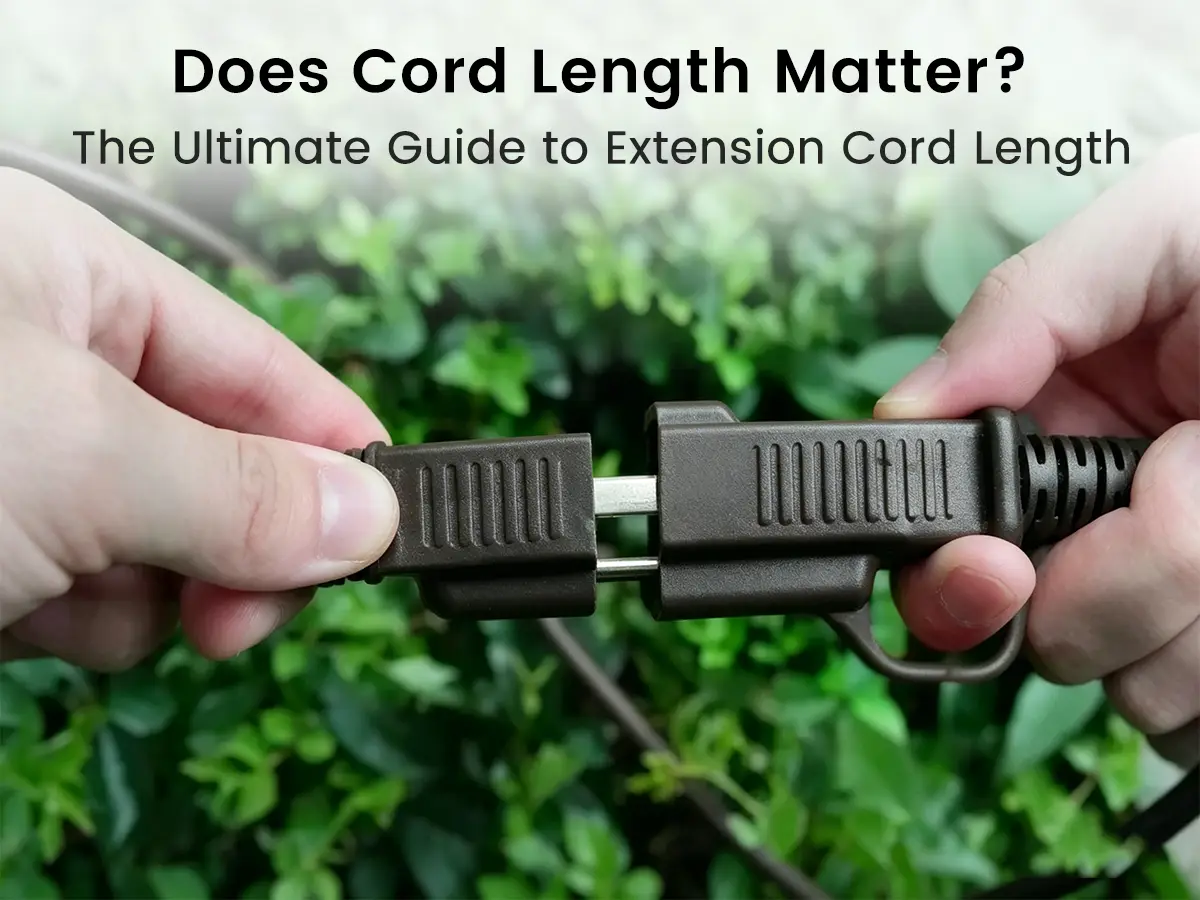
An extension cord is a flexible power cable used to provide electricity to devices that cannot reach a nearby outlet. It bridges the gap between power sources and appliances, offering convenience for home and office setups. However, it is essential to check the wattage rating and avoid overloading the cord to ensure electrical safety and prevent fire hazards.
Choosing the right extension cord length can sometimes feel confusing. Many users hesitate between a 25ft extension cord and a 50ft extension cord, especially when they need to power tools, appliances, or outdoor equipment. Both lengths are safe and widely used, but understanding the technical differences helps you make an informed decision, ensuring efficiency, safety, and device longevity.
Vantecable Extension Cords
Choosing between 25 ft and 50 ft? Compare lengths, wire gauges and outlet layouts for your setup.
The Essential Tie Between Extension Cord Length and Gauge
The performance and safety of an extension cord depend entirely on the balance between its total length and wire gauge (AWG).
As the cord length increases, electrical resistance naturally rises, leading to a phenomenon known as voltage drop.
To counteract this energy loss over long distances, a thicker wire with a lower AWG rating is required.
For instance, while a standard 14 AWG cord may suffice for short distances, a heavy-duty 10 or 12 AWG cord becomes necessary for lengths exceeding 50 or 100 feet to prevent overheating.
Choosing the correct gauge ensures that high-power tools receive stable voltage, protecting your equipment from motor damage and significantly reducing fire hazards caused by excessive heat buildup in thin wires.
Extension Cord Length Ranges and Applications
Extension Cord Selection Guide
| Length | Category | Recommended AWG | Best For | Key Features |
|---|---|---|---|---|
| 10–25' | Short | 16 – 14 AWG | Small Electronics | Compact; Zero power loss |
| 25–50' | Medium | 14 – 12 AWG | Home & Yard Work | Versatile; Easy to handle |
| 50–100' | Utility | 12 – 10 AWG | Heavy-duty Tools | High-power; Reliable |
| 100' + | Extra-Long | 10 – 8 AWG | Industrial Sites | Industrial-grade; Low voltage drop |
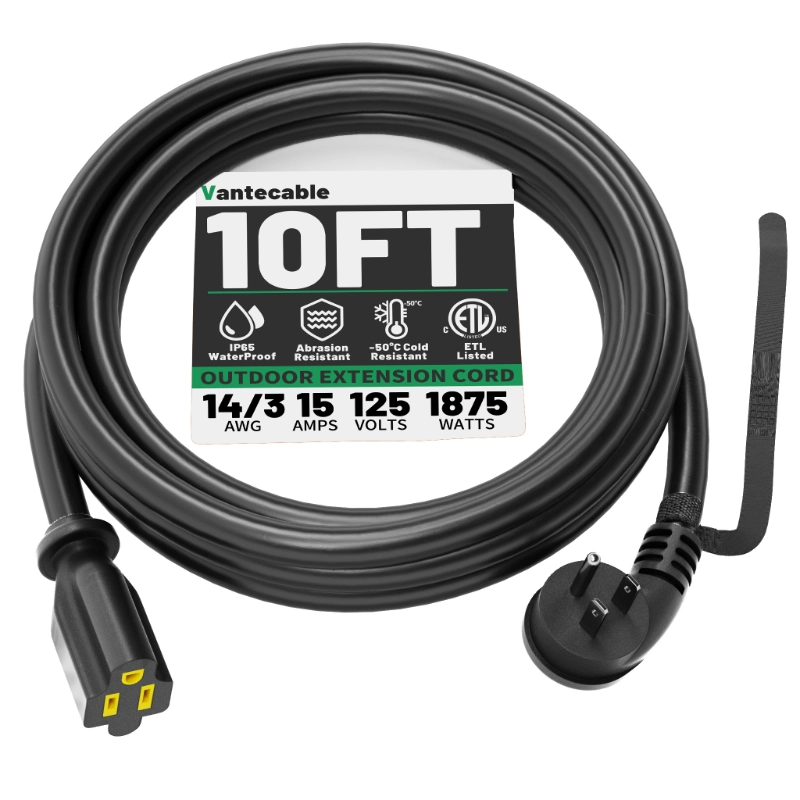
1. Short Cords (10–25 Feet)
-
Best For: Small office setups or home entertainment systems.
-
Reaching outlets just across a room.
-
-
Advantages: Low profile and avoids excessive cable tangles.
-
Highly efficient with negligible power loss.
-
2. Medium Cords (25–50 Feet)
-S-100-.webp?w=2048&h=2048)
-
Best For: General household maintenance and yard work.
-
Powering kitchen appliances or portable heaters.
-
-
Advantages: The most versatile length for standard indoor/outdoor use.
-
Provides ample reach without being overly heavy.
-
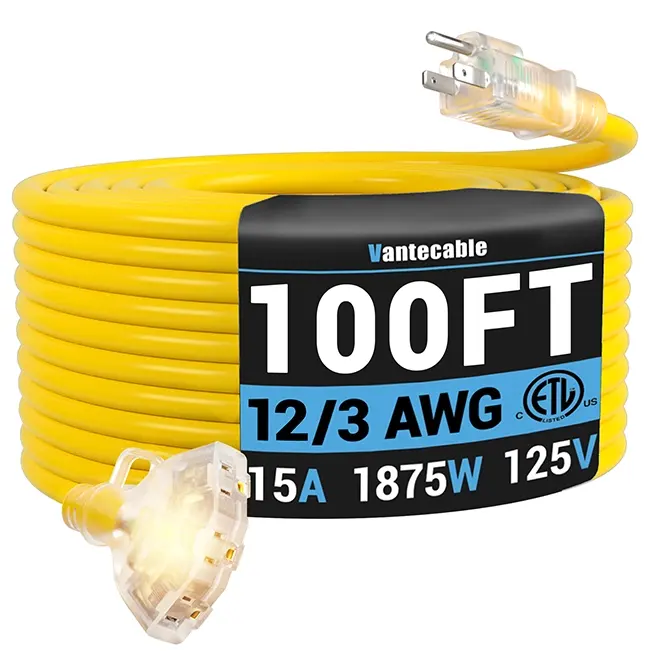
3. Utility Cords (50–100 Feet)
-
Best For: Large-scale DIY projects and lawn mowing.
-
Connecting tools in workshops or garages.
-
-
Challenges: Noticeable weight; requires a cord reel for neat storage.
-
Slight voltage drop may occur with high-drain tools.
-
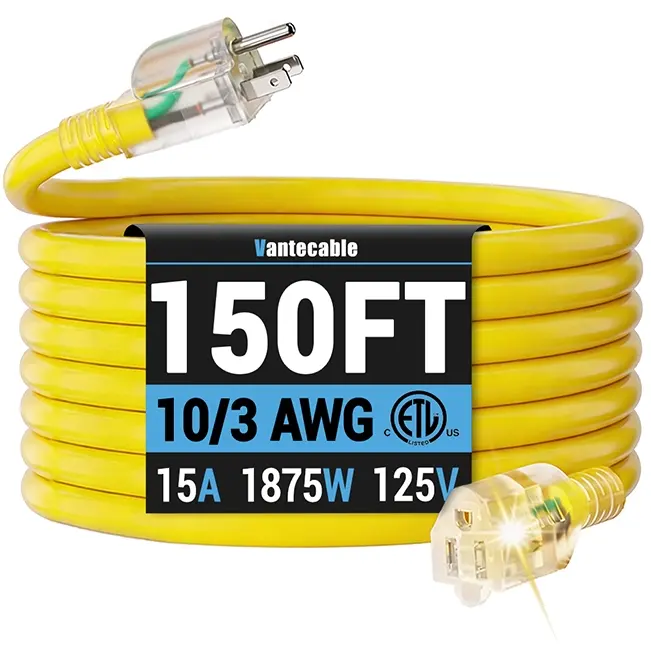
4. Extra-Long Cords (100+ Feet)
-
Best For: Professional construction sites and outdoor festivals.
-
Agricultural use or distant perimeter lighting.
-
-
Challenges: Significant voltage drop; requires a heavier gauge (lower AWG).
-
Difficult to manage and store manually.
-
How to Choose the Right Length for Extension Cord
Device Power Requirements
High-wattage equipment like heaters or saws requires a stable current that can be compromised by the electrical resistance of long cables.
Recommendation: Use the shortest length possible (under 50ft) with a heavy-duty 12 or 10 AWG cord to ensure your high-power motors don't burn out from voltage drop.
Electrical Safety
Excessively long cords left coiled can generate dangerous heat buildup, while cords that are too short lead to risky "daisy-chaining" between multiple outlets.
Recommendation: Select a single, continuous 14 AWG cord that reaches your destination with just a few feet of slack to prevent overheating and tripping hazards.
Work Efficiency
Managing an oversized cord leads to tangles and clutter, while a cord with significant voltage drop will cause power tools to lose torque and speed.
Recommendation: For standard yard work or DIY projects, a 50ft, 14 or 12 AWG medium-duty cord offers the best balance of mobility and consistent tool performance.
Long-term Durability
Long cords are more susceptible to physical damage like pinching or abrasion, and internal heat from over-extension degrades the insulation over time.
Recommendation: Invest in a high-quality 10 AWG industrial-grade cord if long reach is mandatory; otherwise, stick to shorter lengths to minimize thermal stress and storage kinks.
Technical Factors Affecting Cord Efficiency and Safety
1. Electrical Resistance Explained
Electrical resistance is a fundamental property of the wire and can be estimated using the formula:
R = ρ × L / A
Example for typical 14 AWG copper cords:
-
25ft cord (round trip ≈ 50ft) → R ≈ 0.13 Ω
-
50ft cord (round trip ≈ 100ft) → R ≈ 0.26 Ω
The 50ft cord has roughly double the resistance of the 25ft cord, which slightly affects voltage drop and heat, but it remains well within safe limits for standard tools and household equipment.
2. Voltage Drop and Device Performance
Voltage drop occurs when electricity travels through a wire and encounters resistance. It can affect sensitive electronics, motorized tools, and appliances. The voltage drop is calculated as:
V_drop = I × R
Example: 14 AWG cord, 12 A load:
-
25ft cord: V_drop = 12 × 0.13 ≈ 1.56 V (≈ 1.3% of 120 V)
-
50ft cord: V_drop = 12 × 0.26 ≈ 3.12 V (≈ 2.6% of 120 V)
Both cords are well within acceptable limits (NEC recommends ≤ 3% voltage drop per branch). Even high-power tools operate normally with either cord, provided the correct wire gauge is selected.
If you want to know exactly how much voltage drop your extension cord has, you can use our voltage drop calculator.
3. Heat Generation
Longer cords generate slightly more heat due to higher resistance. Heat can be estimated using:
P_loss = I × I × R
Example for 14 AWG cord, 12 A load:
-
25ft cord: P_loss ≈ 12 × 12 × 0.13 ≈ 18.7 W
-
50ft cord: P_loss ≈ 12 × 12 × 0.26 ≈ 37.4 W
While the 50ft cord generates slightly more heat, both lengths are safe for continuous use under normal conditions. Avoid coiling cords tightly during use or covering them with insulating materials, which can trap heat.
4. Start-Up Current and Motorized Equipment
Motorized equipment, such as compressors, power tools, or pumps, has high start-up currents. This can momentarily increase voltage drop in longer cords.
-
50ft extension cord: Slightly higher voltage drop during start-up, but within safe limits if proper gauge is used.
-
25ft extension cord: Minimal voltage drop, safer for frequent start-stop operations.
Tip: Always check your tool’s amperage and match it with the correct cord gauge to ensure efficient operation and avoid plug heating. For example, consider a 12AWG extension cord for high-current tools.
Safety Tips for Extension Cords
-
Always select the correct wire gauge based on your tool’s current. Undersized cords can cause overheating or voltage drop.
-
Use grounded cords (3-prong) for safety.
-
Avoid running cords under rugs or through high-traffic areas.
-
Store cords properly to prevent kinks and damage to insulation.
Summary
Choosing the right extension cord length is a critical decision that balances operational convenience with electrical safety. While longer cords offer greater reach, they also introduce higher resistance, leading to significant voltage drop and potential heat buildup. To maintain peak performance, users must match the cord's length to the device's power requirements, ensuring that high-draw tools are paired with thicker wire gauges (lower AWG) for distances over 50 feet. Ultimately, selecting the shortest viable length for the task not only prevents tripping hazards and cable clutter but also protects equipment from motor damage and reduces fire risks. A strategic choice ensures maximum work efficiency and long-term cord durability.
Explore Vantecable today and make the smart choice for your power adventure.