
.png?w=1368&h=240)
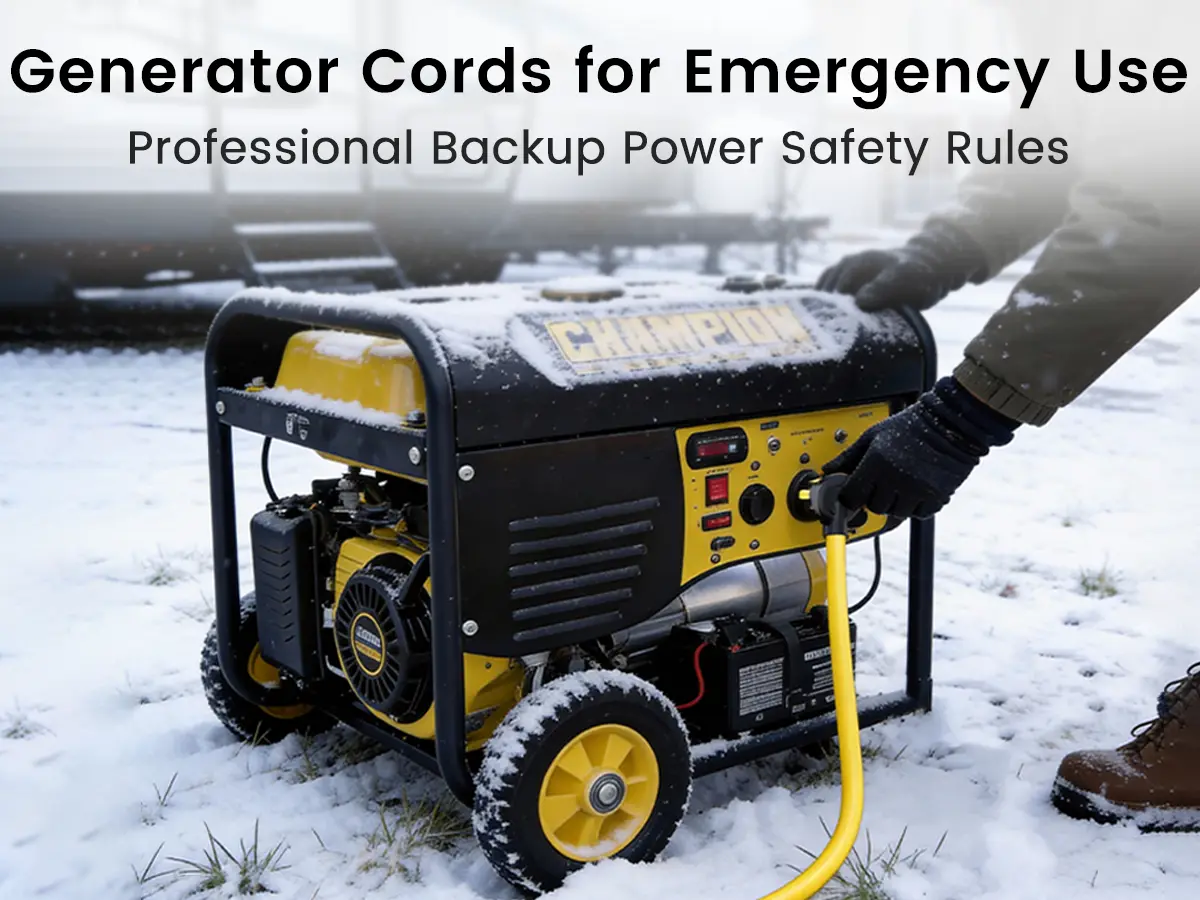
When a power outage hits, using the right extension cord for your generator is just as important as choosing the generator itself. The wrong cord can lead to overheating, voltage drop, damaged appliances, or serious safety hazards. This guide explains what makes a generator extension cord “the best” and how to choose the right one for emergency power use. Explore Vantecable generator cord collection to find the right fit for your generator and emergency power setup.
Vantecable Generator Cords
Compare generator cords by length, amperage and connector.
What Is the Best Extension Cord for Generator and Emergency Power?
The best extension cord for generator and emergency power is a heavy-duty, outdoor-rated generator extension cord designed to handle high electrical loads safely. It should feature a thick wire gauge (typically 10–12 AWG), a proper amperage rating that matches the generator output, and weather-resistant insulation to reduce overheating, voltage drop, and power loss during outages.
Why You Should Not Use a Regular Extension Cord with a Generator
Many people assume a standard household extension cord will work with a generator. In reality, this is one of the most common and dangerous mistakes during emergency power use.
Regular extension cords are usually designed for light, indoor loads. When connected to a generator, they can:
-
Overheat under high current, increasing fire risk
-
Cause severe voltage drop, damaging appliances like refrigerators or furnaces
-
Lack outdoor-rated insulation, leading to moisture and weather-related failures
-
Wear out quickly when exposed to heat, cold, or continuous heavy load
A generator produces far more sustained power than most household devices expect. That’s why a generator-specific extension cord is essential for both safety and performance.
Key Factors to Consider When Choosing a Generator Extension Cord
Wire Gauge (10 AWG, 12 AWG, 14 AWG)
Wire gauge determines how much current a cord can safely carry.
-
10 AWG: Best for high-power generators, long distances, and heavy appliances
-
12 AWG: Suitable for medium loads and shorter runs
-
14 AWG: Only for light-duty use and very short distances
As cord length increases, using a thicker gauge becomes critical to prevent overheating and power loss.
Amperage and Generator Output
Always match the extension cord’s amperage rating to your generator’s output:
-
20A cords for small portable generators
-
30A cords for most home backup generators
-
50A cords for large or whole-house systems
Using a cord rated below your generator’s output can cause insulation failure or connector damage.
Cord Length and Voltage Drop
Longer cords increase resistance, which leads to voltage drop.
-
25 ft: Minimal voltage loss, most efficient
-
50 ft: Common and practical, requires thicker gauge
-
100 ft or more: Only recommended with heavy-duty, low-resistance cords
When in doubt, choose a shorter cord or thicker gauge to protect your equipment.
Outdoor and Weather Resistance
A generator extension cord should always be:
-
Rated for outdoor use
-
Resistant to moisture, sunlight, and temperature changes
-
Built with durable jacketing to handle rough ground and repeated use
Emergency power situations often involve rain, snow, or extreme temperatures, making outdoor-rated cords essential.
Plug and Connector Type
Generators often require specific connectors, such as locking or heavy-duty plugs. Using the correct connector ensures a secure connection and reduces the risk of accidental disconnection during operation.
Best Generator Extension Cords for Emergency Power
For Portable Generators (20A–30A)
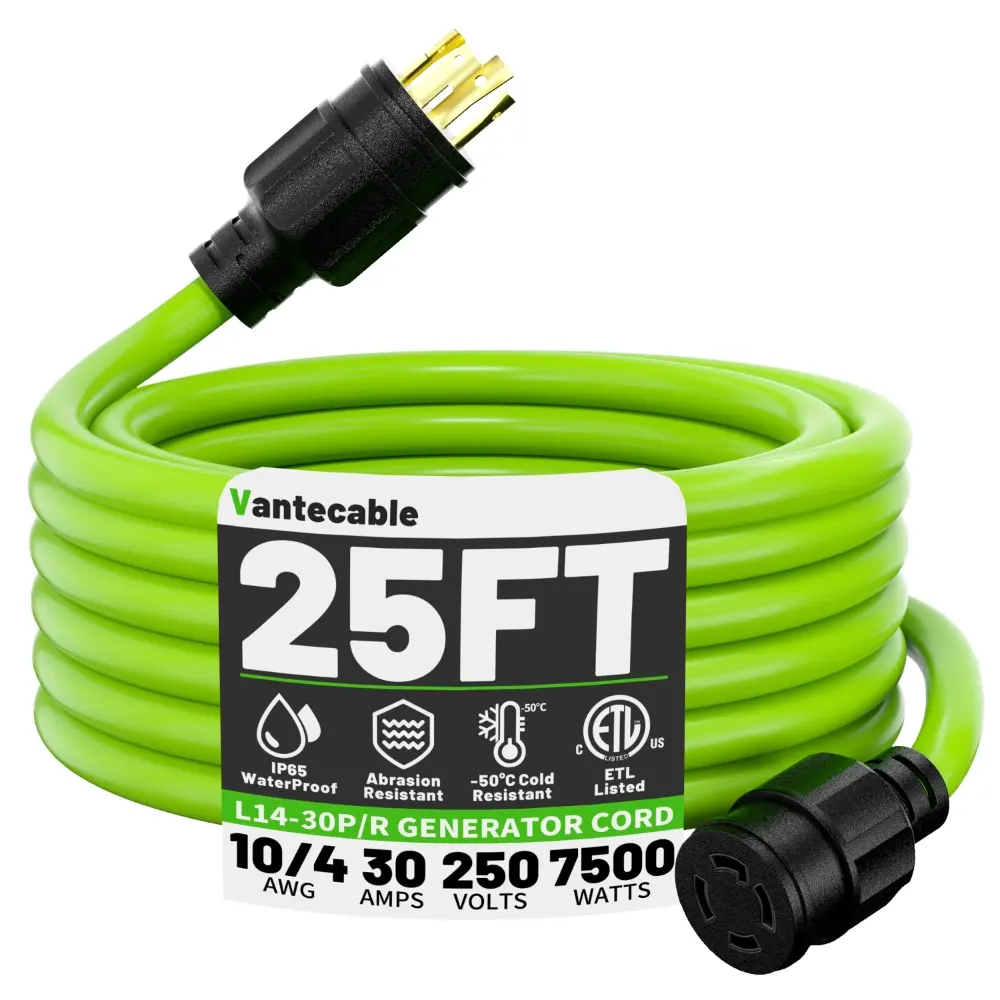
Portable generators used during power outages typically require heavy-duty cords with thick conductors and reliable outdoor insulation. Vantecable L14-30 generator extension cord is ideal for running essential appliances like refrigerators, freezers, sump pumps, or heaters. It's designed for 125/250V, 30-amp systems and capable of handling up to 7,500 watts of power.
It uses 10-gauge copper conductors to reduce voltage drop and features NEMA L14-30P to L14-30R twist-lock connectors, which help prevent accidental disconnection during operation. The cord is ETL listed and built with a weather-resistant STW jacket, making it suitable for outdoor use in rain, sunlight, and cold temperatures.
For homeowners, RV users, or anyone preparing for power outages, this type of heavy-duty, weather-rated generator cord offers a safe and reliable way to connect a portable generator to a transfer switch or power inlet.
For High-Power or Backup Generators
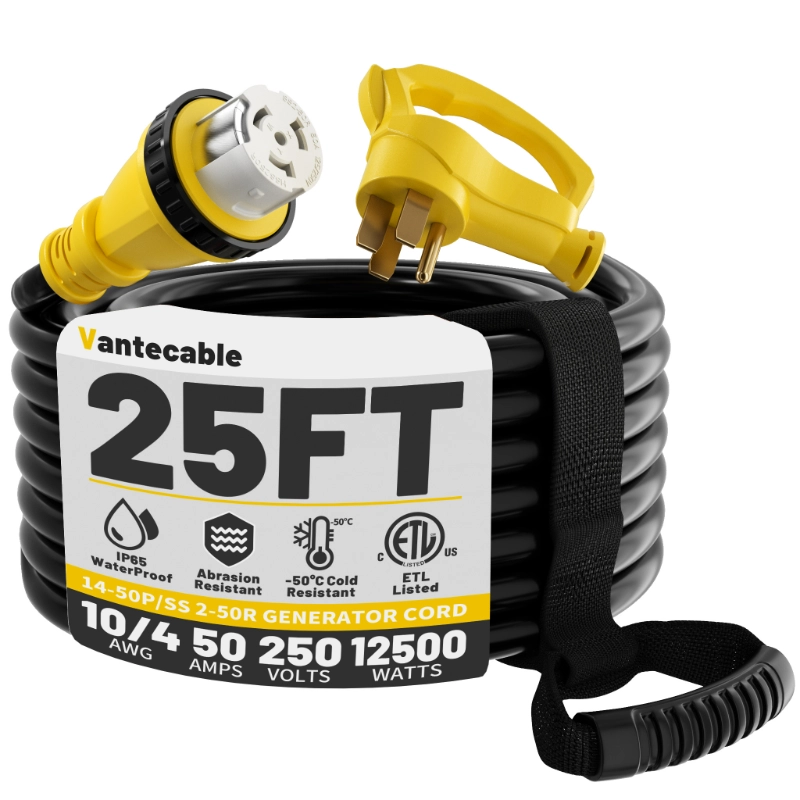
For higher power needs, a 50-amp generator extension cord is a practical choice. The Vantecable 50A generator cord connects a 50A portable generator to a house’s 50A power inlet box, transfer switch, or breaker panel, delivering up to 12,500 watts safely.
It features a NEMA 14-50P male plug and SS2-50R female receptacle with a locking threaded ring to ensure a secure, weatherproof connection. Made from heavy-duty STW copper conductors with a flame-retardant, UV-resistant jacket, this cord is built to withstand outdoor conditions while maintaining reliable power flow.
Available in multiple lengths and with ergonomic handles and adjustable storage straps, it’s easy to plug, unplug, and store, making it a dependable solution for emergency or outdoor power needs.
If you’re looking for a generator extension cord that perfectly fits your setup, these are just two examples. Vantecable offers a full range of generator cords in various lengths, amperages, and connector types, designed to meet different home, RV, and outdoor power needs. Whether you need a smaller 30A cord for light-duty applications or a heavy-duty 50A cord for higher power requirements, you can explore our complete collection of generator extension cords to find the right fit for your situation.
How to Use a Generator Extension Cord Safely During a Power Outage
Even the best extension cord must be used correctly. Always follow these safety tips:
-
Never use a cord while it is tightly coiled
-
Avoid connecting multiple extension cords together
-
Keep connections elevated and away from standing water
-
Do not run cords through doors or windows where insulation can be damaged
-
Never backfeed power into a home outlet without proper equipment
Proper use protects both your generator and your home.
FAQs About Generator Extension Cords
Q: Can I use a regular extension cord with a generator?
A: No. Regular extension cords are not designed to handle the sustained high loads produced by generators and can overheat or fail.
Q: What gauge extension cord do I need for a generator?
A: Most generators require 10 or 12 AWG cords, depending on amperage and length. Thicker wire is always safer for longer distances.
Q: How long can a generator extension cord be?
A: Shorter is better. For longer runs, use thicker gauge cords to minimize voltage drop and heat buildup.
Q: Is a generator extension cord different from a normal extension cord?
A: Yes. Generator extension cords are built with heavier conductors, stronger insulation, and higher amperage ratings.
Choose the Right Extension Cord to Power Your Generator Safely
A generator is only as reliable as the extension cord that delivers its power. Choosing a properly rated, heavy-duty generator extension cord ensures safe operation, protects your appliances, and provides dependable emergency power when you need it most.