
.png?w=1368&h=240)
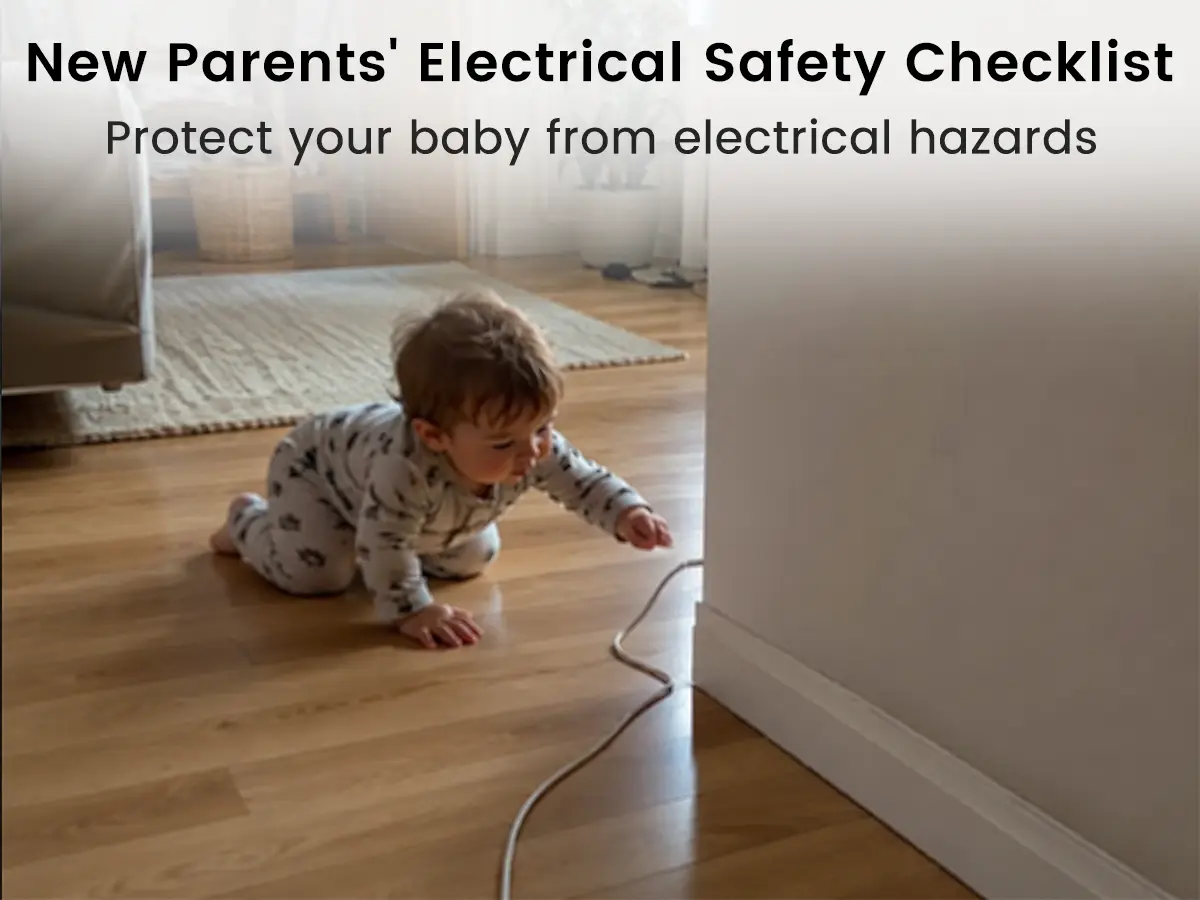
As a new parent, have you ever felt that overwhelming anxiety about your baby’s safety, constantly worrying about hidden dangers, their health, and their well-being? While it is incredibly moving to watch your little one take their very first steps to explore the world, a silent hazard often hides in plain sight: improperly managed electricity.
According to the latest data from the Electrical Safety Foundation International (ESFI) and the CPSC, over 2,400 children are treated in emergency rooms each year for shocks and burns caused by household receptacles and extension cords. Half of these victims are toddlers aged 2 to 3—the exact developmental stage when they begin pulling themselves up on furniture and grabbing dangling wires.
Furthermore, the National Fire Protection Association (NFPA) notes that extension cord failures cause roughly 3,300 residential fires annually.
Grounded in National Electrical Code (NEC) standards, this guide will help you move beyond basic outlet covers. We will audit your home's heavy-duty extension cords and electrical routing to build a truly safe, shock-free environment for your baby to grow.
"Safe Use" Is Not Enough: Why Babies Need Active Defense
As adults, our definition of "safe electrical use" is simple: don't overload the outlet, plug the cord in firmly, and keep appliances away from water. We follow these rules because we understand cause and effect. But to a crawling baby or a curious toddler, a house is an interactive playground, and those rules do not exist.
In a child's eyes, a cable is not an electrical conductor, but a rope that can be pulled; a wall socket is not a source of power for electrical appliances, but a hole to satisfy their curiosity, where they can stick their fingers or toys in. This is why what we consider to be safe standards can become safety hazards for children, because they will "disrupt" what we perceive as safe standards. If we don't add extra protective measures on top of ensuring safe use, then safety becomes unsafe.
Your home’s electrical system requires Active Defense. Active defense means moving past behavioral corrections and implementing physical engineering controls.
It means upgrading to hardware that tolerates and blocks a child's natural destructive habits, ensuring that even if a toddler touches, pulls, or tampers with a connection, the system self-protects before a shock or fire can even start.
Indoor Hazards: Power Strips & Appliance Load
Open Wall Outlets
-
The Hazard: Toddlers love to explore at eye level. Open wall outlets look like tiny slots perfect for probing. Babies will try to shove their fingers, metal hairpins, or keys inside, or worse, drool directly onto the live contacts while crawling.
-
The Solution: Switch to Tamper-Resistant Receptacles (TRR) or use heavy-duty outlet covers. TRR outlets feature built-in safety shutters that permanently block the slots. They only open when a real plug applies equal pressure to both sides simultaneously, instantly stopping a child from inserting a single object.
Floor Power Strips & Cords
-
The Hazard: Exposed cords and loose power strips on the floor are physical traps. Toddlers will trip over them, chew on the soft rubber insulation during teething, or pull dangling wires to stand up, causing heavy appliances (like TVs or humidifiers) to topple onto them.
-
The Solution: Mount power strips to the wall or hide them in cable management boxes. For routing, use a Flat Plug extension cord behind furniture. The ultra-thin plug allows changing the wire direction flat against the wall, meaning you can push heavy cribs or dressers 100% flush to block all physical access.
Improper Cord Usage (Overload & Fire Hazards)
-
The Hazard: Running nursery space heaters, air purifiers, and baby monitors off the same cheap cord causes power overload. Parents often daisy-chain (plug one power strip into another) to reach a distant corner, creating massive electrical resistance, melting insulation, and causing structural fires.
-
The Solution: Never daisy-chain power sources. Check the American Wire Gauge (AWG) rating on your cables. Toss out thin 16 AWG cords; use heavy-duty 12 AWG or 14 AWG cords rated for a full 15 Amps (15A) to safely handle high-wattage nursery appliances.
Cord Management: Preventing Trips & Pulls
Forget complex electrical math for a second. When it comes to your home's layout, babyproofing your wires is all about blocking physical access and securing vertical space. Here is your quick, three-step walkthrough to audit your home’s layout today:
Step 1: Check Under Your Rugs (The Friction Trap)
If you hid an extension cord under your living room area rug to keep it away from your crawling baby, go pull it out right now. Walking over a rug creates constant, unseen friction on the wire beneath it, while the heavy fabric traps heat. Over time, the cord’s rubber coating melts, creating a hidden fire hazard.
-
The Fix: Never run power cords under rugs. If a wire must cross an open floor, cover it with a low-profile, heavy-duty rubber cable ramp that sit 100% flush to the ground so your baby can't claw at it and nobody trips.
Step 2: Look Up 4 Feet (The Gravity Trap)
Between 12 and 24 months, toddlers will grab onto anything to pull themselves up to a standing position. Hanging wires from your desk lamp, the TV on your media console, or the baby monitor are perfect targets. One good tug can bring a heavy appliance crashing down on your child.
-
The Fix: Any cord within 4 feet of the floor needs to be secured. Use self-adhesive cable clips or hook-and-loop wraps to anchor wires tight against the undersides of tables and the hidden backs of furniture. No dangling loops allowed.
Step 3: Eliminate the "Behind-the-Crib" Crawlspace
Standard extension cord plugs stick straight out of the wall by 2 to 3 inches. This forces you to leave a wide gap behind the crib, dresser, or changing table—creating a dark, dangerous crawlspace where curious babies love to slide their hands in to pull on live plugs.
-
The Fix: Swap those bulky wall plugs for a low-profile Flat Plug extension cord. The ultra-thin plug channels the wire at a right angle flat against the drywall. This lets you push heavy nursery furniture 100% tight against the wall, completely blocking your baby's physical access to the outlet.
Outdoor Extension Cords: Yard & Garage Safety
Indoor outlets are only half the story. Garages, patios, backyards, and driveways introduce a different set of risks because electricity outdoors is exposed to moisture, heat, dirt, and physical damage. For families with toddlers, these spaces become especially dangerous once children start walking, riding toys outside, or following parents into the garage and yard.
Wet Conditions & Shock Risks
The Hazard: Outdoor extension cords are frequently exposed to sprinklers, rain, puddles, damp concrete, or morning condensation. A damaged or indoor-rated cord used outside can quickly become a shock hazard—especially when children are barefoot or touching wet ground.
The Solution: Only use extension cords labeled for outdoor use and marked with a “W” rating or equivalent weather-resistant certification. Outdoor outlets should always be protected by a Ground Fault Circuit Interrupter (GFCI), which shuts off power in milliseconds if it detects current leaking to ground. The NEC has required GFCI protection for most outdoor residential receptacles for years because it dramatically reduces electrocution risk.
Before every use, inspect cords for cracked insulation, loose plugs, or exposed copper. If a cord feels warm during operation, replace it immediately.
Garage & Workshop Dangers
The Hazard: Garages often contain the highest electrical loads in the home—power tools, battery chargers, refrigerators, pressure washers, or lawn equipment. Parents sometimes leave extension cords plugged in permanently along walls or across the floor, creating trip hazards and tempting targets for curious toddlers.
The Solution: Unplug extension cords immediately after use and store them out of reach on wall-mounted hooks or enclosed storage reels. Never leave live cords coiled on the ground where children can grab or chew them.
If you regularly power high-draw equipment in the garage, avoid relying on lightweight household cords. Use properly rated heavy-duty cords designed for the amperage of the equipment, and keep cords away from door tracks, sharp edges, and areas where vehicles may roll over them.
Pool, Patio & Holiday Lighting
The Hazard: Temporary outdoor lighting and seasonal decorations often lead to overloaded outdoor power strips and unsafe connections exposed to weather. These setups are especially risky around pools, inflatable water toys, or metal fencing.
The Solution: Use weatherproof covers for all outdoor receptacles and keep all plug connections elevated off the ground. Never connect multiple extension cords together across a yard unless the manufacturer specifically permits it. For temporary outdoor lighting, choose UL-listed products and follow the manufacturer’s maximum connection limits carefully.
Most importantly, teach children early that outdoor cords are never toys, ropes, or climbing supports.
Conclusion
Babyproofing your home’s electrical system is not about making your house look perfect—it is about reducing failure points before curiosity turns into injury.
Outlet covers matter, but real electrical safety goes much deeper than a plastic cap in the wall. Safe homes are built through layered protection: tamper-resistant receptacles, properly rated heavy-duty extension cords, GFCI protection, secure cable routing, and eliminating physical access to dangerous connections.
The goal is simple: even if your child pulls, chews, crawls, or explores exactly the way toddlers naturally do, the environment itself remains safe.
A few careful upgrades today can prevent shocks, burns, appliance tip-overs, and even house fires tomorrow. And for new parents, that peace of mind is worth every effort. Vantecable is committed to protecting your family's safety together.