

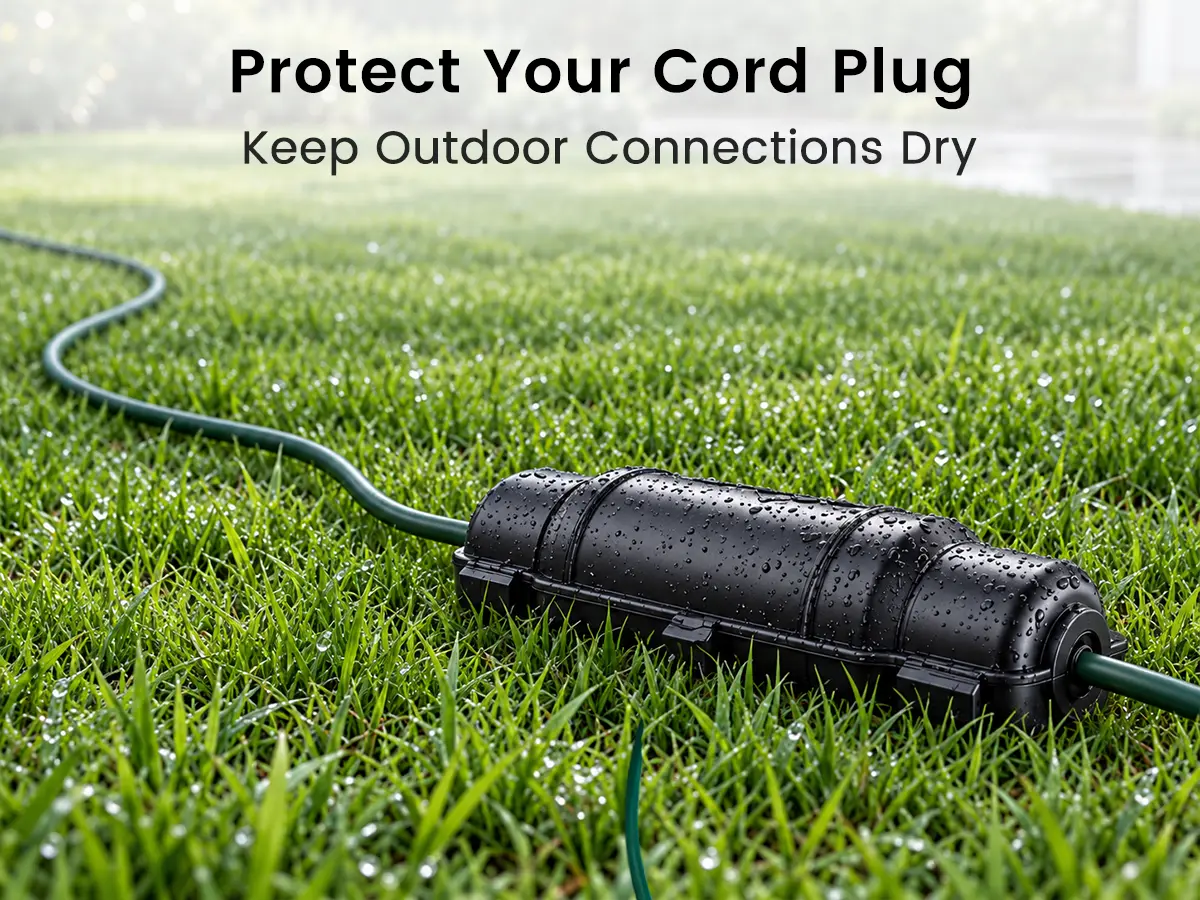
Extension cord plug protection starts with an outdoor-rated, undamaged cord, a fully seated connection inside a closed cover, and a spot that stays off wet ground and out of foot traffic. This guide covers what to check before covering a plug, how to install the cover in four steps, where to place it, and how to check the connection before and after rain. Extension cords are meant for temporary use, so the steps below suit short-term outdoor setups such as holiday lighting, patio equipment and yard work.
Outdoor Extension Cords
Shop outdoor extension cords in 16/3, 14/3 and 12/3.
What Should You Check Before Covering an Extension Cord Plug?
Inspect the plugs and cord for cracked housings, bent or loose prongs, black or brown discoloration, damaged insulation and moisture, and confirm the cord is marked for outdoor use. The CPSC’s extension cord safety guidance also recommends checking a cord for damage before use. A cover does not hide a damaged plug, so replace any damaged part before connecting.
How to Install an Outdoor Extension Cord Plug Cover
An outdoor extension cord plug cover goes on around a connection that is already joined, so the order of the steps matters.
Step 1: Connect the Plug Completely
Before placing the connection inside the open cover, push the plug fully into the receptacle end. The prongs should be fully inserted with no visible gap. A connection that is only partly seated will stay loose after the cover closes, and the latches should never be used to pull it together.
Step 2: Position the Plug Inside the Cover
Place the joined connection in the center of the open cover and let the cables run out of both ends in their natural direction. The plug should not press against the lid. If you are still checking whether a weatherproof outdoor outlet box fits your connected plug, use our outdoor box guide.
Step 3: Close the Cover Fully
Check that the rubber gaskets sit flat, the lid is completely shut and both latches are fastened. Do not close the lid on a cable or on the edge of a plug.
Step 4: Check the Cable Entry After Closing
Look at where each cable leaves the cover. The cable should not be flattened, sharply bent or pulled tight. Move the cable gently: the lid and latches should stay shut.
Where Should You Place an Outdoor Plug Protector?
Set the connection on a stable, dry surface away from low spots where water collects, areas that sprinklers spray directly, heat sources such as patio heaters and grills, vehicle paths, mowing areas and main walkways. OSHA’s page on flexible cord hazards covers the risk of current leakage at wet connectors, which is the reason to keep the joint clear of standing water.
How Should You Check a Waterproof Extension Cord Cover Before and After Rain?
Before rain is expected, confirm that the lid is closed, both latches are fastened and the connection is still off the ground. After rain, check whether water has collected around the cover or reached the cable entries. Before opening the cover, disconnect the power from a dry upstream source. Then inspect the inside of the cover, the plug and the cord, and keep the connection unplugged until all three have been checked. If the cord itself got wet, see our wet cord guide.
What Signs Mean You Should Unplug the Connection?
The table below lists the signs that call for stopping use and what to do about each one.
| Sign | What to do |
|---|---|
| Water inside the cover | Disconnect the power from a dry upstream source and keep the connection unplugged until the cord, plug and cover have been inspected |
| Plug or connector feels unusually warm during use | Disconnect the power and check the connection and cord rating before reuse |
| Burning smell or discoloration | Disconnect the power and replace the damaged plug or cord |
| Buzzing or crackling noise | Disconnect the power and inspect the connection before reuse |
| Outlet or breaker trips | Stop using the setup; do not repeatedly reset it before identifying the cause |
| Cracked cover, broken latch or worn gasket | Replace the cover |
| Damaged plug, jacket or insulation | Replace the damaged part before reconnecting |
Vantecable Waterproof Outdoor Extension Cord Safety Cover
The Vantecable cover fits 12, 14 and 16 AWG extension cords and most standard 2-prong and 3-prong plugs. It is a one-piece hinged cover with two latches, two cable clamps and rubber gaskets, and it is made for outdoor connections. The product page lists IP54. It is available in 1, 2, 3, 6 and 9 packs.
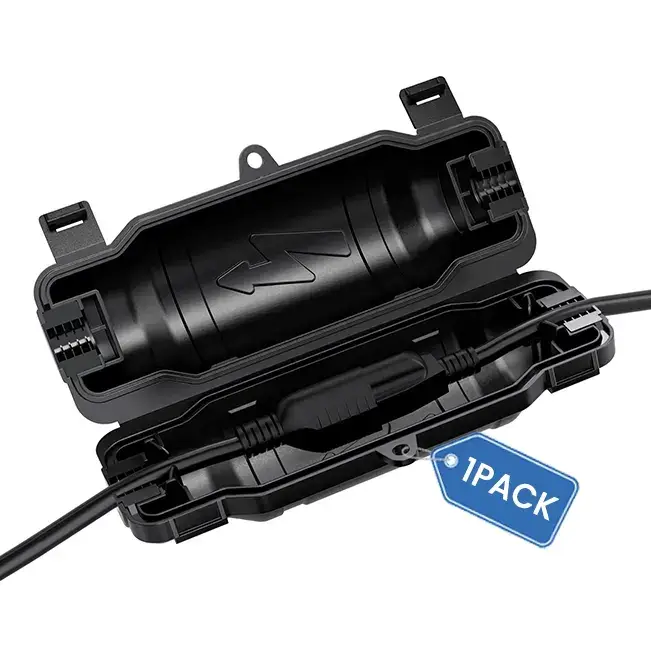
Vantecable Waterproof Outdoor Extension Cord Safety Cover
IP54 · Fits 12/14/16 AWG · Hinged, 2 latches · Rubber gaskets · 1, 2, 3, 6 or 9 pack
From $9.99
Protect Your ConnectionFAQ About Extension Cord Plug Protection
Should You Disconnect an Extension Cord Before Severe Weather?
Disconnect it when the connection cannot stay protected, elevated and safely positioned through the expected conditions.
Can You Use Electrical Tape or a Plastic Bag to Cover an Extension Cord Plug?
No. Neither is a substitute for a cover made for an outdoor plug connection. Tape or a bag also has to be removed before you can inspect the plug after rain.
Do You Need a Plug Cover Under a Covered Porch?
A roof reduces direct exposure, but the connection may still be reached by wind-driven rain or wet surfaces. Use an outdoor-rated cord and add a compatible cover when the connection remains exposed.
Conclusion: Keeping an Extension Cord Plug Dry
A dry connection depends on the setup as much as the cover: a sound cord, a fully closed lid and a position that stays off wet ground and out of traffic. The cover above is made for that kind of outdoor connection.
Safety note: This guide reflects general U.S. electrical practice and the ratings listed for the product described. Always follow the manufacturer’s instructions, the cord’s rating and your local electrical code. Extension cords are for temporary use and are not a substitute for permanent wiring.