


Outdoor extension cords with multiple outlets let one grounded receptacle power several outdoor devices without running separate cords back to the wall. Vantecable’s multi-outlet extension cords come in three layouts: 16/3 1-to-3 and 1-to-4 splitters, 14/3 and 16/3 cords with 3, 6 or 9 outlets spaced along the cable, and 10/3, 12/3 and 16/3 LED triple-tap cords. Lengths run from 2 to 100 ft, in black, green or yellow, with total ratings of 13A/1625W or 15A/1875W.
Every cord uses copper conductors and a flexible SJTW jacket, features an IP65-rated design, and is ETL Listed by Intertek. Compare layout, gauge and length below, then choose the outdoor multi-outlet extension cord that fits your Christmas lights, yard displays or outdoor tools.
Choose a Multi-Outlet Extension Cord Layout
Choose a splitter when devices sit in different directions, outlets spaced along the cord when they follow one route, and a triple-tap when three devices share one spot. The table shows how the three layouts compare.
| Layout | Configurations | Lengths | Best For |
|---|---|---|---|
| 1-to-3 / 1-to-4 splitter (16/3, green) | 3 or 4 branches | 25, 40 ft / 31, 46 ft | Trees, inflatables, yard figures |
| Outlets every few feet (14/3, 16/3) | 3, 6 or 9 outlets | 25, 50, 75 ft | Rooflines, fences, pathways |
| LED triple-tap (10/3, 12/3, 16/3) | 3 outlets at one end | 2–100 ft | Grouped lights, tools, equipment |
More outlets add connection points, not capacity. Add the wattage of every device running at the same time and keep the total within the rating marked on the cord. If the cord, plug or outlet becomes unusually hot, disconnect the power and stop using it until the load, connections and cord condition have been checked. Learn more about why extension cords get hot.
1-to-3 and 1-to-4 Multi-Directional Extension Cords
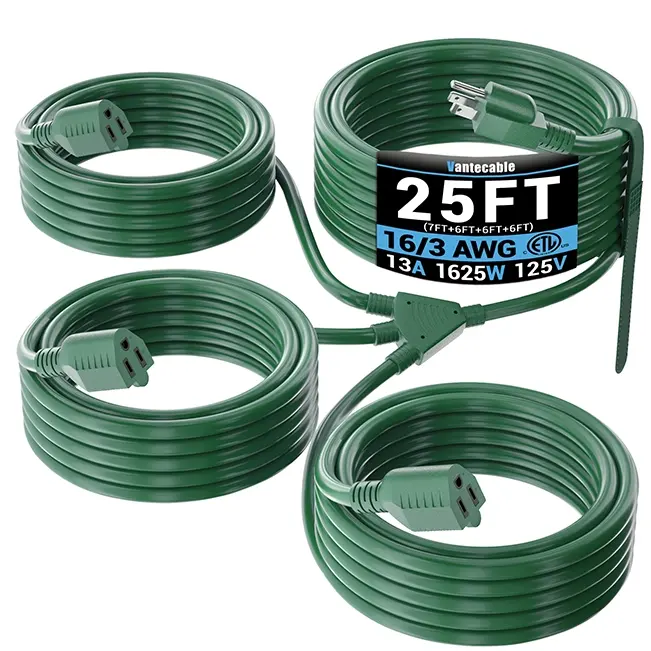
An extension cord with splitter branches sends power from one grounded plug to separate areas, which suits trees, inflatables and illuminated figures spread across a lawn. Each branch has its own grounded outlet, and the green 16/3 jacket blends into grass and shrubs. The 1-to-3 comes in 25 or 40 ft, and the 1-to-4 in 31 or 46 ft, both rated 13A, 125V and 1625W. Not sure which to pick? See 3-outlet vs. 1-to-4 splitters.
Extension Cords With Outlets Every Few Feet
Outlets every few feet turn one cord into a continuous power line for roofline lights, fence decorations, pathway lighting or campsite setups. The 14/3 versions offer 25 ft with 3 outlets, 50 ft with 6 and 75 ft with 9, rated 15A/1875W. The 16/3 versions offer 25 ft with 3 outlets and 50 ft with 6, rated 13A/1625W. Choose black or green. Lighted outlets, protective covers and hanging points are included on selected configurations.
LED Triple-Tap (Multi-Tap) Extension Cords
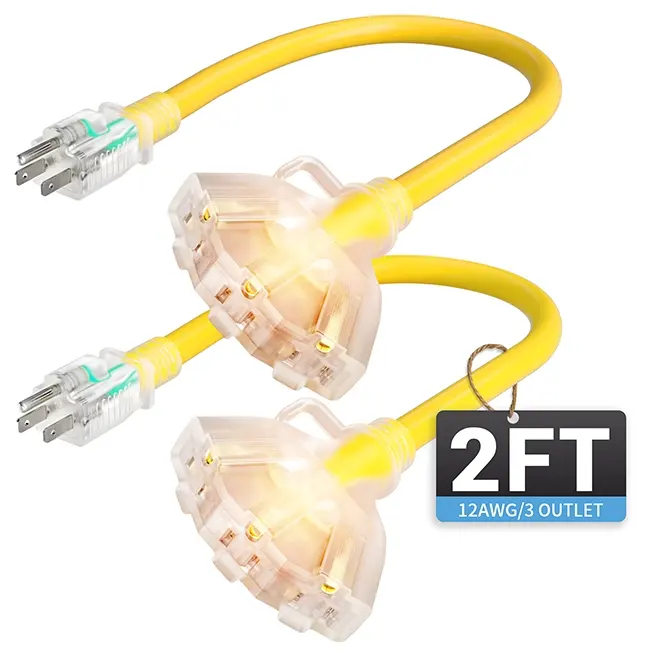
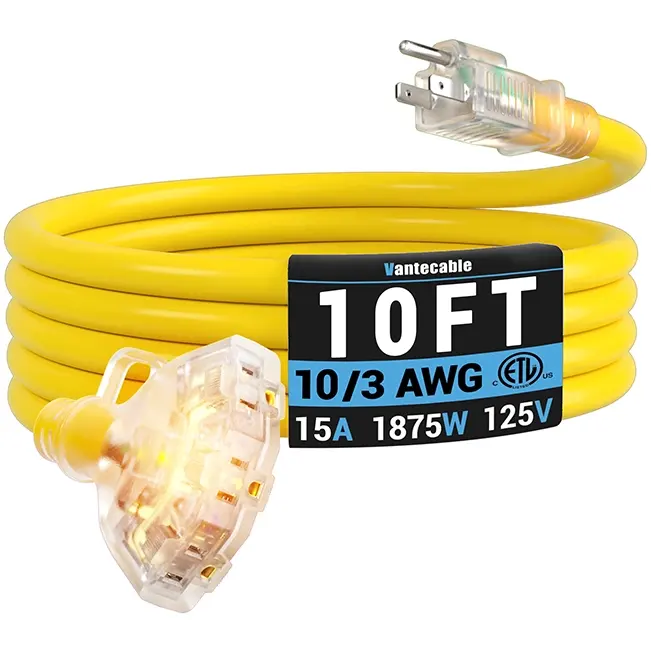
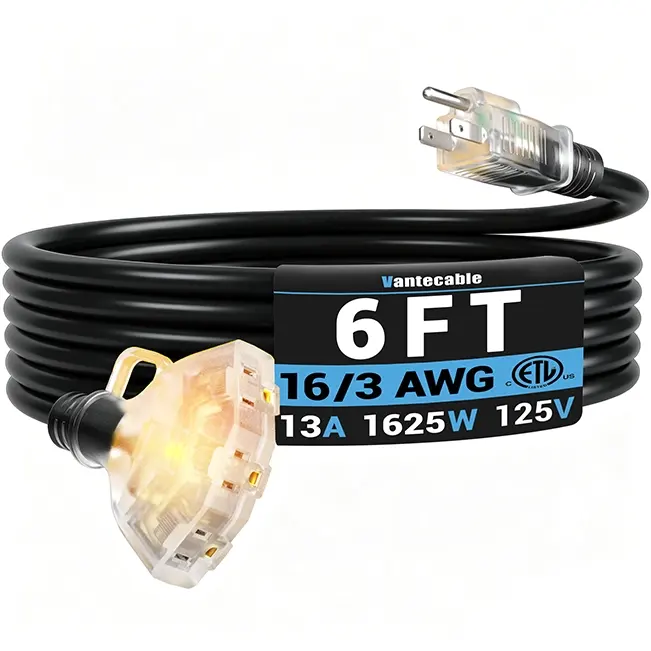
This 3-prong extension cord with multiple outlets places three grounded receptacles at the female end, which works when several devices sit in one area. LED indicators show that power reaches the outlet end, and the built-in hook lets you hang the connector from a compatible support to help keep it off the ground. The 10/3 yellow cord is available in 10–100 ft, the 12/3 yellow in 2–100 ft, and the 16/3 black in 6–100 ft.
Match Gauge and Amp Rating: 10/3, 12/3, 14/3 and 16/3
Use 16/3 or 14/3 for compatible lighting and seasonal displays, and a 10/3 or 12/3 heavy-duty extension cord with multiple outlets for longer outdoor runs. A lower AWG number means a thicker conductor. Always stay within the amperage and wattage on the cord’s rating label.
| Gauge | Layouts Available | Rating |
|---|---|---|
| 16/3 | Splitters, outlets every few feet, triple-tap | 13A / 125V / 1625W |
| 14/3 | Outlets every few feet (3, 6, 9) | 15A / 125V / 1875W |
| 12/3 | Triple-tap | 15A / 125V / 1875W |
| 10/3 | Triple-tap | 15A / 125V / 1875W |
The 10/3, 12/3 and 14/3 cords share the same 15A rating. The difference is conductor thickness: heavier 10/3 and 12/3 conductors can help reduce voltage drop over longer runs, while the total load must still remain within the cord’s 15A/1875W rating.
Short or Long Extension Cords With Multiple Outlets
Choose the shortest cord that reaches the location without stretching, pinching or crossing walkways. A 2–15 ft triple-tap fits devices grouped near the power source. The 25–50 ft cords cover porches, rooflines, trees and mid-size yards, such as a 50 ft extension cord with multiple outlets for a roofline. A 75 ft cord with 9 outlets or a 100-foot extension cord with multiple outlets (triple-tap) reaches wider layouts, with the load still limited by the cord’s rating.
Weather-Resistant Outdoor Cords for Rain, Cold and Dust
These outdoor cords are weather-resistant, not submersible. IP65-rated designs resist rain and splash, and the SJTW jackets stay flexible in cold weather. Selected models include outlet covers that help keep rain, snow and dust away from unused receptacles. Molded plugs and extended strain relief protect the plug-to-cord joint, and selected triple-tap models are tested for more than 20,000 bends.
Keep plug connections out of standing water, inspect the cord before each use and connect to a GFCI-protected receptacle. For rating details, see outdoor extension cord weather ratings.
Multi-Outlet Extension Cords for Christmas Lights and Yard Displays
Choose a Christmas light extension cord with multiple outlets according to the display layout: splitter branches for trees and yard figures, spaced outlets for rooflines and fences, and a triple-tap for lights grouped in one area. Green cords blend into lawns and shrubs, black cords are less visible on dark walls and fences, and yellow cords are easier to see, which can help users identify the cord route and reduce trip risk. The same cords also work for Halloween decorations, campsite lighting and compatible outdoor equipment. To keep the routing neat, read how to hide Christmas light cords.
FAQ About Outdoor Extension Cords With Multiple Outlets
What is an extension cord with multiple outlets called?
It is commonly called a multi-outlet extension cord. Depending on the outlet layout, it may also be described as an extension cord splitter, a 1-to-3 or 1-to-4 splitter cord, a triple-tap extension cord, or an extension cord with evenly spaced outlets.
Are extension cords with multiple outlets safe?
Yes, when the cord is rated for outdoor use, remains undamaged and is operated within its stated amp and watt limits. Use a grounded, GFCI-protected outdoor outlet, and remember that every connected device shares the cord’s total 13A/1625W or 15A/1875W rating. More outlets do not provide more electrical capacity. Keep plug connections off wet ground. If a connection may be exposed to rain or snow, see our outdoor extension cord plug protection guide.
How do extension cords with multiple outlets work?
One grounded plug carries power through the cord to several receptacles. These may be grouped in a triple-tap connector, spaced along the cable or separated into individual splitter branches. Each outlet receives power from the same source, so the combined load of all connected devices must stay within the cord’s total rating.
What is the best outdoor extension cord with multiple outlets?
The best option depends on the layout and electrical load. Splitter branches work well for decorations placed in different directions, evenly spaced outlets suit rooflines and fences, and triple-tap cords power several devices positioned together. Compare the gauge, amp rating, outlet layout and required length before choosing, or use our multi-outlet extension cord buying guide.
Can I use an extension cord with multiple outlets for Christmas lights?
Yes. An outdoor-rated multi-outlet cord can distribute power to Christmas lights, trees, rooflines, inflatables and yard decorations. Add up the wattage of everything connected, follow the light manufacturer’s string-connection limit and keep plug connections off wet ground.
Can I connect two outdoor extension cords together?
Do not daisy-chain outdoor extension cords. Choose one outdoor-rated cord with the correct gauge and enough length to reach the setup instead. Additional connections can introduce voltage drop, loose connections and overheating risks, especially when several devices share the same supply.