

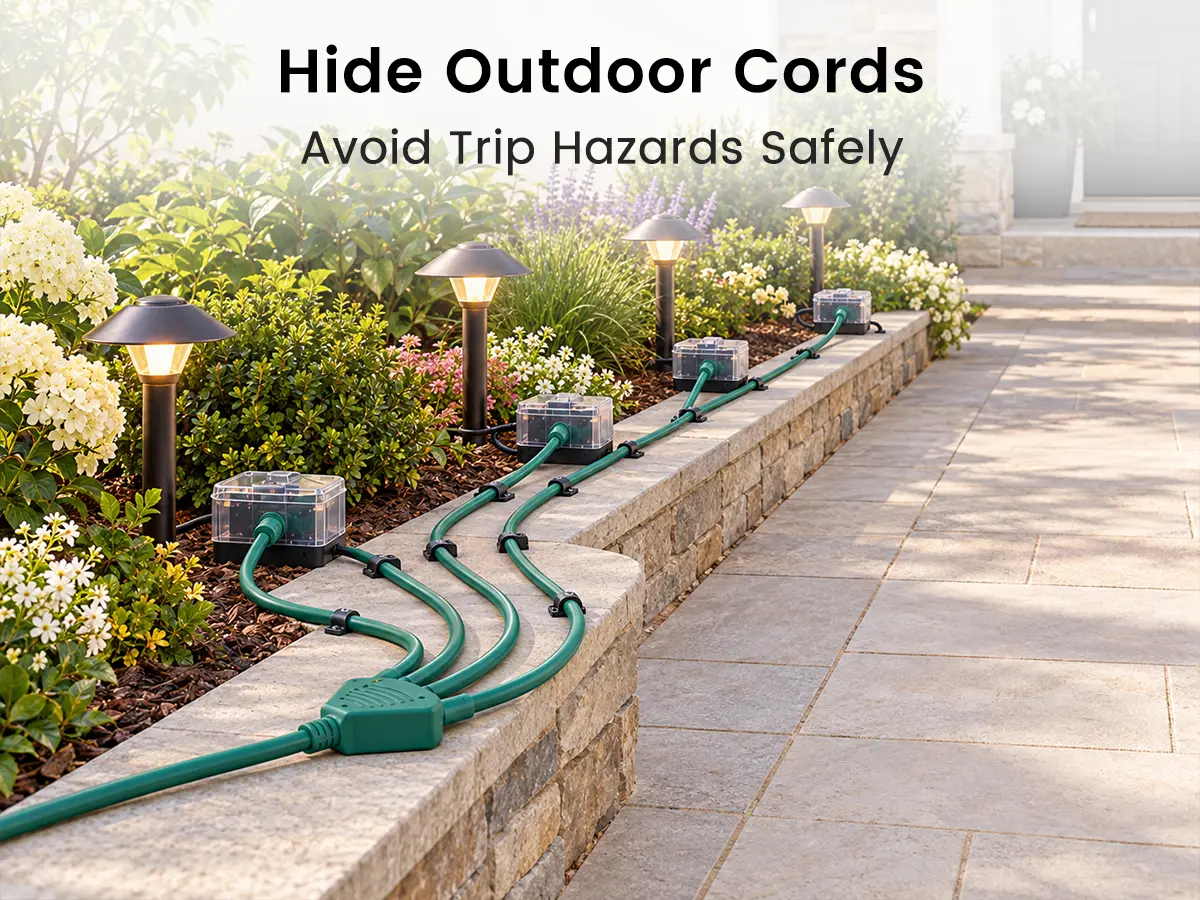
Christmas lights, inflatables and yard figures rarely sit near a single outdoor outlet, so the shortest cord path often crosses a walkway or a step. Knowing how to hide extension cords for outdoor Christmas lights comes down to routing them around walking areas instead of concealing them completely. Keep every extension cord trip hazard out of the walkway, run cords along yard edges where they stay visible and easy to inspect, and keep plug connections off wet ground. Never bury an ordinary extension cord, hide it under a doormat or mulch, or pinch it in a doorway.
Outdoor Extension Cords
Shop outdoor-rated cords for lights and yard decorations.
How Do You Plan Cord Routing Outside Around Walkways and Steps?
Keep cords off walkways, steps and driveways whenever possible. Plan cord routing outside along a wall, fence line or planting-bed edge. If the route still crosses foot traffic, move the decoration closer to the outlet. Use a purpose-built outdoor cable protector only when no alternate route exists.
Dividing the display into zones keeps routes from crossing each other. The table below divides a Christmas display into yard zones, with the emphasis on keeping each cord route away from foot traffic.
| Yard Zone | Decorations | Cord Direction | Main Check |
|---|---|---|---|
| Roofline and porch | String lights, wreaths, icicle lights | Follow the wall base to the point below the lights, then run the cord up the wall, clear of the door swing | Cord is not pinched by the door or hanging where people reach |
| Shrubs and planting beds | Net lights, tree wraps, small figures | Run along the bed edge instead of through the bed | Cord stays on the surface and in view |
| Lawn inflatables and ground decorations | Inflatables, yard figures, lit signs | Follow the lawn edge or fence line, then approach the decoration from the side away from the walkway | Cord is clear of the mower path, the driveway and low spots where water collects |
How Do You Hide an Outdoor Christmas Light Extension Cord Without Covering It?
To hide Christmas light cords safely, route them along lawn edges, shrubs, walls or fences where they blend into the background but remain accessible for inspection. A green outdoor Christmas light extension cord is difficult to spot along a lawn edge or at the base of shrubs, and a dark cord works along a shadowed wall base or fence. Covering a cord with soil, mulch, a doormat or a rug hides it from inspection as well as from view, which is why those methods are not used here. For general rules on cord condition and use, see the CPSC extension cord safety guide.
Once the route is set, fasten the cord only in ways that do not pierce or pinch the jacket, and leave slack at each plug so the connection carries no pull. Keep surplus cord outside the walkway and away from the entrance, because loose coils near the door are easy to miss.
The table below lists common Christmas cord-routing problems and the safer response for each situation.
| Route Problem | Hidden Risk | Better Response |
|---|---|---|
| Under soil, mulch or gravel | The cord cannot be inspected and can be cut by rakes or digging tools | Lay the cord on the surface along the edge of the bed |
| Under a doormat or rug | Wear goes unseen, and the raised spot is an extension cord trip hazard | Route around the entry, or use an existing outdoor outlet |
| Through a door, window or gate latch | Closing the door can pinch or crush the cord | Reposition the decoration or choose a different power source |
| Across steps or the middle of a walkway | Direct trip hazard, worse after dark | Detour along a wall, fence or bed edge |
| In standing water, snowmelt or drainage paths | Plug connections sit in water | Keep connections on higher, drier ground |
| In a driveway or mower path | Vehicles and mowers can run over or cut the cord | Run the cord along the edge farthest from vehicle and mower paths |
| Excess coils or a connection box at the entry | Dark coils and boxes are easy to miss and step on | Choose a length that fits the route and move connections away from the entrance |
Can an Outdoor Outlet Extender Reduce Extra Cords Across the Yard?
In this guide, an outdoor outlet extender means a multi-outlet extension cord. Vantecable’s 1-to-3/4 splitter cord places its outlets at intervals along the cord, so one run can reach the roofline lights and a nearby inflatable without a second cord from the house outlet. That keeps fewer cords crossing the yard, which matters more than the extra outlets themselves.
All devices on the cord share one rating. The nameplate watts of everything running at the same time, including the inflatable’s blower fan, must stay within the cord’s total rating shown on the card below. Light string makers also set a maximum number of strings that can be connected end to end, and that limit applies separately from the cord rating. More outlets add places to plug in, not more power, so no fixed number of light strings fits every display. For a full comparison of outlet counts, see our multiple outlet guide.
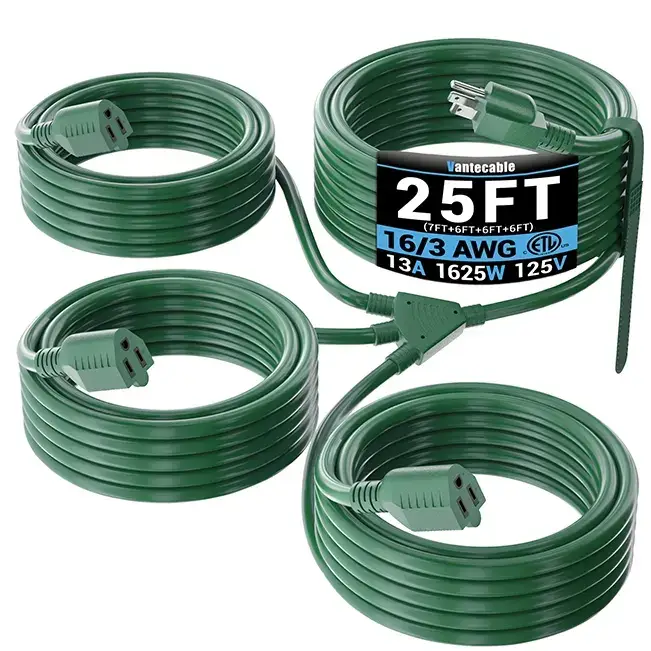
Vantecable 1-to-3/4 Splitter Outdoor Extension Cord
3 outlets on 25/34/40 ft · 4 outlets on 31/46 ft.
16/3 SJTW · Green · 13A / 125V / 1625W · ETL Listed (Intertek)
From $21.05
Shop Multi-Outlet CordCan an Outdoor Cord Cover Protect Christmas Light Plug Connections?
The term outdoor cord cover can refer to two different products: a plug connection cover or a cable protector/ramp. A plug connection cover helps protect the point where two plugs meet, while a cable protector manages an unavoidable cord crossing. Neither one makes an indoor cord suitable for outdoor use. A plug connection cover does not remove an extension cord trip hazard, and placing one in a walking path creates an obstacle. Route the cord first, then protect the connection. Place the cover where water does not collect and where nobody steps. After rain or snow, disconnect power from a dry upstream point before opening the cover, then check the lid, the seals and the cord entry points for moisture before relying on the cover again. Sizes and fit are covered in our connection box guide.
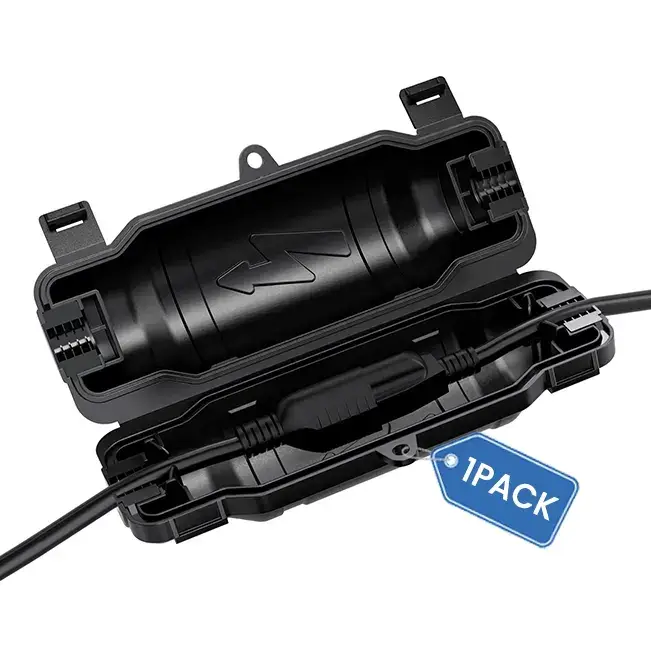
Vantecable Waterproof Outdoor Extension Cord Safety Cover
Keeps the plug connection dry and clear of the walkway.
IP54 weatherproof · Fits 12/14/16 AWG cords · Hinged lid, 2 latches · Rubber gaskets · 1–9 pack
From $9.99
Protect Your ConnectionHow Do You Check Cord Routing Outside Before Christmas Guests Arrive?
Walk the path guests will take from the driveway or sidewalk to the front door, instead of checking only near the outlet. In daylight, look for damaged jackets, low spots where water pools, mower and vehicle paths, cords pressed under decorations and extra coils left near the entry. Check again after dark, because a dark cord can be hard to see against lit decorations, and a cord you cannot see is still a trip hazard. Outdoor lights and decorations should also be plugged into a GFCI-protected outlet. Before guests arrive, use our Christmas yard checklist to inspect the rest of the display.
FAQ About Hiding Outdoor Christmas Light Extension Cords
Is It Safe to Plug Christmas Lights Into an Outdoor Extension Cord?
Yes, when the lights and cord are rated for outdoor use, the cord is undamaged, the circuit is GFCI-protected and the combined load stays within the cord’s rating. Treat the cord as temporary power: unplug it when the decorations are off, recheck it after rain, snow or any change to the display, and take it down when the season ends.
What If an Extension Cord Must Cross a Walkway?
Do not place a bare cord directly across a walkway. Reroute it or move the decoration first. If no alternate route exists, use a purpose-built outdoor cable protector or cable ramp rated for pedestrian traffic. Install it as directed and keep the crossing visible.
How Do You Secure Christmas Light Cords Along a Fence?
Run it along the base of the fence on the yard side, away from gates and mower paths. Fasten it as described above, with slack at the plugs and the surplus kept off the walkway.
Conclusion: How to Hide Extension Cords for Christmas Lights Safely
Mark the walking routes first, then run cords along the yard edges so they stay visible and easy to inspect. Add up the lights and inflatables running at the same time and compare the total with the cord’s rating. Check each light string’s connection limit separately. Use a plug connection cover only to protect a connection; it cannot correct a poor route or eliminate a trip hazard.
Safety note: Extension cords are for temporary use. Route cords clear of foot traffic, keep plug connections off wet ground, and unplug outdoor decorations when they are not in use. This guide is general information and does not replace the manufacturer’s instructions or local electrical codes.