

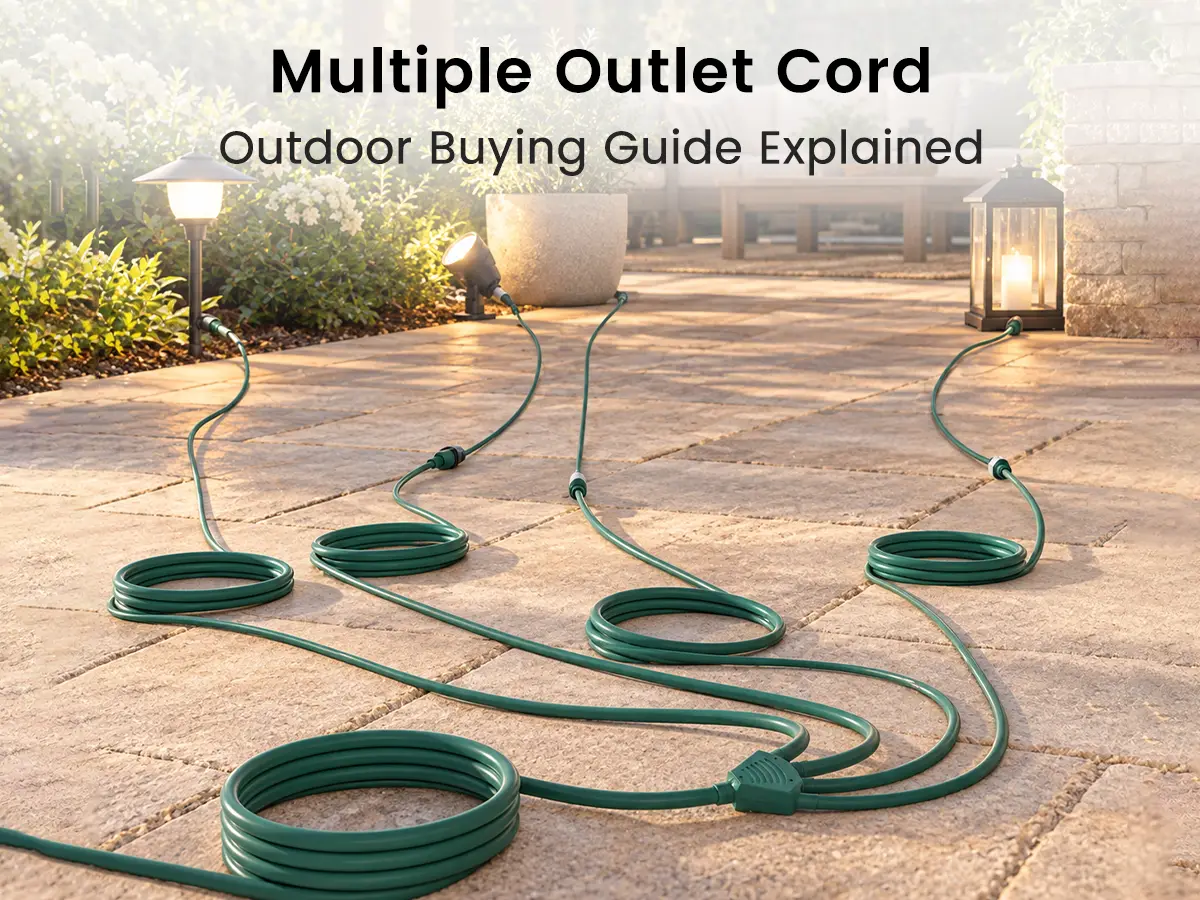
An extension cord with multiple outlets lets you power three or four outdoor devices from one wall outlet, as long as the cord is marked for outdoor use and the combined load stays within its rating. A power strip is made for indoor use and is the wrong tool for that job, which is why a multi outlet extension cord is the usual choice. This guide explains what the numbers on the jacket mean and how to pick a length and outlet count that stays within the rating. Vantecable’s 16/3 SJTW cord is the working example throughout, so you can compare real specs as you read.
Outdoor Extension Cords
Compare outdoor extension cords by length and outlet count.
What Is an Extension Cord With Multiple Outlets?
An extension cord with multiple outlets is a single cord with a plug on the supply end and a molded head on the other end that carries several receptacles. Instead of running three separate cords from one outdoor outlet, you run one cord and the outlets sit together at the far end.
The example cord in this guide is 16/3 SJTW, where SJTW is the jacket marking for outdoor use. Our SJTW extension cord guide breaks down each letter.
Is a Multiple Plug Outlet the Same as a Power Strip?
No. A power strip is an indoor product: a short cord feeding a bar of outlets, meant for a desk or the area behind a TV. A multi-outlet extension cord has its outlets in a molded head at the end of a longer cord and, when marked for outdoor use, is made for conditions a power strip is not. If you are deciding whether a cord you already own is suitable for an outdoor run, read our article on using an indoor extension cord outside.
Can You Use an Extension Cord With Multiple Outlets Outside?
Yes, provided the cord is marked for outdoor use. Outdoor suitability comes from three things: the jacket rating (SJTW or similar), the plug and connector construction, and a rating that matches the load you plan to run. A 16/3 multi-outlet cord is a legitimate outdoor product when the manufacturer lists it as one.
Extension cords are temporary power. They are not designed for direct burial or permanent underground wiring. A permanent underground run needs cable rated for direct burial and matched to the voltage, load and local electrical requirements.
What Makes a Multi-Outlet Cord Outdoor-Rated?
Two features decide whether a multi-outlet cord is suited to outdoor use. Check both before you buy.
Wire Construction, Gauge and Jacket
The first number in 16/3 is the AWG wire size, and a lower number means thicker wire that can carry more current. The second number is the conductor count: 3 means hot, neutral and ground, which you want on any outdoor product. The jacket marking, such as SJTW, shows the cord is intended for outdoor use.
Third-Party Certification
The cord should carry a recognized listing mark from an independent lab. Vantecable’s cord is ETL Listed (Intertek), and Intertek’s ETL Listed Mark FAQ explains what the mark covers. A cord without a listing mark has not been independently verified.
How Do You Choose an Outdoor Multi-Outlet Cord?
Start from the load, then work through the rating, length and outlet count. The table shows how the spec sheet of Vantecable’s 16/3 cord reads.
| Specification | Vantecable 16/3 Outdoor Multi-Outlet Cord |
|---|---|
| Outdoor suitability | Yes, rated for outdoor use |
| Wire construction | 16/3 AWG, three conductors (hot, neutral, ground) |
| Total rating | 13A, 125V, 1625W |
| Certification | ETL Listed (Intertek) |
How Many Devices Can You Run, and Do More Outlets Add Power?
More outlets do not add power. The outlets share one cord, so whether the head has three outlets or four, the total is capped by the cord’s rating, which is 1625W on this 16/3 cord, and by the branch circuit feeding it. The cord rating is the limit here, because it is lower than a standard 15A household circuit.
Plan in watts. Add up the wattage printed on the label of every device that will run at the same time, and keep the total under the cord’s rating. A device on one outlet reduces what is left for the others.
The Consumer Product Safety Commission’s extension cord safety publication names overloading as a common cause of overheating and advises checking the rating on the cord’s tag or packaging.
What Length Do You Need?
Length affects both reach and voltage drop, since a longer run loses more voltage. Pick the shortest cord that reaches your farthest device with a little slack. The distance from the outlet to that device matters, not the size of the yard, and extra length only adds cost and more cord to coil and trip over.
The table below lists the outlet count and typical use for each length.
| Cord Length | Outlets | Best For |
|---|---|---|
| 25 ft | 3 | Patios, porches and short yard runs |
| 31 ft | 4 | Small gardens and light holiday displays |
| 40 ft | 3 | Driveways, larger yards and multi-light setups |
| 46 ft | 4 | Long runs to a detached shed, dock or far corner |
Where Can You Use an Outdoor Multi-Outlet Cord?
Anywhere you need to split one outdoor outlet into several: patios and decks, landscape and garden lighting, workshops and garages, campsites and RV setups, and temporary job-site power for small tools and lights. Holiday and seasonal lighting is one of the most common uses, since several light strings spread across a yard can share one cord instead of needing separate cords.
How Do You Set Up a Multi-Outlet Cord Safely?
Check the plug, outlets and insulation for wear or damage before each use, and replace a damaged cord. Route the cord away from walkways so it does not become a trip hazard, and keep plug connections off the ground where water collects, such as low spots that hold snowmelt. Our outdoor extension cord weather ratings guide explains how outdoor ratings apply in wet conditions.
Is a 16/3 Multi-Outlet Cord Right for Your Setup?
It is the right choice if your loads are light to moderate, you need power in more than one place at the far end, and the cord will live outdoors. It is the wrong choice for loads close to the cord’s rating, such as space heaters or power tools that draw heavily.
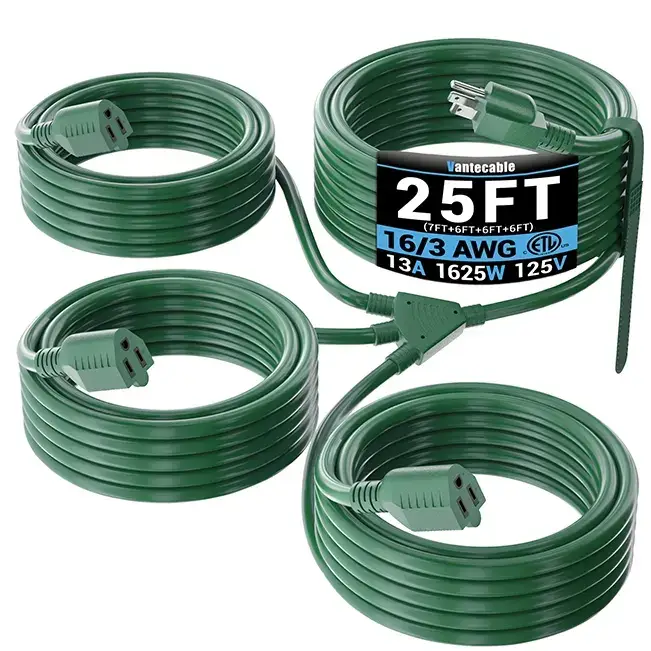
Vantecable 1-to-4 Splitter Outdoor Extension Cord
16/3 SJTW · 25–46 ft · Green · ETL Listed (Intertek)
From $21.05
View ProductFAQ About Extension Cords With Multiple Outlets
Can You Leave a Multi-Outlet Extension Cord Plugged In All the Time?
It is better not to. The CPSC describes extension cords as temporary power and advises unplugging a cord when it is not in use, because a plugged-in cord stays energized. If you need power in the same spot long term, a permanent outlet installed to local requirements is the better solution.
Can You Connect Another Extension Cord to a Multiple Plug Outlet?
You can, but it is not ideal. Each added connection is another point that can get wet or pull apart. If you need more reach, choose the correct length instead of joining shorter cords.
Can You Shorten or Repair a Multi-Outlet Cord Yourself?
No. The CPSC advises never altering a cord to change its length and warns against inadequate repairs such as taping damaged insulation. Replace a damaged cord instead.
Conclusion: Choosing an Extension Cord With Multiple Outlets
Match the cord to the job. Confirm the cord’s rating covers everything that will run at once, pick the shortest length that reaches your farthest device with a little slack, and buy a cord that carries a recognized listing mark. A multi-outlet outdoor cord is a simple way to power several things from one outlet without running separate cords across the yard.
Safety note: This guide reflects general U.S. electrical practice and the ratings printed on outdoor ETL-listed cords. Always follow the manufacturer’s instructions and your local electrical code. Extension cords are for temporary use and are not a substitute for permanent wiring.