

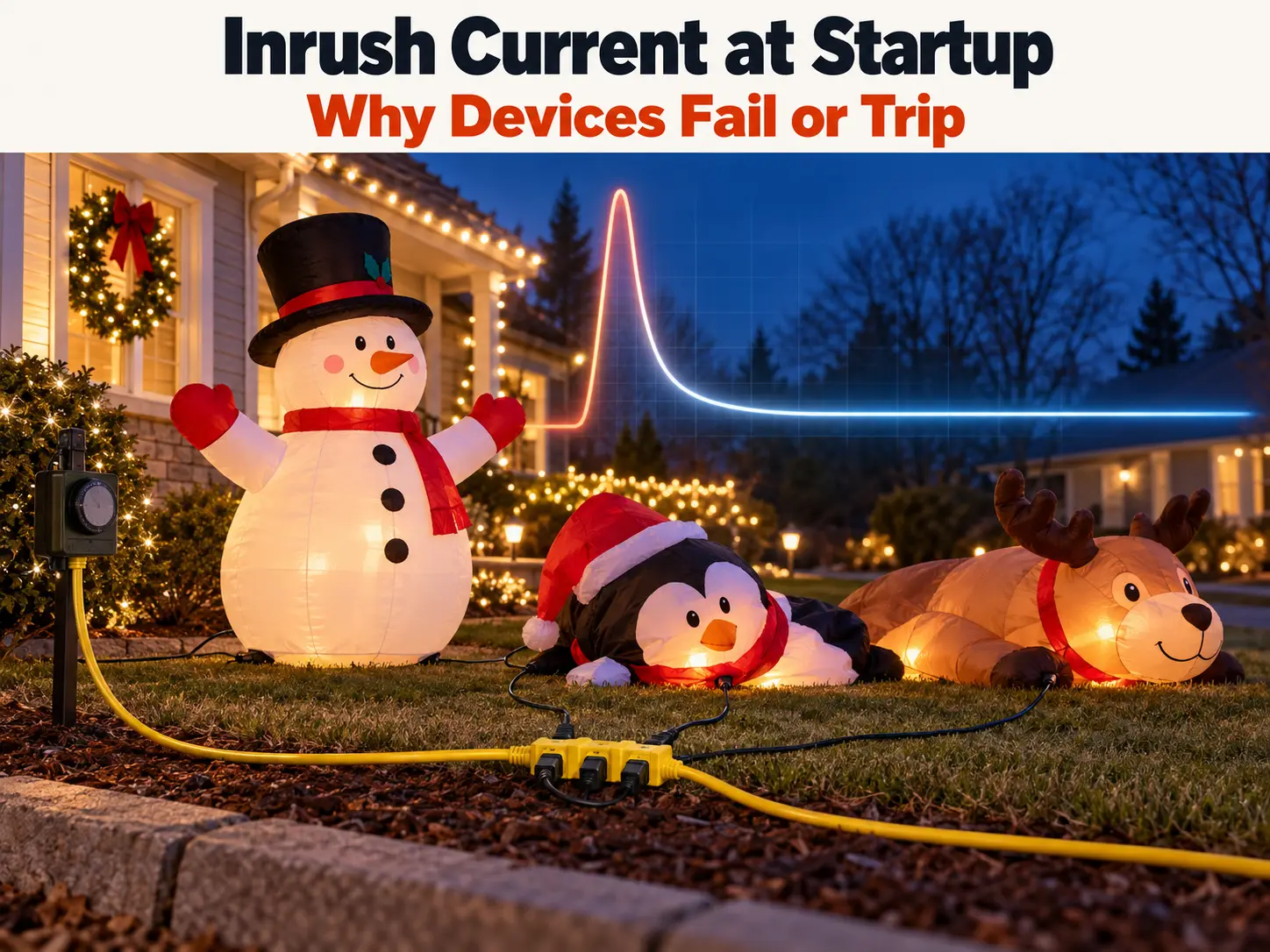
Inrush current is the brief rise in current that can occur when equipment is first energized. A device’s running wattage does not describe its startup demand, so equipment that looks modest in normal operation can still fail to start or trip a protective device.
Overlapping startup demands can make three inflatable decorations fail together when one timer switches them on, even though each device draws little power once it is running. The first step is to find out whether one device, a shared start or the supply path is involved, before changing the cord.
Find the Right Extension Cord
Compare lengths, wire gauges and outlet layouts for your setup.
Startup Current vs. Running Current on Equipment Ratings
Running current describes established operation, while startup current describes the first moments after power is applied. A device’s nameplate usually lists its rated input power or current rather than a separate startup-current value, so those ratings alone do not tell you how much current it draws as it starts.
Startup values cannot be estimated from the nameplate with a fixed multiplier. Manufacturers also use related terms such as peak current and locked-rotor current, and these are not interchangeable measurements. For motor starting current in particular, the value depends on the motor and the load it drives.
The manufacturer is the right source for these details. Before connecting several devices to one cord or timer, ask for the exact model’s rated input, how the startup values are defined and measured, any requirements for extension cords, and any limits on restarting. If the manufacturer publishes no startup data, contact its support team instead of using a general figure from another source.
Breaker Trips at Startup With One Device or Several Devices
Start by checking whether the breaker trips at startup with one device alone or only when several devices start together. Our breaker tripping guide covers total load and how the three outlets share one rating, so this section focuses on the startup moment.
The table below compares startup patterns to help decide what to check next. The patterns narrow the search and do not confirm a cause.
| Startup pattern | What it may indicate | What to verify next |
|---|---|---|
| One device trips protection as it starts | Equipment condition, starting demand or a supply problem | Device model, manufacturer instructions, which protective device operated |
| Devices start normally alone but fail when started together | Overlapping startup demand or another shared-supply issue | Timer behavior, other loads on the circuit, manufacturer startup information |
| A motor hums but does not reach normal speed | A starting or equipment problem | Stop use and contact the equipment manufacturer |
Motor Starting Current When One Device Struggles to Start
A single device that fails at startup points to the device itself, the cord path or the supply, not to overlapping starts. Think back to whether it ever started normally. A problem that began after moving the setup or changing the cord makes the supply path worth checking first. If nothing has changed, both the equipment and the supply path still need consideration.
If a device hums but does not reach normal speed, or its housing becomes unusually warm, disconnect it and contact the manufacturer. Restarting it repeatedly to see whether it trips again does not identify the cause and can damage the equipment.
Simultaneous Startup Current When Several Devices Start Together
When one timer or switch energizes several devices at once, their startup demands overlap and add together on the same cord and circuit. Devices already running on that circuit keep drawing their normal current during the startup, so they remain part of the load.
If each device starts normally on its own but they fail together, overlapping starts are a likely factor. Use each manufacturer’s startup information to judge whether a shared start is reasonable, and apply the staggered approach described later in this guide.
Why Lights Dim When Motor Starts and How Extension Cord Voltage Drop Fits In
A brief voltage sag is the most likely reason lights dim when a motor starts, and it can come from the cord, the branch circuit or the supply upstream. Higher current during startup increases the voltage lost along the conductors.
Compare the cord’s length and marked rating with the equipment’s requirements first, with the power disconnected, because extension cord voltage drop depends on the length of the run and the current it carries. Look for discoloration or damage at the plugs and connectors, and note any extra cords or adapters added to the run.
A voltage-drop estimate based on gauge, length and load is a planning figure. It does not replace a measurement taken during startup and cannot identify a loose connection. If the lights dim repeatedly, a connection becomes warm or other outlets are affected too, have a qualified electrician check the circuit.
Staggered Startup and Overlapping Startup Current
Yes, for equipment that supports normal separate starting, staggered startup can reduce how much the startup demands overlap. It does not lower the running load, and it does not guarantee that a protective device will stay on.
Startup Sequence That Reduces Overlapping Starts
Starting one device at a time, and waiting until it reaches normal operation before starting the next, reduces overlap. Follow each manufacturer’s instructions for the order and any waiting time, because the right interval depends on the equipment and no single delay suits every device. If one device cannot start normally on its own, resolve that problem first, since changing the order will not correct it.
Automatic Restart When a Timer Brings Startups Back Together
A shared timer can do this. Starting the devices one at a time by hand does not change what the timer does at its next scheduled on-cycle, which may energize all of them together again. Whether equipment restarts by itself after a power interruption depends on the device and its controller, so check the manual. If the setup fails only on timer cycles, check the timer’s instructions for the type of load it can switch, because a wattage or amperage limit alone does not show that it suits motor-driven devices, and ask the device and timer manufacturers whether the devices may share that timer.
How to Choose a Multi-Outlet Extension Cord After Ruling Out Startup Problems
After checking startup behavior, confirm whether the existing cord matches the equipment manual’s length and gauge requirements. A 10 AWG cord is worth considering when the manual calls for heavier-gauge wiring over the intended run.
Vantecable’s 10/3 and 12/3 triple-tap cords both carry a 15A / 125V / 1875W total rating. Neither product page provides a separate motor-starting specification, so use the equipment manufacturer’s startup information when assessing the setup.

Vantecable 10/3 Lighted Triple-Tap Extension Cord
Three outlets and a lighted end, with 10 AWG conductors for setups that call for this gauge.
10 AWG · SJTW · Three outlets · LED indicator at the triple-tap end · 15A / 125V / 1875W total · ETL Listed (Intertek)
From $27.99
View the 10/3 CordInrush Current FAQ
What Is the Difference Between Inrush Current and Surge Current?
When “surge current” refers to the initial current drawn at switch-on, it means inrush current. Inrush current describes the brief startup demand when equipment is first energized. A voltage surge is different: it is a rise in voltage.
Can You Measure Inrush Current With a Multimeter?
Not reliably. Inrush current measurement needs a meter with an inrush or triggered-capture function, because a normal current reading can miss the brief startup event. The Fluke inrush measurement guide covers clamp meters with that function. Check the meter manufacturer’s specifications, and leave measurements on live wiring to a qualified electrician.
Do You Size a Breaker for Inrush Current?
Not by choosing a larger breaker. A breaker’s rating is set by the circuit’s wiring and electrical code, and it responds to both the current level and how long it lasts, so a brief startup peak does not necessarily trip it. If startup trips continue, have a qualified electrician review the circuit. Do not install a higher-rated breaker to stop them.
Conclusion: Check Inrush Current Before Changing the Setup
Inrush current makes startup a separate condition from normal operation. Establish whether the problem involves one device or several receiving power together, then check the manufacturer’s startup data and the supply path. Where separate starting is permitted, check whether a shared timer or automatic restart will bring the devices back on together. Choose the cord after those requirements are clear.
Safety note: This article gives general troubleshooting information and does not replace the equipment manufacturer’s instructions or local electrical codes.