

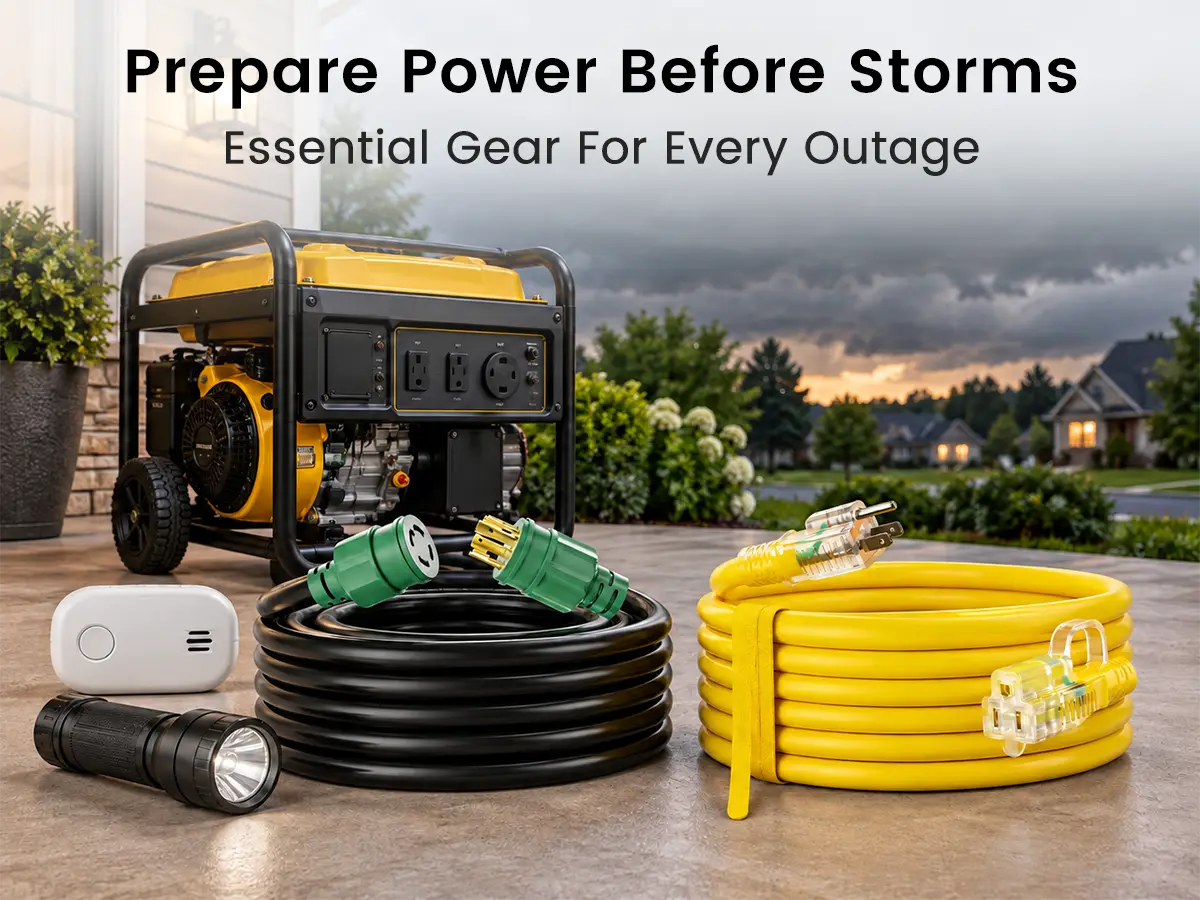
Power outage checklist: Before hurricane season brings a storm to your area, prepare the electrical gear that keeps essential loads supported without improvised connections. Identify the generator outlet, the inlet or equipment connection, the load, and the outdoor cord route before the forecast changes. A cord is only appropriate when its plug configuration, rating, condition, and intended use all match the equipment it connects.
This power outage checklist focuses on safe pre-storm electrical preparation rather than improvised connections after the outage begins.
For additional compatible options, start with the Emergency Power Cords collection.
Power Outage Preparedness Starts With Essential Loads
An effective power outage checklist begins with needs, not cable length. Write down the equipment that matters during an outage: lighting, phone charging, a refrigerator or freezer plan, a weather radio, and any other essential household load that your backup-power setup is designed to support. The CDC recommends planning for lighting, backup charging, a weather radio, carbon monoxide detectors, refrigerator thermometers, and, where used, a generator with outdoor-rated extension cords. The CDC power-sources checklist is a useful starting point for the non-cord items in the kit.
Do not turn this list into a promise that every appliance can run at once. Generator capacity, branch-circuit arrangement, connected loads, and a home’s transfer equipment all affect what can be powered. Record the actual nameplate information from each essential device and follow the generator manufacturer’s instructions. If an item is medically necessary or part of a permanently wired home system, confirm the plan with the equipment manufacturer and a qualified electrician before storm season.
Emergency Power Checklist: Record the Outlet Before Buying a Cord
Take a clear photo of the generator receptacle and the inlet or equipment plug you intend to connect. Then write down the exact configuration rather than relying on a label such as “30 amp” or “50 amp.” A 30A locking connector, a four-prong 30A outlet, a 50A 14-50 receptacle, and a shore-power inlet are not interchangeable simply because their current ratings sound similar.
Your list should include the generator outlet configuration, the required cord-end configuration, voltage, amperage, cord length, and whether the cable will remain outdoors. This prevents a common hurricane-season mistake: buying a high-capacity-looking cord and discovering that it cannot physically or electrically connect to the setup.
If you still need to determine conductor size for a compatible generator connection, see generator cord gauge. That article covers gauge selection; this checklist stays focused on storm preparation and connection planning.
Hurricane Electrical Safety: Inspect Cords and Connectors Before the Storm
Do the inspection while there is daylight and time to replace damaged equipment. Unplug each cord and look along its full length for cuts, crushed insulation, flattened sections, exposed conductor, loose strain relief, heat damage, corrosion, and connector housings that no longer close securely. Check both blades or pins and the grounding contact. A lighted female end can show that power has reached that connector, but it does not confirm proper grounding, polarity, voltage quality, or the condition of the equipment downstream.
For hurricane electrical safety, plan the route as carefully as the connection. Keep cord runs away from standing water, sharp edges, vehicle paths, doors that can pinch the jacket, and areas where a cord may be buried under rugs or debris. Use only cords intended for outdoor use when the route is outdoors, and keep connections supported and protected from water according to the product instructions. Never use a damaged cord as a temporary solution during a storm.
This hurricane electrical safety step is most effective when the route is planned and inspected before severe weather arrives.
Portable generators require a separate safety plan. The American Red Cross advises operating a generator outside, away from doors, windows, and vents; it also warns against backfeeding power into a home through an outlet. Use the generator manufacturer’s instructions and a qualified electrician for any transfer-switch or inlet-box installation. Read the Red Cross safe generator use guide before the season starts.
Generator Cord Matching: 15A, 30A, and 50A Connections
The purpose of a generator cord is to make a matching, intended connection. First match the plug and receptacle configuration. Then confirm voltage and current requirements. Finally, select a cord length that reaches safely without forcing the connection, creating a trip path, or routing the cable through a wet or damaged area.
A standard 5-15 household-style extension cord may be appropriate only for compatible 120V, 15A equipment and its matching receptacle. It does not become a 30A or 50A supply cord because it has a thick jacket or a large conductor size. Likewise, a 30A generator cord must match the generator’s specific 30A outlet; L5-30 and L14-30 have different configurations and should not be treated as substitutes.
Wattage ratings depend on the connector, so use the rating of the cord you are buying. Vantecable’s 30A L5-30 generator cord (10/3 AWG) is rated 30A at 125V, up to 3,750W. The 30A L14-30 cord (10/4 AWG) is rated 30A at 250V, up to 7,500W. The 14-50P-to-SS2-50R cord (6/3 + 8/1 AWG) is rated 50A at 125/250V, up to 12,500W. These are cord ratings, not a guarantee that your generator, outlet, or connected circuit can deliver that much continuously, so work to the lowest applicable rating and your generator manual.
| Connection task | What must match | Do not assume |
|---|---|---|
| Generator to inlet | Plug type, receptacle type, voltage, and amp rating | A higher-looking amp rating means compatibility |
| Generator to appliance | Device plug, cord rating, and outdoor-use designation | A household-style cord can deliver 30A or 50A |
| Equipment-side extension | 15A plug limit, appliance load, and cord condition | 10/3 or 12/3 changes a NEMA 5-15 plug rating |
30A Generator Cord for Matching Twist-Lock Outlets
Choose a 30A locking generator cord only after identifying the outlet. A 10/3 L5-30 generator cord is for the matching L5-30 connection. A 10/4 L14-30 generator cord is for the matching L14-30 connection. The additional conductor and connector configuration matter. Do not force incompatible plugs together. If your generator outlet differs from the cord you own, match the cord to the outlet rather than stacking adapters. An adapter should only be used if it is listed for that exact conversion, and the cord’s own 30A rating still limits the circuit.
For the equipment-side portion of the plan, a 12/3 outdoor extension cord with a lighted end is intended for compatible 15A, 125V devices (up to 1,875W), subject to the product specifications and device nameplate. It is not a substitute for a dedicated 30A generator cord or a means to deliver full 30A service to a household-style receptacle.
For a practical 30A storm-prep setup, this pair covers the generator-to-inlet connection and separately connected, compatible 15A equipment.
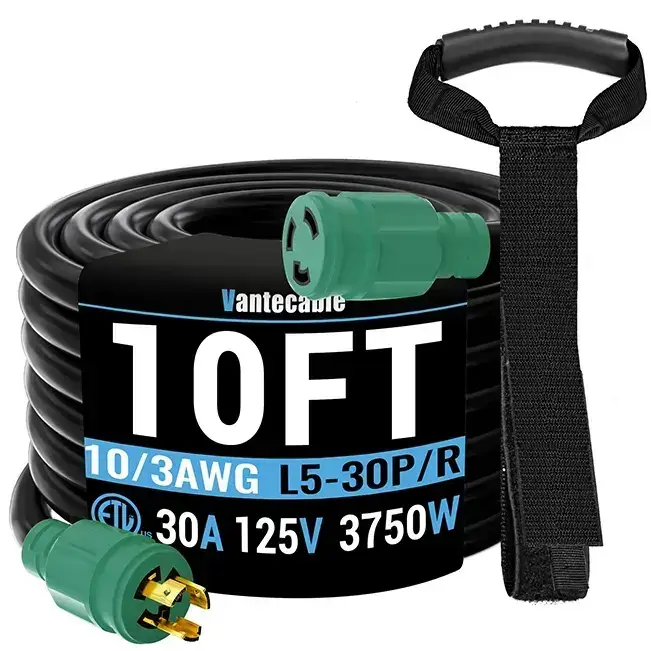
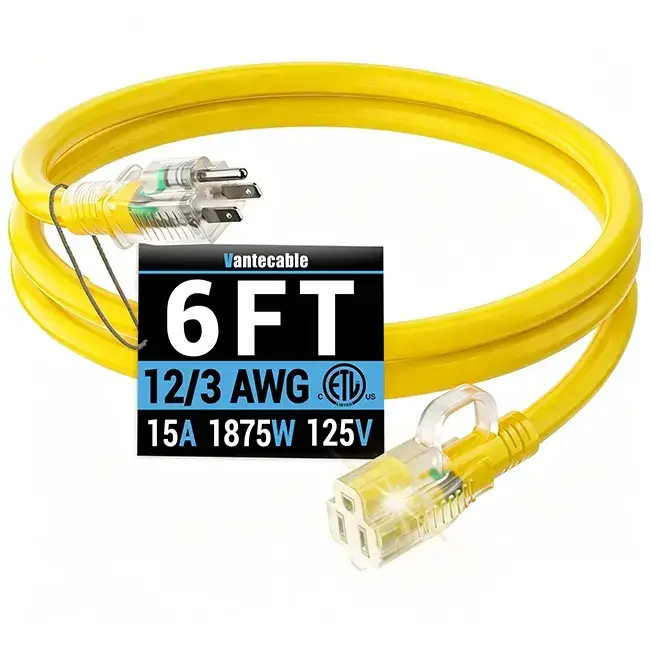
30A Locking Connection Set
Choose the generator cord that matches your outlet, then add a 12/3 lighted cord for separately connected, compatible 15A equipment.
50A Generator Cord for a Matching Power Inlet
For an intended 50A inlet-box or shore-power style connection, confirm every connection point before selecting the cable. The 14-50P-to-SS2-50R cord is built for that specific pairing: a 14-50P plug for a 50A generator outlet and a twist-lock SS2-50R connector for a matching 50A inlet. It uses 6/3 + 8/1 AWG conductors and is rated 50A at 125/250V, up to 12,500W. It is not a way to turn a 15A, 30A, or otherwise nonmatching receptacle into a 50A connection. Connecting a 30A cord to a 50A outlet through an adapter does not change the cord: it remains a 30A cord.
As part of an emergency power checklist, stage this cord only when the generator source and receiving inlet are already compatible. Inspect the locking connector, sealing surfaces, cable jacket, and strain relief before use. If the home connection is new, permanently wired, or uncertain, pause and have a qualified electrician confirm the installation.
For a 50A storm-prep setup, this pair separates the matching inlet connection from the 15A equipment-side extension needs.
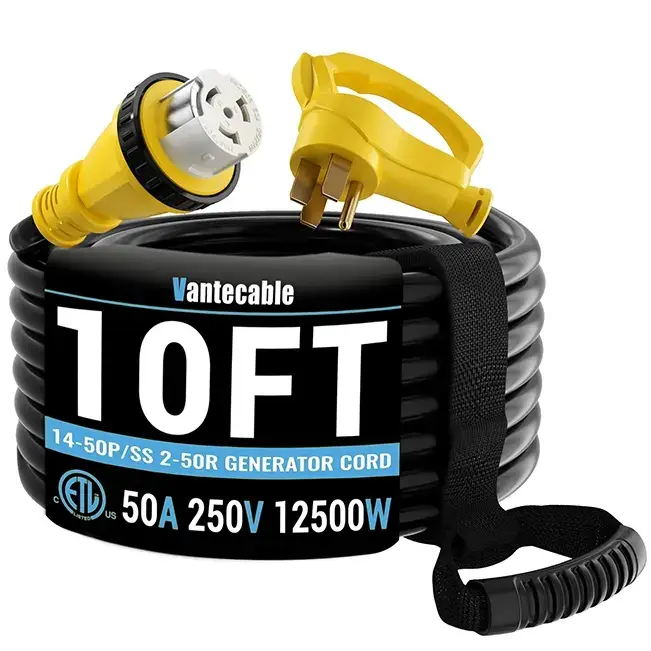
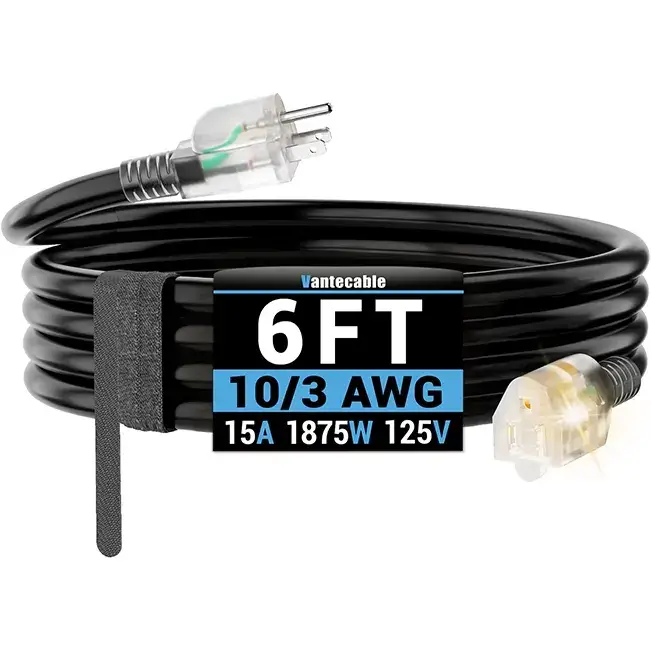
50A Inlet Connection Set
Choose the 50A inlet cord option, then add a 10/3 lighted cord for separately connected, compatible 15A equipment.
Emergency Power Checklist: Plan the Cord Route and Length
Measure from the generator’s outdoor operating location to the intended inlet or equipment connection before you buy. The shortest route is not automatically the safest one. Allow for a route that keeps the generator outdoors, away from openings into the home, and clear of walkways and vehicle traffic. Do not run a portable generator in a garage, basement, shed, or enclosed porch, even if doors are open. Keep the run only as long as it needs to be. Longer runs add resistance and voltage drop, and Vantecable’s L5-30 cord lists a reduction from 30A to 25A for lengths over 50 feet. CDC’s power-sources checklist calls for at least 20 feet of outdoor-rated extension cord, so the generator can sit well away from doors, windows, and vents.
For each cord, label the destination and its intended use. A simple tag such as “inlet,” “refrigerator,” “lights,” or “charger station” reduces guesswork when a storm interrupts normal routines. Store each cord coiled loosely and dry, with connector ends protected. Before use, fully unroll any cord that will carry a load, because a coiled cord under load traps heat.
Place equipment-side cords where they can be seen and unplugged easily. Do not route them through closed windows or doors where the insulation can be crushed. Do not use a cord to bypass a tripped breaker, GFCI, a damaged outlet, or a required transfer device. These are signs to stop and inspect the system, not reasons to add another adapter.
Power Outage Preparedness: Complete the Pre-Storm Check
- Confirm the generator manual, rated outlets, fuel plan, and outdoor operating location.
- Confirm the exact plug/receptacle configuration for every generator cord and inlet connection.
- Inspect extension cords and connectors; remove any damaged item from the emergency kit.
- Separate dedicated generator cords from household-style equipment-side extension cords.
- Identify essential loads and record their nameplate requirements.
- Test flashlights, battery packs, weather radio, and carbon monoxide alarms according to their manufacturer instructions.
- Keep cords and connectors elevated, dry, and away from flood-prone areas.
- Save the collection page and keep the correct cord information with your generator documentation.
This checklist does not replace local evacuation orders, electrical-code requirements, or generator instructions. When flooding, damaged service equipment, downed lines, or water intrusion are present, keep clear and contact the appropriate local utility or qualified professional.
FAQ
What should I stock up on for power outages?
Start with the items that support safe communication, lighting, food-temperature awareness, and the backup-power plan you already have: batteries or power banks, flashlights, a weather radio, carbon monoxide alarms, refrigerator thermometers, and matching outdoor-rated cords for compatible equipment. For generator use, also confirm fuel storage and the manufacturer’s maintenance requirements. Avoid buying electrical adapters or cords until you know the exact outlet and inlet configurations.
What are essential things to buy for a power outage?
Essential purchases depend on the household plan, but the electrical portion should include reliable lighting, charging capability, weather information, carbon monoxide protection, and correctly matched cords. Do not treat a generator as a stand-alone purchase: you also need a safe outdoor location, the correct connection method, and a way to identify the loads it can support.
What should be in a power outage kit?
Include emergency lighting, battery backup, a weather radio, supplies for communication, carbon monoxide alarms, and a written list of essential equipment. Add a generator cord only when it matches the generator outlet and intended inlet or equipment connection. Store it with its use label so no one has to guess during an outage.
How do I prepare for 72 hours without power?
Prepare an emergency kit and a written plan for lighting, charging, food-temperature checks, communication, and essential household needs. Test the backup-power setup before hurricane season. If using a generator, run it only outdoors and follow the generator manufacturer’s instructions; do not backfeed a home through a wall outlet.
Can I use a regular extension cord with a generator?
Not as a substitute for a generator cord. A standard household extension cord is not designed for the sustained 30A or 50A output of a generator and cannot replace a dedicated generator cord, a transfer switch, or a power inlet. A heavy-duty outdoor extension cord can serve a single compatible device plugged into a matching 120V outlet on the generator, as long as the load stays within the cord’s rating. Vantecable’s lighted 10/3 and 12/3 outdoor cords use NEMA 5-15 plugs and are rated for 15A, so add up your device’s running and starting watts before connecting it.
Conclusion
A useful power outage checklist turns storm preparation into a series of verified matches: essential load to power plan, generator outlet to cord, cord to inlet or equipment, and route to safe outdoor use. Make those checks before hurricane season, keep electrical gear organized by purpose, and replace questionable cords before they are needed. Explore Emergency Power Cords to complete a compatible setup.