

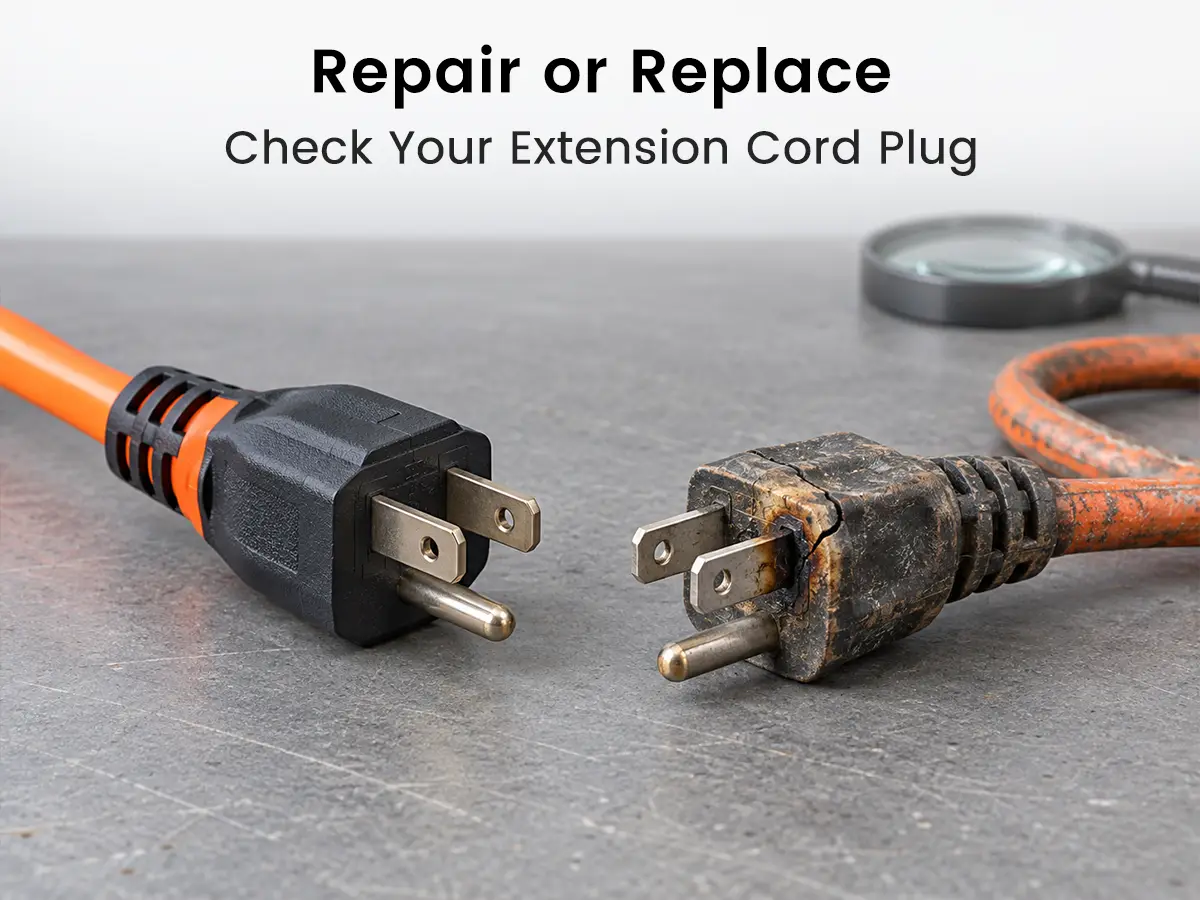
Most damaged extension cord plugs mean a new cord, not a repair. A plug that wobbles in the outlet, a cracked housing, or a plug that feels warm after a few minutes of use all point to that, and replacing an extension cord plug is worth considering only when the damage is confined to the plug, the manufacturer allows it and the new end matches the cord exactly. Burn marks, melting, exposed conductors or damage along the cable always mean the whole cord should go.
Need a Replacement Cord?
Outdoor-rated cords for tools, lights and holiday displays.
Does Your Extension Cord Plug Have Any of These Problems?
Unplug the cord and inspect the plug and the first few inches of cable before deciding anything:
- Prongs that are loose, bent, corroded or missing
- A housing that is cracked, melted or discolored
- A plug that runs hot or gives off a burning smell
- A sheath that is cracked or pulling away at the base of the plug
- Cuts, flattened spots or abrasion anywhere else on the cord
A hot plug can also point to an overloaded cord, an undersized cord or a poor outlet connection. If the cause is unclear, stop using the setup; see our guide to extension cord overheating for a closer diagnosis. The table shows how each finding usually plays out.
| What you find | Where it is | Usual decision |
|---|---|---|
| Bent prong, no other damage | Plug blade only | Replace the cord; end replacement only if the manufacturer allows it |
| Cracked housing, cord intact | Plug body | Replace the cord; end replacement only if the manufacturer allows it |
| Loose or corroded prongs | Plug body | Replace the cord |
| Discoloration, melting or burn smell | Plug and nearby cable | Replace the cord |
| Cracked sheath at plug base | Plug and first inches of cable | Replace the cord |
| Exposed conductors or cuts | Cable body | Replace the cord |
When Can Extension Cord Replacement Ends Be Considered?
For most damaged plugs, the right answer is a new cord. A replacement end is worth considering only when the damage is limited to the plug, the cable is undamaged along its full length, the manufacturer states that the end can be replaced, and a matching end exists. Cords with molded plugs are generally not built to be opened, so most plug damage ends the cord’s service life. If you cannot confirm all four points, replace the cord. If you are unsure about any of them, a qualified electrician can tell you whether the cord is worth keeping.
When Should You Replace the Whole Extension Cord?
Replace the whole cord when you see burn marks, melting, exposed conductors or damage in more than one place on the sheath. The same applies when the cord or connector has been submerged or exposed to floodwater, when you cannot read its rating, or when you cannot tell how far the damage extends. Heat damage at the plug often travels into the cable, where it cannot be seen from outside. OSHA’s page on flexible cord hazards describes the shock and fire risks that come with damaged cords.
What Must Match When Replacing a Three Prong Plug?
A replacement end has to match the cord in every item below, not just the plug pattern. A plug that fits the outlet but is rated lower than the cord, or built for a different cable diameter, leaves the cord only as capable as its weakest part.
| Check | What must match | Why it matters |
|---|---|---|
| Conductor count | Same number of conductors as the cord | A three-conductor cord needs a three-conductor end |
| Grounding configuration | Ground conductor connected to the ground pin | Keeps the ground path intact |
| Plug pattern | Same NEMA configuration as the original | Fits the intended outlet and load |
| Voltage and current rating | At or above the cord’s rating | The lowest-rated part sets the limit |
| Cord gauge | Compatible with the conductor size (for example 16/3 or 12/3) | Loose or oversized terminals create heat |
| Cable diameter | Fits the strain relief and clamp | Prevents pull-out at the plug |
| Indoor or outdoor marking | Outdoor-rated end for an outdoor cord | Indoor ends are not built for weather |
| Manufacturer instructions | Replacement allowed for that cord | Some cords are not meant to be reopened |
Never convert a three-prong plug to a two-prong one, and never cut off the ground pin to make a cord fit an ungrounded outlet. Both remove the grounding path. The CPSC’s extension cord safety publication covers the basics of using cords within their ratings.
How Do You Choose a New Cord Instead of Replacing an Extension Cord Plug?
If the damaged cord needs replacing, match the new cord to the equipment’s plug, load, required reach and operating location. Choose an outdoor-rated cord for outdoor use and the shortest length that reaches without tension. Check the complete cord’s marked voltage and current rating, rather than choosing by gauge alone.
Was the damaged cord powering one tool, or three outdoor lights in separate parts of the yard? If the old cord powered several temporary lights or decorations in different spots, a 1-to-3 outdoor extension cord can replace the worn cord and provide three connection points along one new temporary power route. Check the outlet spacing and the combined load before buying, and select a length with three outlets. Shop the outdoor splitter cord →
Can a Cord Cover Protect an Intact Extension Cord Plug Outdoors?
A cord cover can protect a compatible, intact outdoor plug connection from weather exposure. An outdoor cord cover cannot repair a burned, loose, corroded or damaged extension cord plug, and it cannot make a damaged plug safe to use. Replace or resolve the damaged cord first, then check the cover’s fit and intended use in our connection box guide.
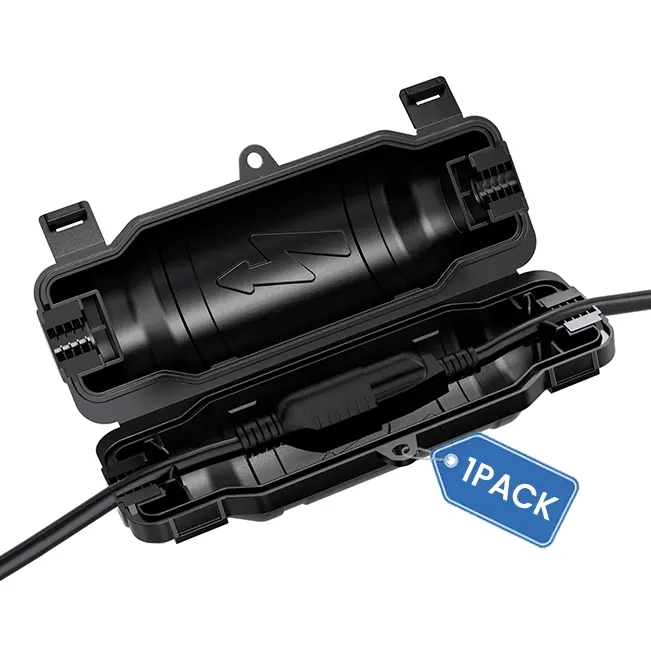
Vantecable Outdoor Extension Cord Safety Cover
Fits 12/14/16 AWG plugs with a snap-lock closure and double seals.
IP54 · Snap-lock · Double seals · Fits 12/14/16 AWG · 1–9 packs
From $9.99
Protect Your ConnectionFAQ About Replacing an Extension Cord Plug
Can a Molded Extension Cord Plug Be Replaced?
Usually not by the user. A molded plug is formed onto the cable and is not designed to be opened, so a damaged one normally means replacing the cord. Even when a manufacturer offers a replacement end for a specific cord, replacing only one end makes sense only if the other end, the cable and the rating all check out.
Is a Male Replacement Plug the Same as a Female Connector?
No. The male plug goes into the outlet, and the female connector receives the plug of the device or another cord. They are different parts with different housings, so a replacement has to be the same type as the end it replaces.
Does Replacing an Extension Cord Plug Change the Cord’s Rating or ETL Listed Status?
It can change both. The cord can only carry what its lowest-rated part allows, so a replacement end rated below the cord’s gauge and current lowers the usable rating. ETL Listed (Intertek) applies to the cord as it was tested and certified, and a field-replaced end changes that assembly, so do not assume the listing carries over. Ask the manufacturer before treating a modified cord as still listed.
Conclusion: Replace the Cord When Plug Damage Is Not Isolated
Most damaged plugs are a reason to replace the cord. A replacement end is a narrow exception for damage confined to the plug, with the manufacturer’s approval and an exact match. A cord cover is for connections that are already intact. If your current cord has failed, shop extension cords to find a replacement that fits the distance and load.
Safety note: This article describes general inspection and replacement practice, not a substitute for the cord manufacturer’s instructions or local electrical codes. Take a damaged cord out of service, and have any replacement end installed or verified by a qualified person.