

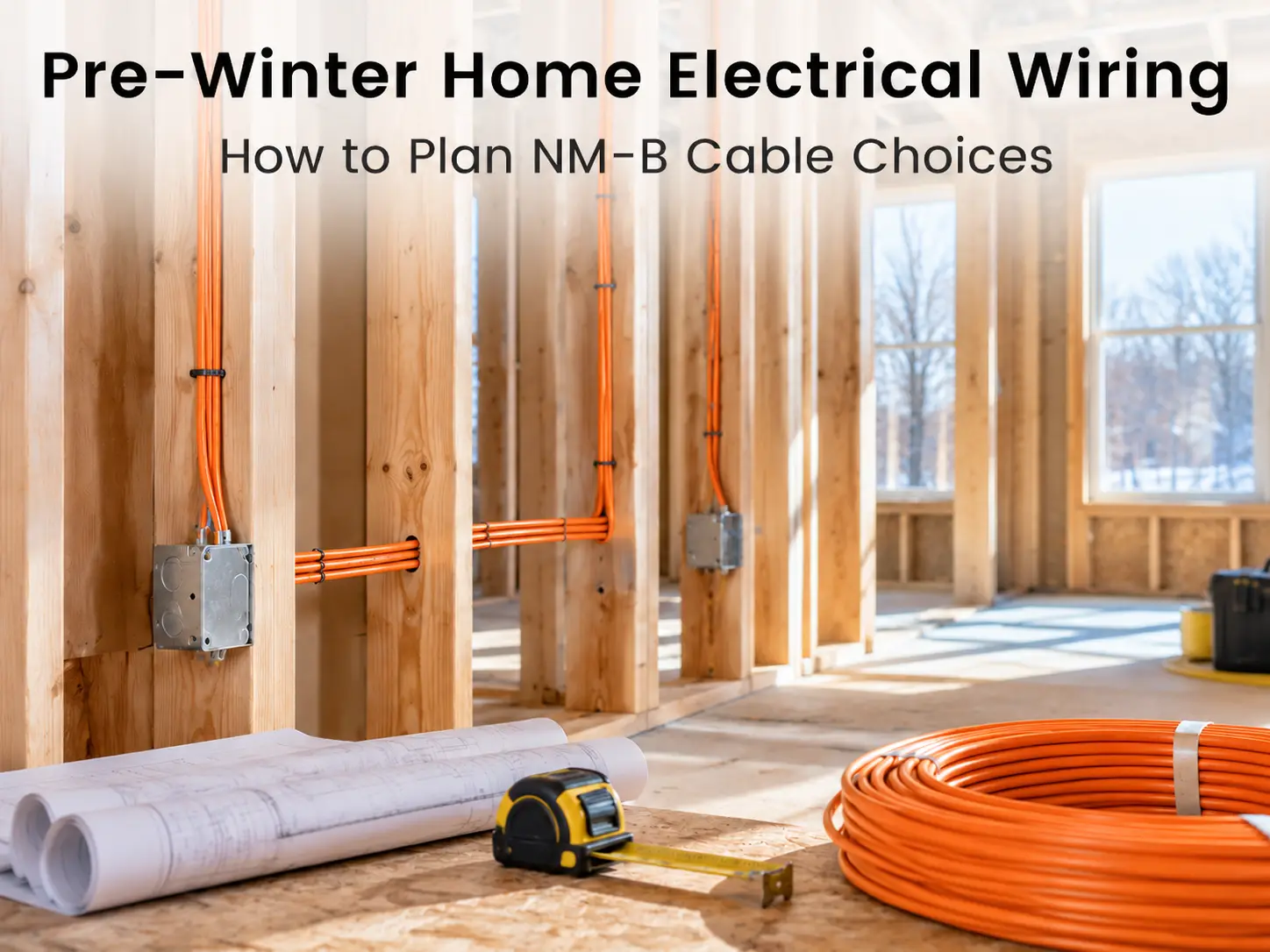
For home electrical wiring, match NM-B wire to the circuit it will serve, not just the room where it will be installed. 14/2, 12/2 and 10/2 NM-B cover different circuit ratings, and all three are for permitted indoor dry-location installations.
Whether you are adding hallway lights, installing home-office receptacles or replacing a fixed appliance before winter, this guide explains where NM-B wire fits, which size to consider and what to compare before you buy.
Find Wire for Your Next Home Project
Compare NM-B cable sizes and lengths for indoor residential wiring.
What Does Your Home Electrical Wiring Project Need to Power?
Start with the lighting, receptacles or equipment you want to add, then determine whether a suitable existing circuit can supply them or a new circuit is needed. Most home projects fall into three groups.
Supplemental lighting is the most common. A dark hallway, a closet with no fixture or a ceiling light that needs to move during a renovation all add a lighting load. That load can often be supplied from a suitable existing circuit, but only after you confirm what the circuit already carries.
Adding or moving receptacles is the second group. A spare bedroom that becomes a home office, furniture that blocks an old outlet or a renovated room with awkward outlet positions all lead to new receptacles. A new outlet does not add capacity; the circuit remains limited by its wiring and overcurrent protection, as explained in ESFI’s electrical system guide. It shares whatever the circuit can already deliver, so a computer, monitor and space heater on one circuit still draw from one breaker.
Fixed equipment is the third group. A replacement electric water heater or another hard-wired appliance comes with its own instructions for circuit rating, conductor size and conductor count, and those instructions take priority over general rules of thumb.
Each of these projects may extend an existing circuit or call for a new one. The room name does not set the wire size. The circuit rating and the equipment do.
What Is NM-B Wire, and Where Can You Use It?
NM-B wire is a nonmetallic-sheathed cable used for permanent residential wiring in dry locations. Common applications include ceiling lights, wall receptacles and compatible fixed appliances, with cable routed through permitted indoor wall cavities and ceiling spaces.
The three Vantecable sizes in this guide use solid copper conductors: two insulated conductors and a bare ground conductor inside one jacket. The "/2" in 14/2 NM-B, 12/2 NM-B and 10/2 NM-B counts only the insulated conductors. A cable marked “12/2 with ground” therefore contains three conductors in total.
The entire cable route matters, even when the equipment is indoors. If part of the run passes through a damp location or continues underground to a detached building, NM-B cannot serve that section. See our UF-B Buying Guide for cable options suited to those conditions.
Which NM-B Wire Fits a 15A, 20A or 30A Circuit?
Match the cable to the circuit rating first. The table connects common home projects with the NM-B size to consider.
| Home Wiring Project | Circuit Rating | NM-B Cable to Consider |
|---|---|---|
| Add ceiling lights, hallway lights or bedroom receptacles to a suitable 15A circuit | 15A | 14/2 NM-B with ground |
| Install a 20A receptacle circuit for a home office or a kitchen small-appliance circuit | 20A | 12/2 NM-B with ground |
| Supply a fixed 240V water heater whose instructions specify a 30A circuit, 10 AWG copper and no neutral | 30A | 10/2 NM-B with ground |
These examples assume a permitted indoor dry-location installation that needs two insulated conductors plus ground. Confirm the complete circuit design, the equipment instructions and your local requirements before ordering.
Should You Use 12 or 14 Gauge Electrical Wire?
For ordinary residential copper branch circuits, 14 AWG suits a 15A circuit and 12 AWG suits a 20A circuit. The deciding factor is the circuit's overcurrent protection, not the device you plan to plug in today.
A 20A circuit still needs appropriately sized wiring even if it currently powers only one lamp. The breaker protects the circuit wiring, so its rating must match the wire—not just today’s connected load. For ordinary residential copper branch circuits, do not use 14 AWG on a 20A breaker. Follow the National Electrical Code edition adopted locally.
When Does a Home Electrical Wiring Project Need 10/2 NM-B?
10/2 NM-B is commonly considered for a fixed 240V electric water heater when its installation instructions specify a 30A circuit, 10 AWG copper conductors and no neutral.
In that setup, the cable’s two insulated conductors supply the two hot connections, and the bare conductor provides equipment grounding. The cable must also follow a permitted indoor dry-location route.
Other appliances may need a different conductor configuration even when they use a 30A circuit. If the equipment requires two hot conductors, a neutral and a ground, 10/2 does not provide enough insulated conductors. Match both the wire gauge and conductor count to the installation instructions.
Which Vantecable NM-B Wire Should You Buy for Your Project?
Each Vantecable NM-B cable is solid copper with a ground conductor, intended for indoor dry-location wiring. Each size has a different jacket color and its own set of coil lengths, so confirm the coil you want on the product page.
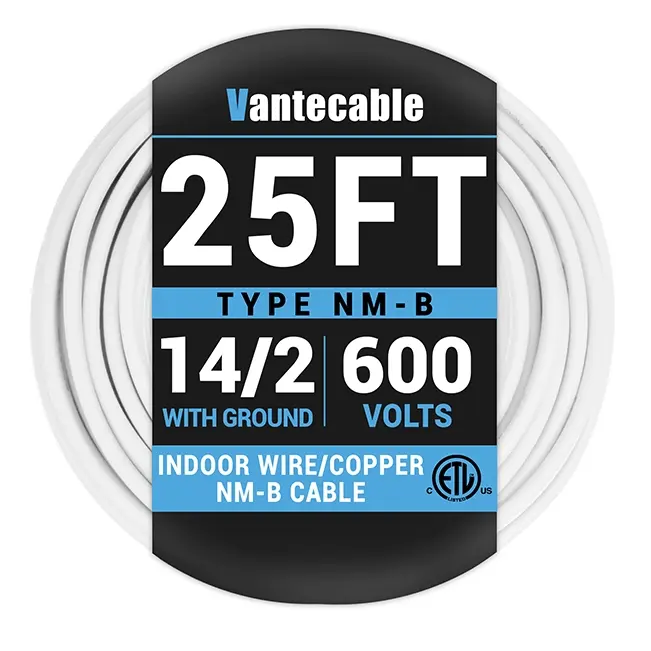
Vantecable 14/2 NM-B Wire With Ground
Solid copper NM-B cable for suitable indoor residential wiring projects.
14/2 AWG with ground · Solid copper · 25 / 50 / 100 / 250 ft · ETL Listed (Intertek)
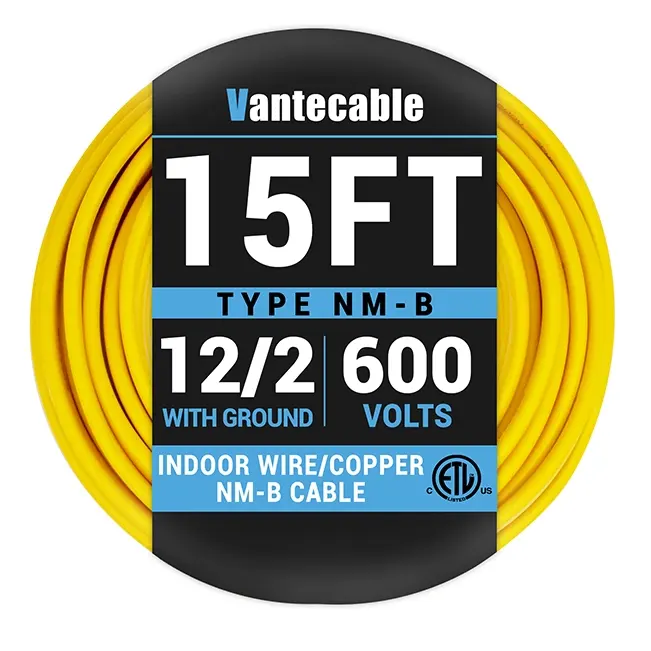
Vantecable 12/2 NM-B Wire With Ground (Yellow)
Compare coil lengths for projects specifying 12 AWG NM-B cable with ground.
12/2 AWG with ground · Solid copper · 15 / 25 / 50 / 100 ft · ETL Listed (Intertek)

Vantecable 10/2 NM-B Wire With Ground (Orange)
Solid copper cable for compatible circuit designs requiring 10 AWG NM-B with ground.
10/2 AWG with ground · Solid copper · 25 / 50 / 100 ft · ETL Listed (Intertek)
What Should You Compare When Buying NM-B Wire?
Compare the required cable specification first, then coil length, total price and price per foot. Size and conductor count come from your circuit, so they are not negotiable. Only after they are fixed does it make sense to compare coils of the same specification.
Check conductor material when comparing prices, too. Our copper vs CCA guide explains the material differences; this article’s circuit-selection table applies to copper NM-B.
The price shown on each product page applies to the selected coil, so check it after you choose a length.
How Much NM-B Cable Should You Order?
Order by the path the cable will actually travel, not by the straight-line distance between two points. Cable leaves a panel or device, climbs framing, crosses joists and drops into boxes, and every one of those segments counts.
For each circuit, write down the project, the wire size, the conductor configuration, the route length, the extra length needed at each connection and the coil length you plan to buy. Keep circuits separate. A 14/2 run for lighting and a 12/2 run for receptacles are different purchases, so do not add their footage into one total. For long runs, voltage drop may call for a larger wire than the breaker alone would suggest, which is a question for the circuit design stage rather than the shopping stage.
If your project also includes a buried supply to a shed or detached garage, plan that portion separately using our underground wiring guide.
Home Electrical Wiring FAQ
How Often Should You Rewire Your House?
You do not need to rewire your house on a fixed schedule. Replace or upgrade wiring when an inspection identifies deterioration, unsafe alterations or wiring that cannot support the planned electrical demand.
Age is a reason to assess the installation, not an automatic deadline for a full rewire. An electrician can determine whether the work involves one circuit, several sections or the whole house.
Can Wire Be Too Big for Home Electrical Wiring?
Yes. A heavier wire can be wrong for a particular terminal, junction box or device. Larger conductors may not fit the terminals on a receptacle or switch, and they take up more space in a box.
Buying thicker wire is therefore not a universal upgrade. Check the conductor range the terminal accepts, the space available in the box and the equipment requirements before choosing a larger size.
Can You Upgrade an Electrical Panel Without Rewiring the Whole House?
Yes. An electrical panel can be upgraded while existing branch-circuit wiring remains in place, provided that wiring is suitable for continued use and meets the requirements of the project.
Damaged wiring, unsuitable circuits or additional work required by local rules may still need correction. A higher-capacity panel does not increase the capacity of existing branch-circuit wires.
Conclusion: Choose NM-B Wire for the Circuit You Actually Need
Good home electrical wiring starts with the load you want to add. Identify the lighting, receptacle or fixed-equipment project, confirm the cable stays within an indoor dry route, then match the wire size, conductor count and purchase length to the circuit. With those checked, 14/2, 12/2 and 10/2 NM-B each have a clear job.