

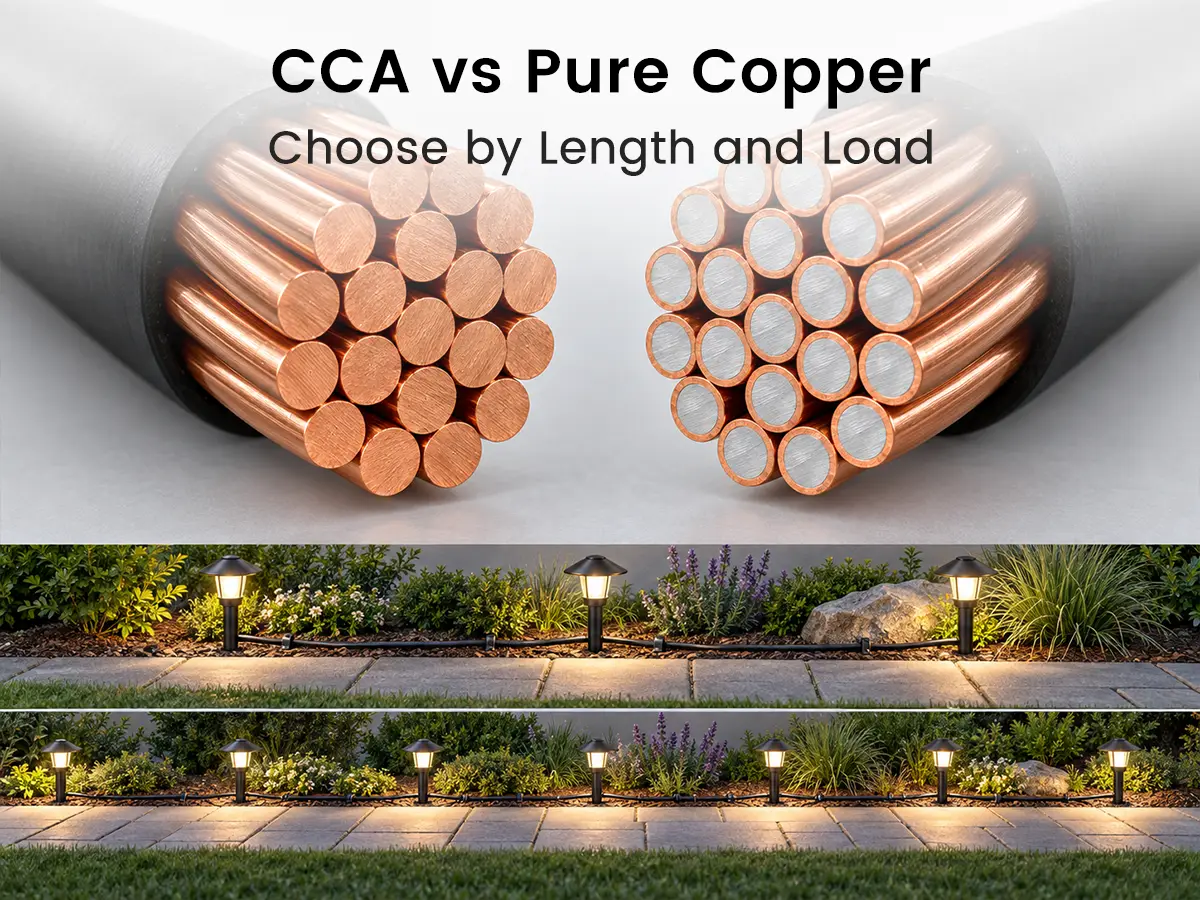
Copper clad aluminum vs copper wire is a common question when selecting materials for low-voltage lighting and electrical connections. The main difference comes from the conductor material: copper provides lower resistance at the same size, while CCA (copper-clad aluminum) offers a lighter and lower-cost alternative for certain applications.
For low-voltage projects, the right choice depends on more than the wire material alone. Cable length, connected load, voltage-drop requirements and installation environment all affect whether copper or CCA is the better fit.
Copper vs CCA Wire: What Is the Difference?
The main difference between copper and CCA wire is the conductor material.
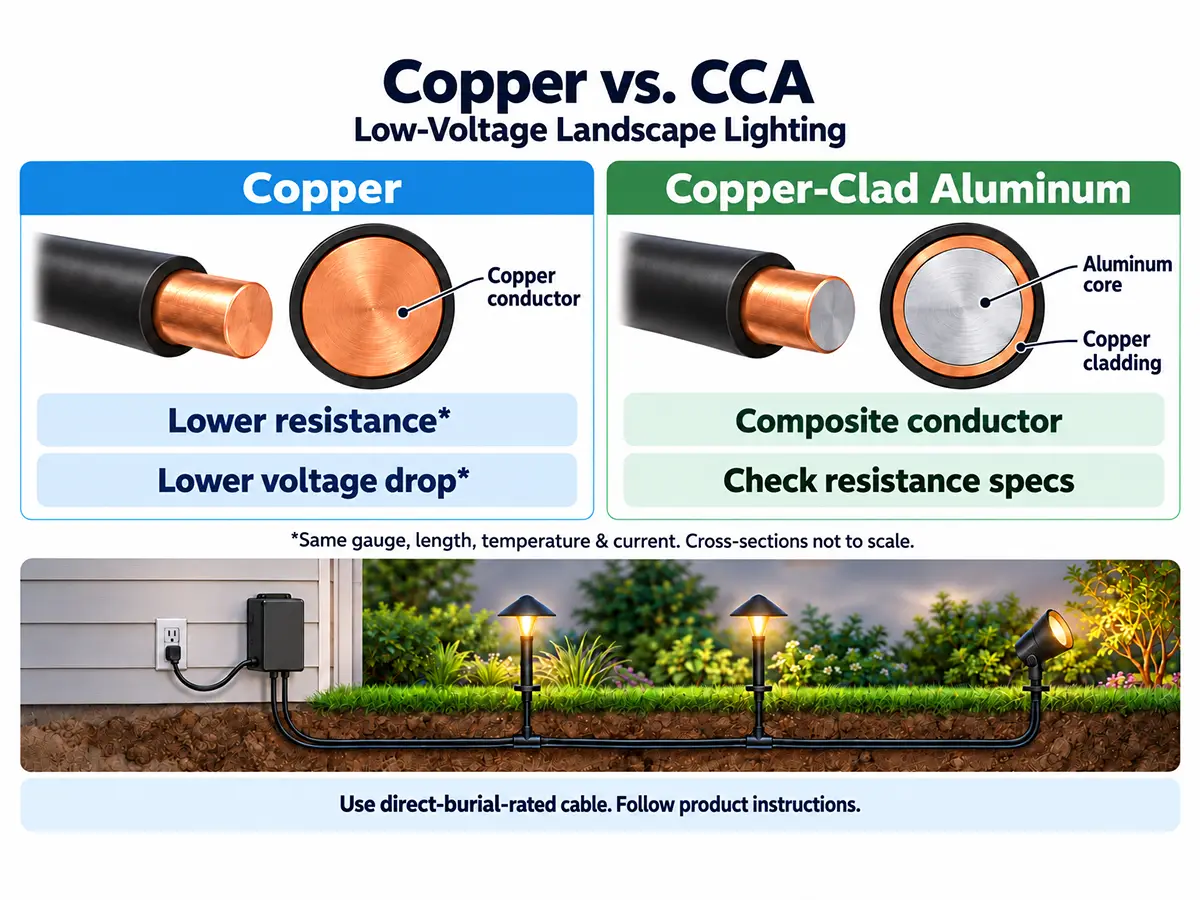
Copper wire uses copper as the primary conductor. Copper has lower electrical resistance, which helps reduce voltage loss when current travels through a cable.
Copper clad aluminum (CCA) wire uses an aluminum core with a copper outer layer. This construction reduces weight and material cost while maintaining a copper surface around the conductor.
When comparing copper vs CCA wire, the AWG number alone does not describe the complete electrical performance. Two wires with the same gauge can behave differently when the conductor materials are different.
The term CCA landscape wire may appear in searches related to outdoor lighting, but the phrase itself does not define whether a product is suitable for a specific installation. The actual product specifications, conductor material and installation requirements determine the intended application.
Copper and CCA are different conductor options. The right selection depends on the requirements of the project rather than a simple comparison of which material is universally better.
How Does CCA Compare With Copper for Voltage Drop?
One of the biggest practical differences between CCA and copper is voltage drop.
When two wires have the same gauge, length and electrical load, the conductor with higher resistance loses more voltage along the cable. Because CCA generally has higher resistance than copper, it typically experiences greater voltage drop under the same conditions.
This difference becomes more noticeable in low-voltage systems. A 12V lighting circuit has less voltage margin than a higher-voltage system, so conductor resistance can have a greater impact on the voltage reaching the fixture.
| Factor | Copper Wire | CCA Wire |
|---|---|---|
| Conductor material | Copper | Aluminum core with copper cladding |
| Resistance at the same size | Lower | Higher than copper |
| Weight | Higher | Lower |
| Material cost | Usually higher | Usually lower |
| Voltage drop under the same conditions | Lower | Higher |
For a specific lighting project, voltage drop depends on the actual wire size, cable length, connected load and operating conditions. A voltage drop calculator can help compare how conductor size, distance and load affect the final voltage.
For low-voltage lighting, the important question is whether the cable can deliver the required voltage at the farthest fixture.
Why Does CCA Cost Less Than Copper Wire?
The cost difference between CCA and copper wire mainly comes from the materials used in the conductor.
Copper is a higher-cost raw material, while aluminum is lighter and generally less expensive. By using an aluminum core with a copper outer layer, CCA can reduce material cost and overall cable weight compared with a solid copper conductor.
This makes CCA suitable for some applications where weight and upfront cost are important factors.
However, initial cost is only one part of the decision. If a project involves longer cable runs, higher loads or tighter voltage-drop requirements, the conductor’s electrical characteristics become more important.
The best material choice is the one that matches the requirements of the application.
How Do Length and Load Affect CCA vs Copper Performance?
Cable length and electrical load determine how much conductor resistance affects a lighting system.
A short connection with a small load places different demands on a wire compared with a longer run supplying multiple fixtures. As distance increases, resistance accumulates along the cable, making conductor material more important.
CCA vs Copper for Longer Runs
At the same gauge and length, CCA generally produces more voltage drop than copper because it has higher resistance.
For shorter, lower-load connections, the difference may be less significant depending on the equipment requirements. For longer runs or projects where voltage at the farthest fixture is important, copper can provide more electrical margin.
When comparing materials, consider:
- Cable length
- Connected load
- Required operating voltage
- Acceptable voltage drop
For more information about selecting landscape lighting wire, review our landscape wire buying guide.
Does ETL Listed Mean Outdoor or Direct Burial Rated?
An ETL Listed (Intertek) mark indicates that a product has been evaluated according to applicable safety requirements. However, ETL Listed does not automatically mean a wire is waterproof, direct burial rated or suitable for every outdoor environment.
Certification, jacket construction and installation ratings describe different parts of a product.
The ETL Listed Mark information explains the purpose of the certification mark. The exact product specifications still determine whether a wire is suitable for a specific installation.
For example, outdoor use, wet locations and direct-burial applications require the product information to specifically support that environment.
Where Does CCA Wire Fit in Low-Voltage Projects?
CCA wire can be a practical option when its characteristics match the application.
Shorter runs, lighter loads and projects where weight or material cost are important factors may be situations where CCA is considered. Vantecable’s 12 AWG CCA wire is designed for compatible low-voltage connections such as LED lighting and electrical hookups.
CCA can work well when the project requirements match the wire specifications. The important factors are the connected load, cable length and intended installation environment.
A CCA wire product should be evaluated according to its own specifications. For example, Vantecable’s 12 AWG CCA wire is a direct-burial rated landscape wire, so it can be installed underground for low-voltage lighting when used according to the product’s listed installation requirements.
For 120V extension cord-related CCA discussions, including material selection differences, see our separate CCA wire guide.
When Should You Choose Copper Landscape Wire?
Copper landscape wire is often considered when voltage drop, cable distance or higher electrical demand become more important factors.
Because copper has lower resistance than CCA at the same size, it can provide more electrical margin for longer runs, higher loads or lighting systems where maintaining voltage at the farthest fixture matters.
Copper may be a better fit when a project requires:
| Project condition | Material consideration |
|---|---|
| Longer lighting runs | Copper provides lower resistance at the same size |
| Higher load on one cable | Lower resistance can provide more voltage margin |
| Voltage-drop sensitive lighting | Copper can help reduce voltage loss |
| Outdoor landscape lighting | Select a product with the required installation rating |
This does not mean every project requires copper. The conductor material should match the actual lighting layout, cable distance and installation requirements.
Choosing Between Vantecable Copper and CCA Wire
The best choice depends on how the wire will be used.
For outdoor landscape lighting projects where copper conductors and direct-burial approval are required, Vantecable offers:

12/2 Pure Copper Landscape Wire
100-250 ft · 12/2 AWG · 99.9% Copper · 12V/24V DC · ETL Listed · Direct burial
From $49.99
View 12/2 Landscape WireFor compatible low-voltage connections such as LED lighting and electrical hookups, Vantecable also offers:

12 AWG Copper Clad Aluminum Wire
100-250 ft · 12 AWG CCA · Copper-Clad Aluminum · 12V/24V DC · ETL Listed · Direct burial
From $23.99
View CCA 12 AWG WireWhen selecting between copper and CCA, compare the conductor material with the cable length, load and installation environment of the project.
Copper Clad Aluminum vs Copper Wire FAQ
Is 12 AWG CCA the Same as 12 AWG Copper Wire?
No. AWG describes conductor size, not conductor material. A 12 AWG copper wire and a 12 AWG CCA wire have the same nominal gauge but different electrical characteristics. At the same length and load, CCA typically has higher resistance, which can result in greater voltage drop compared with copper.
Can I Direct Bury 12 AWG CCA Wire?
Yes. Vantecable’s 12 AWG CCA wire is a direct-burial rated landscape wire, so it can be installed underground for low-voltage lighting when used according to the product’s listed installation requirements. As with any direct-burial cable, follow the product markings, local codes and the intended application environment.
Do I Need a Thicker Gauge When Using CCA Instead of Copper?
Because CCA generally has higher resistance at the same conductor size, a larger gauge may be needed to achieve similar voltage-drop performance. The correct comparison depends on the actual cable length and load. Instead of replacing copper wire with the same AWG number in CCA, compare the expected voltage drop for the specific application.
Conclusion: Copper Clad Aluminum vs Copper Wire for 12V Lighting
Choosing between copper clad aluminum vs copper wire depends on the requirements of the complete lighting system.
CCA can be a practical option for compatible low-voltage applications where weight and cost are important considerations. Copper provides lower resistance and more voltage margin when longer runs, higher loads or voltage-drop concerns become more important.
Before selecting a wire, compare the conductor material, cable length, load and installation requirements. The right choice is the one that matches the project conditions.
Shop Vantecable’s Low Voltage Landscape wire during the Fall Backyard Wire Refresh and save up to 65% on eligible products. For outdoor low-voltage lighting projects, explore Vantecable’s landscape wire collection and choose the wire type that fits your application.
Shop Low Voltage Landscape Wire
Compare Vantecable copper and CCA wire options for low-voltage lighting and electrical connections.