

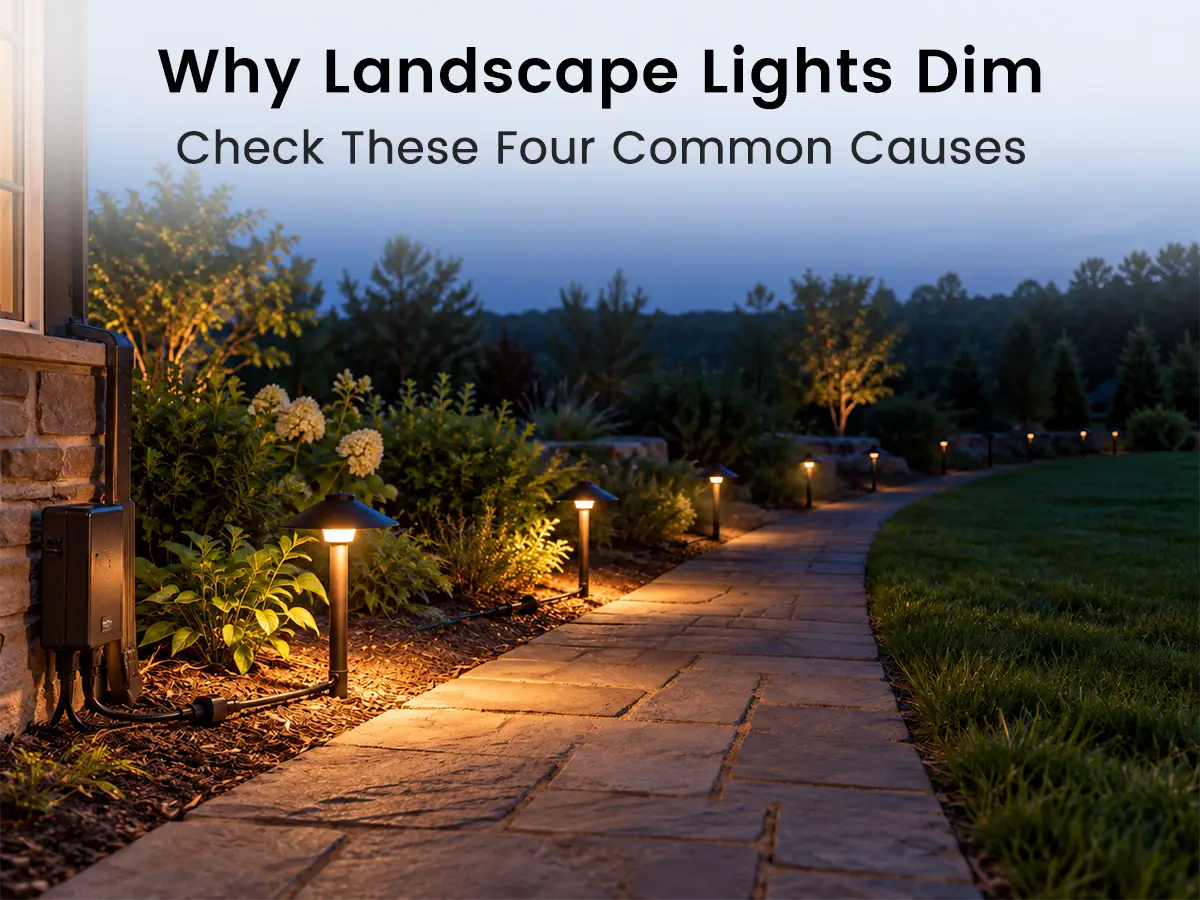
Landscape lights dim at the end of the run when the farthest fixtures receive less voltage than they need to operate normally. Common causes include voltage drop along the cable route, excessive lighting load, connection problems or a fixture issue.
The location and pattern of the problem usually provide the first clue. Lights that gradually become weaker farther from the transformer point to a different issue than lights that flicker, stop working in one area or fail at a single fixture. This guide explains how to identify the cause before replacing parts or changing the wiring layout.
Why Are My Landscape Lights Dim?
When landscape lights are dim, start by identifying where the brightness problem appears.
If every light appears dim, the issue may affect the entire system, such as transformer output, total lighting load or another system-level condition. If only the lights at the end of the run become dimmer, the cable route and voltage reaching the farthest fixture become more likely areas to inspect.
The table below compares common symptoms and the areas that usually need attention first.
| What you notice | Areas to check first |
|---|---|
| Lights dim at the end of the run | Cable length, wire size, connected load and voltage reaching the fixture |
| All lights appear dim | Transformer output, total system load and power supply |
| Lights flicker | Connections, splices, controls or fixture issues |
| One section stops working | Branch cable, splice or local connection |
A symptom does not identify one guaranteed cause. It helps narrow down where testing should begin.
Why Do Landscape Lights Get Dimmer at the End of the Run?
When the first fixtures near the transformer look normal but lights farther away become weaker, the cable run is often the first area to evaluate.
Low-voltage landscape lighting is more sensitive to cable resistance because the system operates at a lower voltage. As current travels through the wire, some voltage is lost along the route. Longer cable runs and higher connected loads create more opportunity for voltage loss before power reaches the final fixture.
A thicker conductor has lower resistance than a thinner conductor of the same material and length. The NIST Copper Wire Tables document resistance differences between wire sizes.
However, there is no single distance limit that applies to every landscape lighting installation. Fixture wattage, conductor material, cable length, connections, temperature and the fixture’s required input range all affect the final result.
A normal first light followed by progressively weaker fixtures is a common sign that the cable route and connected load should be checked.
Why Are My Landscape Lights Flickering?
Flickering and dimming are different symptoms.
Dimming usually appears as a steady reduction in brightness, especially toward the end of a longer cable run. Flickering is more often associated with unstable power delivery, a damaged splice, a loose connection, a fixture problem or a control issue.
If flickering starts after a connection point, inspect that section first. Moisture, corrosion or a loose connection can interrupt power intermittently and affect the fixtures after that location.
For underground connection issues, review our guide about wire connectors.
How Do I Check Low Voltage Landscape Lights?
Before replacing wire, connectors or fixtures, test the system while the lights are operating. A reading taken without the normal lighting load can appear higher because the circuit is not experiencing the current demand that creates voltage loss.
Start by measuring the low-voltage output at the transformer terminals that supply the lighting circuit. Then measure voltage at a fixture closer to the beginning of the cable run and compare it with the fixture farthest from the transformer.
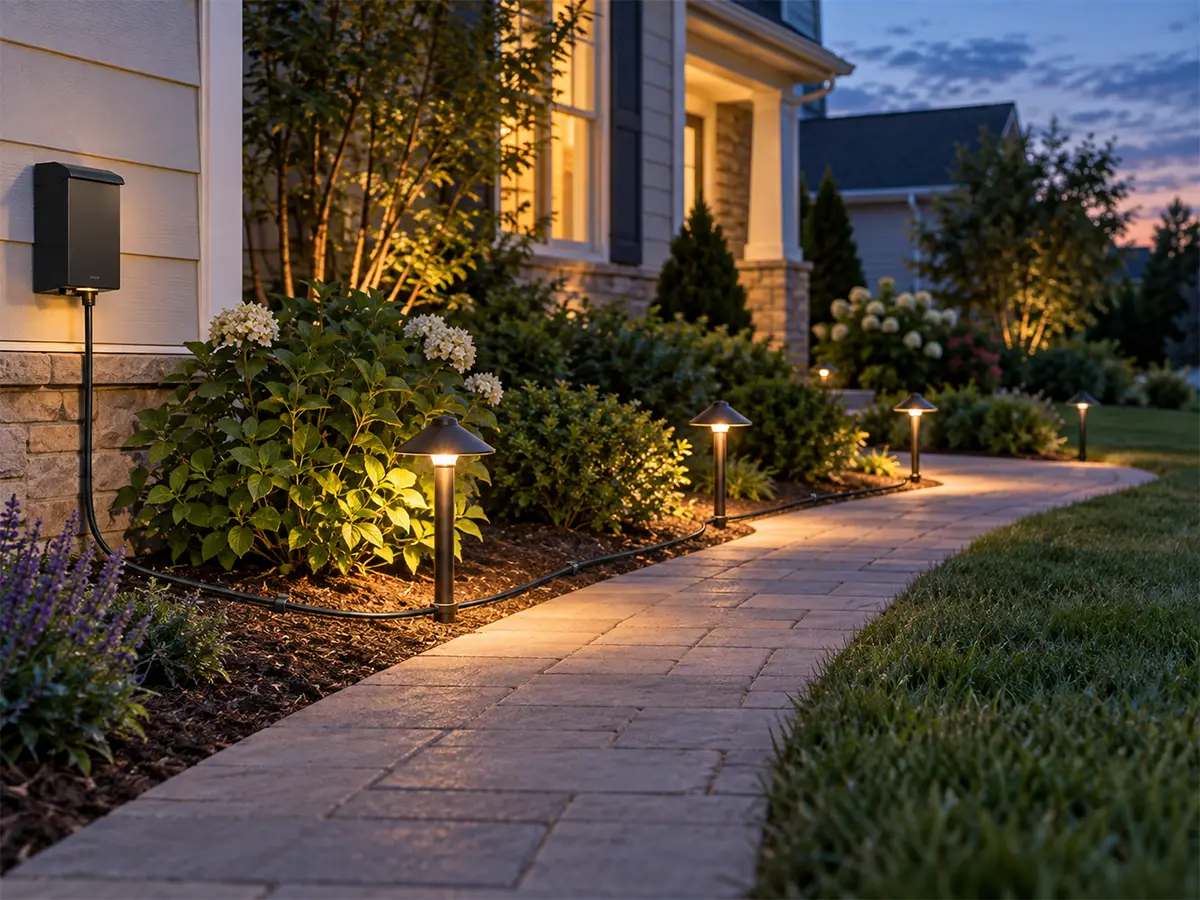
The results can help identify where the problem occurs.
| Test result | What it suggests |
|---|---|
| Transformer output is already low | Check power supply, transformer settings or overall system load |
| Voltage is normal near the transformer but lower at the farthest fixture | Cable length, wire size or connected load may be limiting the run |
| Voltage drops suddenly after one point | Inspect the connection, splice or damaged cable section |
| Voltage reaches the fixture but the light does not operate | Check the fixture or local connection |
Set the multimeter according to the transformer output type. Some landscape lighting systems use AC output while others use DC output, so the correct meter setting depends on the actual system. Test only accessible low-voltage points described in the equipment instructions and never probe the 120V compartment.
What Causes Landscape Lights to Stop Working?
When landscape lights are not working, identify whether the failure affects the entire system, one lighting section or a single fixture.
If every fixture is off, start with the parts that supply the complete system. The transformer may not be receiving power, a timer or photocell may not be activating, or a system-level setting may be preventing operation.
If one lighting section is off while other areas remain normal, focus on that branch of the circuit. Cable damage from digging, edging, planting or other outdoor work can interrupt one area. A failed splice or a loose or corroded connection can also stop power from reaching every fixture after that point.
If only one fixture is affected, the problem is more likely local. The fixture itself, the fixture lead or the connection directly serving that light may need inspection. Testing voltage at the affected point helps determine whether power reaches the fixture before replacing components.
How Can I Fix Dim Landscape Lights?
The correct fix depends on what the testing shows. Replacing parts without identifying the cause can waste time if the problem comes from the cable layout, lighting load or a single failed connection.
If voltage decreases gradually across a long cable route, the issue is usually related to cable distance, wire size and connected load. Reducing the demand on that route can improve performance. This may include shortening the cable path, reducing the number of fixtures on one run or dividing a large lighting area into separate shorter runs.
For example, a front walkway and a distant backyard lighting zone may perform better as separate runs instead of sharing one long cable route. Each cable run should be calculated based on the fixtures connected to that specific run and the distance from the transformer to the farthest fixture. The transformer’s total wattage rating should not simply be divided between multiple runs.
If the voltage loss occurs suddenly at one point, the issue is more likely related to a connection or damaged cable section. Inspect the splice, connection point or visible cable damage before replacing the entire route. For underground connection problems, use components suitable for the installation location and follow the connector manufacturer’s preparation and sealing instructions.
If the existing wire size does not match the actual lighting load and cable distance, compare the planned setup with our wire calculator before changing the cable.
When Should I Replace My Landscape Lighting Wire?
Replacing a connector or fixture will not solve every lighting problem. The wire itself may need replacement when the cable jacket has been damaged, corrosion has spread beyond a connection point, the existing cable no longer matches the planned lighting layout, or voltage loss remains excessive after connections and fixtures have been checked.
A cable replacement decision should be based on the actual lighting system, including fixture wattage, cable distance and installation requirements. Replacing wire with the same setup without identifying the original cause may not solve the problem.
For a new or replacement low-voltage lighting run, Vantecable offers: ETL Listed (Intertek) 12/2 landscape wire with 99.9% copper conductors for outdoor low-voltage lighting applications. Designed for path lights, spotlights and accent lighting, with direct-burial approval.
Shop Vantecable’s pure-copper wire during the Fall Backyard Wire Refresh and save up to 65% on eligible products.

12/2 Pure Copper Landscape Wire
100-250 ft · 12/2 AWG · 99.9% Copper · 12V/24V DC · ETL Listed · Direct burial
From $49.99
View 12/2 Landscape WireProduct specifications, including installation ratings and certifications, should always be checked for the exact model being installed. The Intertek ETL Listed Mark explains the purpose of the ETL certification mark and what it represents.
FAQ
Can Low Voltage Landscape Lights Be Too Far From the Transformer?
Yes. As the cable distance increases, resistance along the wire can reduce the voltage available at the farthest fixture. The effect depends on the wire size, conductor material, connected load and fixture requirements. A lighting layout that works well with a short cable route may perform differently when the same number of fixtures are placed farther away.
Does Transformer Wattage Equal the Load on My Landscape Lighting Run?
No. A transformer’s wattage rating describes the available capacity of the transformer, but each cable run should be considered based on the fixtures actually connected to that run. For example, a transformer may supply multiple lighting areas, but each individual cable should be evaluated using the fixture wattage and cable distance on that specific route.
Do I Need New Wire If My Landscape Lights Are Dim?
Not always. Dim lights may result from voltage loss, a connection problem, fixture issues or system load conditions. Testing the system first helps determine whether the solution is adjusting the layout, repairing a connection or replacing the wire.
Conclusion: Fixing Dim Landscape Lights
When landscape lights dim at the end of a run, start by identifying the pattern of the problem, then confirm the cause through testing.
A gradual loss of brightness across a long route usually points toward checking cable distance, wire size and connected load. A sudden failure at one point suggests inspecting the connection or fixture in that area.
Shop Vantecable’s pure-copper wire during the Fall Backyard Wire Refresh and save up to 65% on eligible products.
For new or replacement low-voltage lighting projects:
Shop Low Voltage Landscape Wire
Compare Vantecable 12/2, 14/2 and 16/2 landscape wire options for outdoor low-voltage lighting projects.
Always follow the instructions provided with the wire, fixtures and lighting equipment, along with applicable local requirements.