

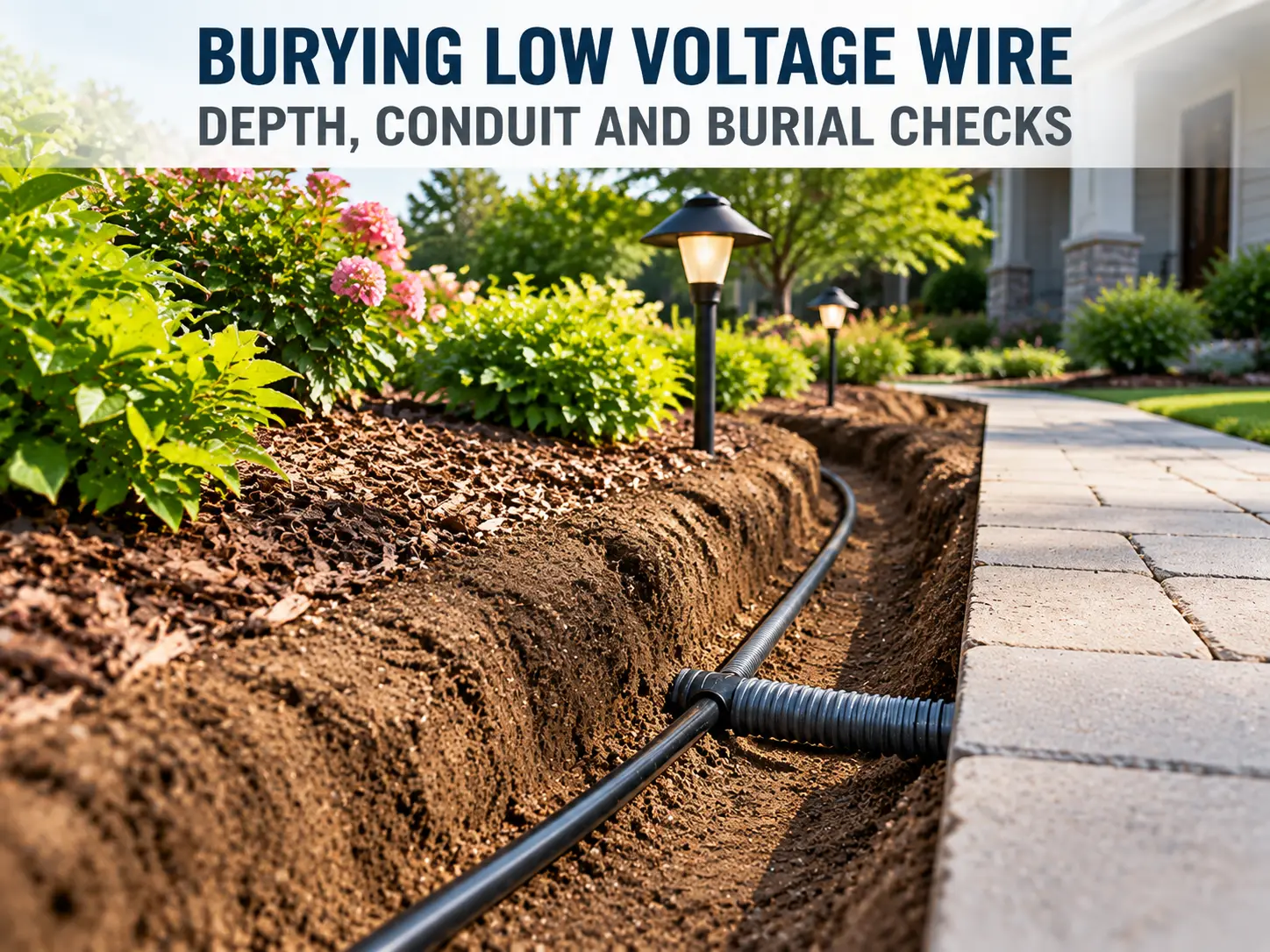
The how to install direct burial landscape wire process starts with planning the cable route, choosing suitable wire for the installation environment and protecting connection points before the cable is covered.
Before burying landscape wire, plan where the transformer will be placed, how the cable will reach each lighting area and where connections will be made. Proper preparation helps create a cleaner low voltage landscape lighting installation and reduces changes after the wire has been installed.
This guide explains how to plan the route, bury direct burial landscape wire, protect connections and complete the installation process.
What Is Direct Burial Landscape Wire?
Direct burial landscape wire is low voltage cable designed for underground outdoor lighting installations when used according to the product specifications.
It connects the transformer to landscape lighting fixtures such as pathway lights, garden lights and outdoor accent lighting. Because the cable remains outdoors after installation, selecting wire that matches the intended environment is an important first step.
Before installation, confirm that the selected wire matches your project requirements, including the lighting system specifications, installation environment and product instructions.
For more information about low voltage landscape wire types and buying considerations, see our landscape wire guide.
How to Plan Your Landscape Lighting Wire Installation
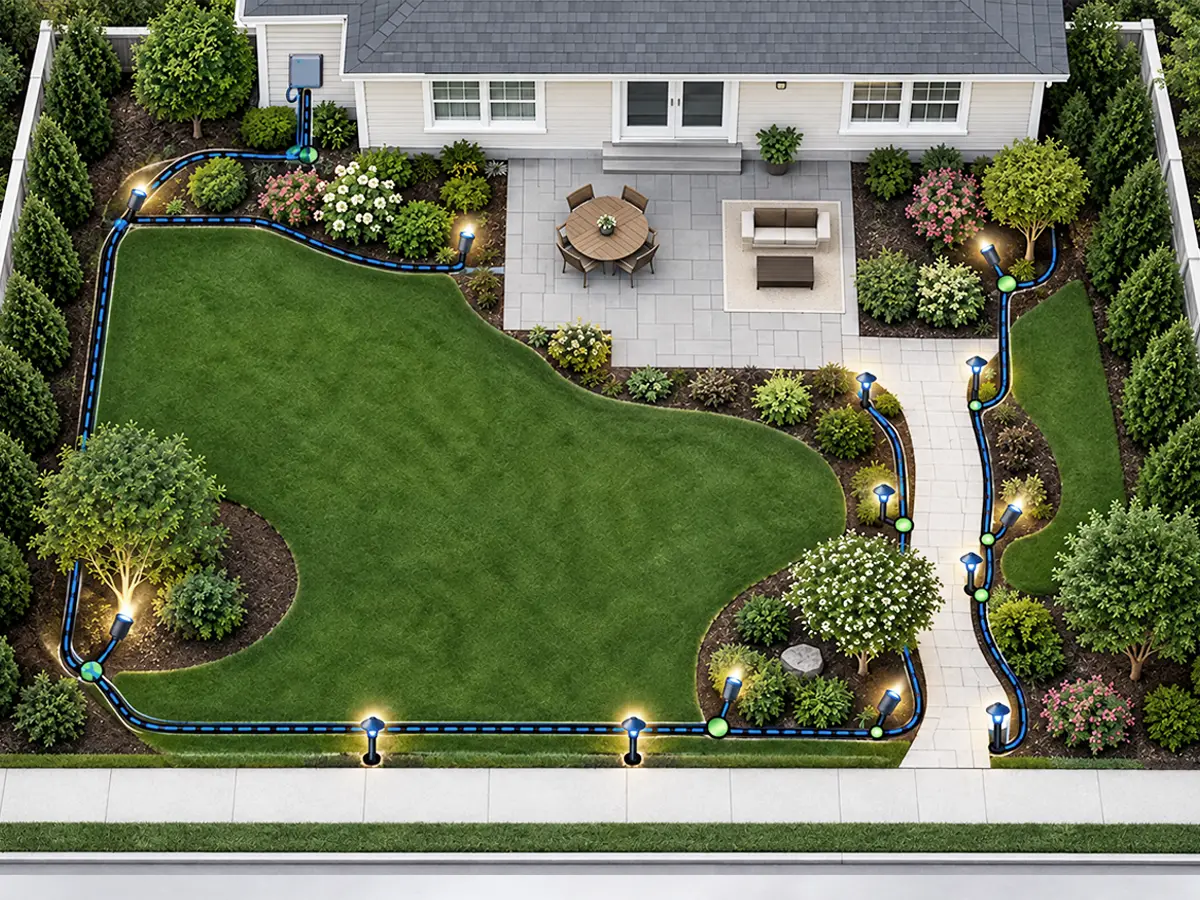
Before installing direct burial landscape wire, plan the complete lighting layout first. A good installation starts by deciding where the transformer will be placed, where the lighting areas will be located and how the cable will reach each fixture zone.
Choose a transformer location that provides convenient access to power while keeping the cable route practical. A clear route helps avoid unnecessary cable changes after installation.
Measure the actual cable path from the transformer to each lighting area instead of estimating only the straight-line distance. Include turns, changes in direction and additional cable needed for fixture connections.
For example, a pathway lighting project may require cable to follow a walkway edge, while garden lighting may require the wire to move around planting areas or landscape features. The final cable route is usually different from the shortest distance between two points.
For larger properties, consider whether different lighting areas should use separate wire routes. Front walkways, backyard gardens and driveway lighting may have different layouts, so planning each area separately can make the installation easier to manage.
Before purchasing wire, estimate the complete cable route length rather than measuring only the straight-line distance. Include turns, extra cable needed near fixtures and additional length required for making connections during installation.
If you need help understanding how wire size relates to your project conditions, see our wire gauge guide.
How to Bury Landscape Lighting Wire
Installing landscape lighting wire underground requires attention to the cable route, installation environment and connection points before the installation is completed.
The table below summarizes the main installation stages and what to confirm before covering the cable.
| Installation Stage | What to Confirm |
|---|---|
| Before digging | Confirm transformer location, fixture positions and the complete cable route |
| Before placing wire | Check that the cable reaches each lighting area and allows enough length for connections |
| During installation | Avoid damaging the cable jacket and keep connection points accessible |
| Before covering | Test the lighting system to confirm the fixtures operate correctly |
When installing direct burial landscape wire, follow the product specifications and installation instructions for the selected cable.
Avoid pulling the cable too tightly or placing unnecessary stress on the outer jacket during installation. Damage that occurs before burial can be difficult to identify after the installation is complete.
Before covering the wire completely, test the transformer, fixtures and connections to confirm that the lighting system is working correctly.
Does Landscape Wire Need Conduit?
Whether landscape wire needs conduit depends on the installation environment and the conditions around the cable route.
Direct burial landscape wire is designed for underground outdoor lighting applications when the product specifications allow that use. However, additional protection may be appropriate in areas where the cable may be exposed to physical damage or conditions beyond normal landscape installation.
Consider additional protection in locations affected by future landscaping work, frequent digging or other activities that may disturb the cable route.
The correct installation method depends on the selected wire, installation location and project requirements. Always follow the product instructions and applicable local requirements.
How to Connect and Protect Buried Landscape Wire
Connection points are one of the most important parts of a buried landscape lighting installation. Even when the cable itself is suitable for outdoor use, poorly planned connections may affect the long-term reliability of the lighting system.
When connecting buried landscape wire, use connectors that match the wire and lighting system, protect connection points from moisture exposure and confirm that each connection is secure before covering the installation.
Planning connector locations before installation can also make future maintenance easier because connection points are easier to identify later.
For more information about connection options, see our wire connectors guide.
Choose Direct Burial Landscape Wire for Your Project
After planning the route and confirming the installation requirements, select a landscape wire option that matches your project.
Shop Vantecable’s pure-copper wire during the Fall Backyard Wire Refresh and save up to 65% on eligible products.
VANTECABLE 12/2 landscape wire is designed for low voltage outdoor lighting applications where a two-conductor cable is needed for landscape installations. The cable provides a dedicated connection between compatible landscape lighting fixtures and transformer systems.

12/2 Pure Copper Landscape Wire
100-250 ft · 12/2 AWG · 99.9% Copper · 12V/24V DC · ETL Listed · Direct burial
From $49.99
View 12/2 Landscape WireFor additional landscape wire options, visit our landscape wire collection.
Direct Burial Landscape Wire FAQ
Can I install landscape wire before installing the lights?
Yes. Many landscape lighting projects install the wire route before placing every fixture. Planning the transformer location, cable path and fixture positions before installation can help reduce changes after the wire has been placed underground.
How much landscape wire do I need?
Measure the complete cable route from the transformer to each lighting area and include additional length for turns, fixture connections and installation adjustments. The required wire length should be based on the actual installation path rather than only the straight-line distance.
Can I extend landscape wire after it has been buried?
Extending buried landscape wire may be possible when using compatible wire and suitable connection methods. However, planning the correct cable length before installation can reduce the need for additional buried connection points.
Conclusion: Complete Your Direct Burial Landscape Wire Installation
A successful landscape lighting installation starts with proper preparation before the wire is buried.
Choose suitable direct burial landscape wire, plan the complete cable route, protect connection points and test the lighting system before completing the installation.
By preparing the installation correctly, you can create a cleaner and more reliable low voltage outdoor lighting setup. Shop Vantecable’s pure-copper wire during the Fall Backyard Wire Refresh and save up to 65% on eligible products.
Shop Low Voltage Landscape Wire
Choose VANTECABLE landscape wire options for outdoor low voltage lighting projects.