
.png?w=1368&h=240)
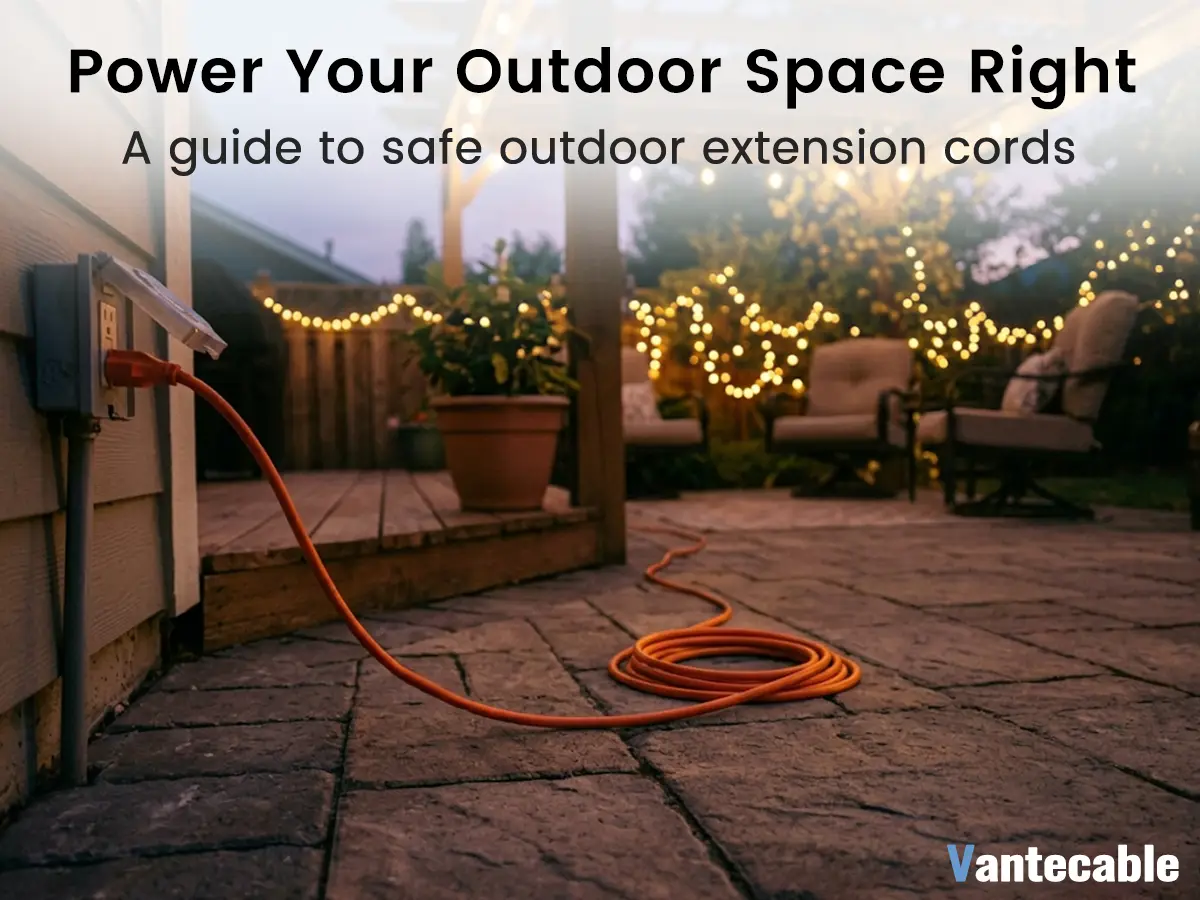
Whether you're lighting up a backyard patio, running power tools on a weekend project, or keeping holiday decorations glowing through December, one thing becomes clear fast: a single indoor outlet was never designed for the demands of outdoor living. That's where a reliable, heavy-duty outdoor extension cord becomes not just convenient — it becomes essential.
At Vantecable, we engineer extension cords and power solutions built for real outdoor conditions — from weekend DIYers to professional jobsite crews. This guide walks you through why the right outdoor extension cord matters, what to look for, and how choosing the wrong one can put both your equipment and your safety at risk.
Why Standard Indoor Cords Don't Belong Outside
It's a mistake many homeowners make: grabbing a spare indoor extension cord from the garage and running it out to the backyard. On the surface, it works. But the risks are significant.
Indoor extension cords are designed for controlled environments — stable temperatures, low humidity, and no UV exposure. Take them outside and they're immediately exposed to moisture, sunlight degradation, temperature swings, and physical wear from grass, gravel, and foot traffic. Over time — and sometimes very quickly — the insulation cracks, the connectors corrode, and the risk of electrical shock or fire increases dramatically.
Outdoor extension cords, by contrast, are rated for exactly these conditions. Look for the "W" designation on the cord jacket (e.g., SJTW or SJTOW), which confirms the cord is approved for outdoor use. This rating indicates weather-resistant insulation that can handle moisture, cold, and UV exposure without breaking down.
At Vantecable, every outdoor extension cord in our lineup carries proper outdoor ratings, with SJTW-rated jackets designed to stay flexible and durable across a wide range of temperatures and environments. For a deeper look at why indoor cords fail outside, see our full guide: Can You Use an Indoor Extension Cord Outside?
Understanding Wire Gauge: Why It Matters More Than You Think
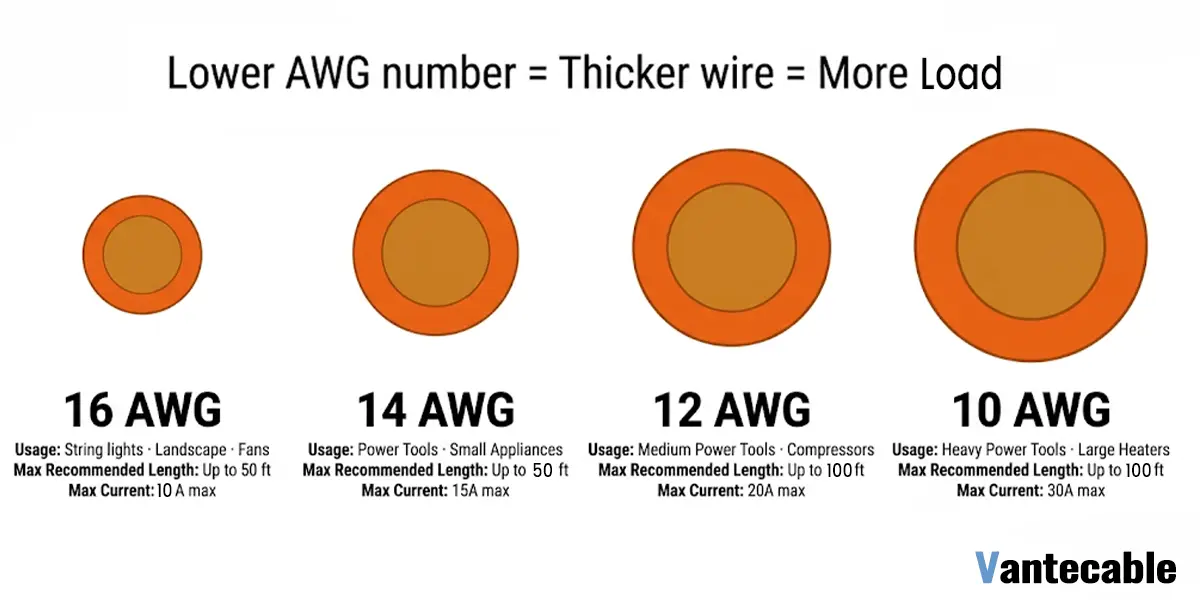
Wire gauge — measured in AWG (American Wire Gauge) — is one of the most misunderstood specs on an extension cord. The lower the AWG number, the thicker the wire and the more current it can safely carry.
Using an undersized cord for a high-draw application doesn't just risk tripping a breaker. It causes voltage drop, which reduces the performance of your tools and appliances, and generates heat buildup inside the cord — a leading cause of electrical fires. For a detailed technical breakdown, see our Voltage Drop Calculator & Formula Guide and our article on Why Extension Cords Get Hot.
Here's a practical breakdown:
- 16 AWG: Suitable for light-duty applications like string lights, landscape lighting, and small fans. Best kept under 50 feet.
- 14 AWG: A solid choice for medium-duty tools — lawnmowers, hedge trimmers, leaf blowers — up to 50 feet. Vantecable's ETL-listed 14 AWG cords are designed for exactly these everyday outdoor tasks.
- 12 AWG: The go-to for high-draw equipment: table saws, air compressors, miter saws, and power tools that run continuously. Vantecable's 12 AWG heavy-duty cords support up to 20 amps and are built to maintain stable power delivery across distances up to 100 feet without dangerous voltage drop.
- 10 AWG: For professional-grade, long-distance runs — think generators, large construction equipment, or commercial-grade setups. When consistent power delivery over 100+ feet is non-negotiable, 10 AWG is the appropriate choice.
A useful rule of thumb: the longer the cord run and the higher the load, the lower the AWG number you need. When in doubt, go one gauge thicker than you think you need. The cost difference is small. The safety margin is significant.
Still deciding between gauges? Read our side-by-side comparisons: 12 AWG vs 14 AWG and 14 AWG vs 16 AWG.
Multi-Outlet Extension Cords: Centralized Power for Complex Setups
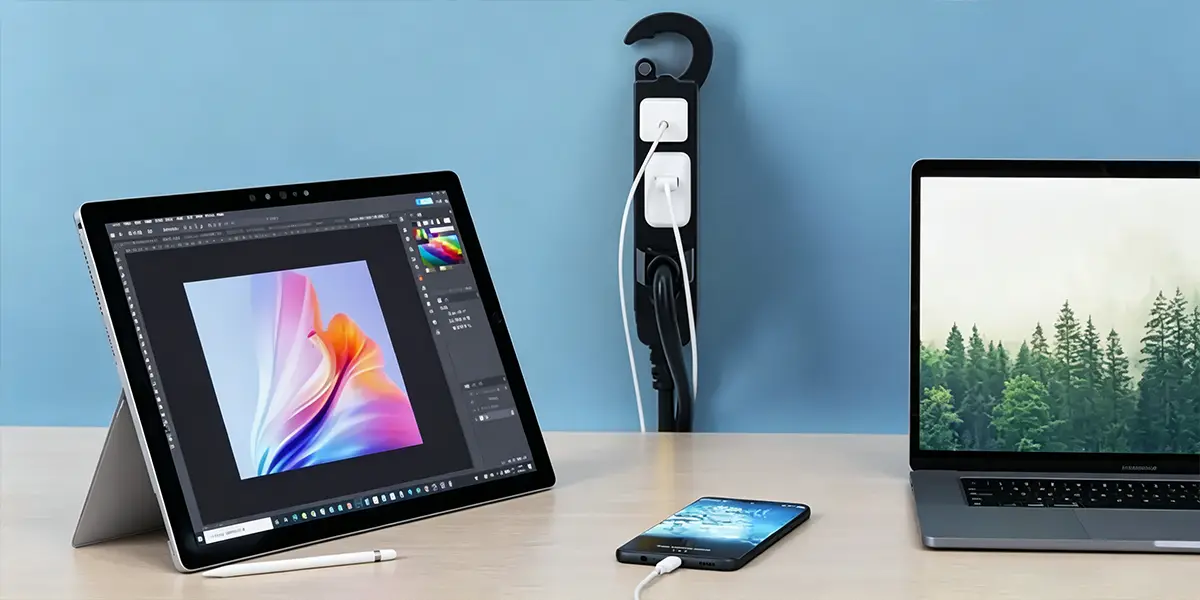
Running multiple tools, lights, or devices from a single outdoor outlet is a common challenge — especially for backyard entertaining, seasonal decorating, or multi-tool jobsites. Multi-outlet extension cords solve this problem by turning one outlet into a centralized power hub.
Rather than running separate cords from the house for every device, a quality multi-outlet cord keeps your setup organized, reduces trip hazards, and puts power exactly where you need it. Vantecable's multi-outlet designs are particularly popular for:
- Outdoor workshops and garages where multiple tools need to run simultaneously
- Patio and deck setups with string lights, speakers, fans, and phone chargers
- Seasonal holiday displays where multiple light strings and inflatables need power in the same yard zone
- Temporary outdoor workspaces for contractors, landscapers, and event crews
When selecting a multi-outlet cord for outdoor use, always verify the total combined wattage of your devices stays within the cord's rated capacity. Overloading a multi-outlet cord — even a good one — is a safety issue no rating can fully compensate for. Our guide on matching extension cords to tools and appliances covers this in detail.
The Role of Conductor Material: Copper vs. CCA
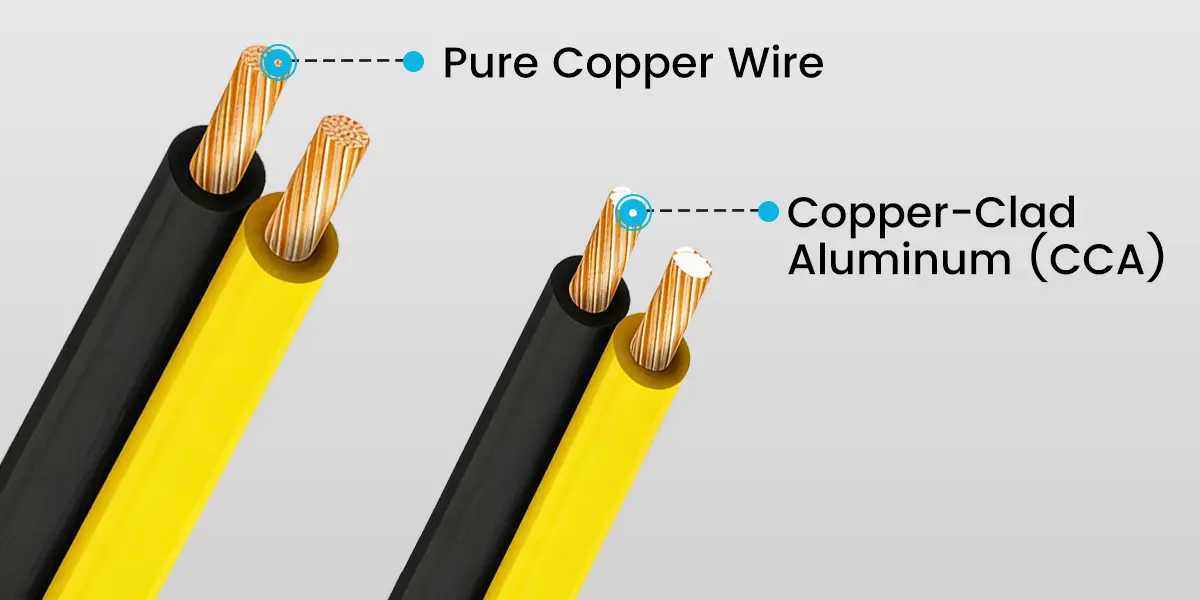
Not all extension cords are built the same on the inside. Conductor material plays a direct role in performance, safety, and longevity.
Pure copper conductors offer the best electrical conductivity, meaning less resistance, less heat generation, and more stable power delivery — especially at higher loads and over longer distances. Copper is also more flexible and durable over repeated bending and coiling.
CCA (Copper-Clad Aluminum) conductors are lighter and lower in cost, but aluminum carries about 40% less current capacity than copper for the same gauge size. In heavy-duty or long-run applications, CCA cords require upsizing to match the performance of pure copper equivalents.
Vantecable's heavy-duty 12 AWG outdoor cords are built with 100% pure copper conductors, ensuring the performance and thermal safety standards that professional and demanding home applications require.
Safety Ratings That Actually Mean Something
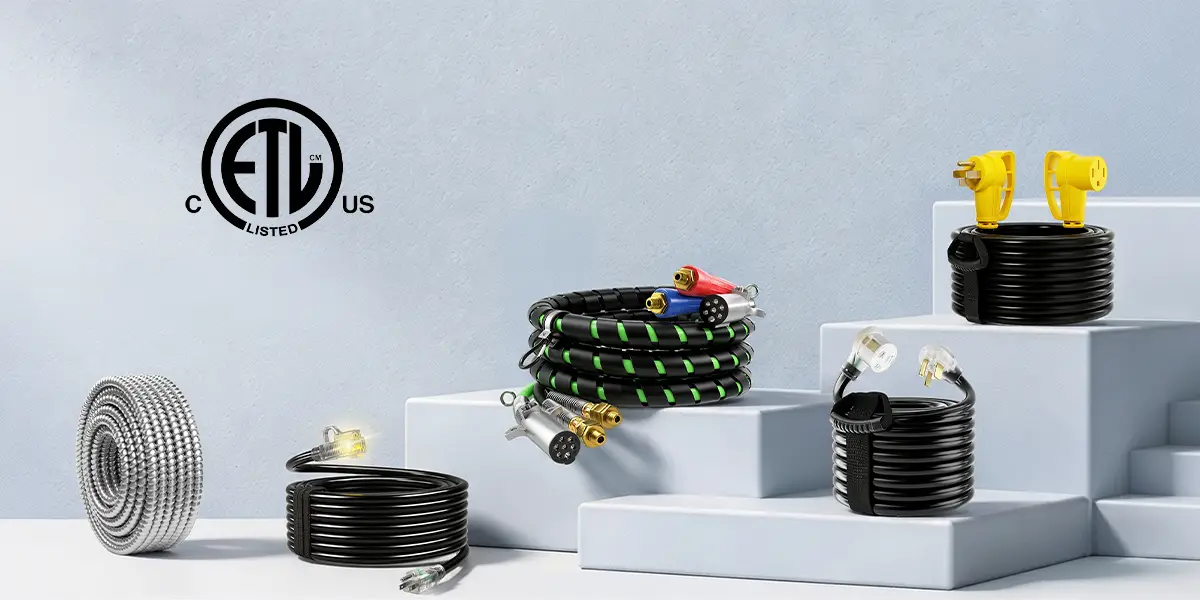
When shopping for outdoor extension cords, certifications aren't marketing language — they're meaningful evidence that a product has been independently tested against established safety standards.
ETL Listed: The ETL mark, issued by Intertek, is one of the most recognized safety certifications in North America. It confirms a product has been tested to ANSI/UL standards for electrical safety. All Vantecable extension cords that carry the ETL listing have been independently verified to meet these requirements — not just self-certified by the manufacturer.
UL Listed: The Underwriters Laboratories mark carries similar weight and is widely required by retailers and building codes across the United States. UL certification confirms compliance with established safety and performance benchmarks.
For outdoor applications specifically, these certifications matter even more. Moisture, temperature variation, and physical stress place greater demands on a cord than indoor use ever would. An uncertified cord that looks identical to a certified one on the shelf may lack critical internal protections — from fuse elements to flame-retardant housing — that only become apparent when something goes wrong.
Never purchase outdoor electrical equipment without at least one of these trusted third-party certifications. For the full technical breakdown of what ETL and UL actually test, read our article: ETL vs UL Certification — Is It Safe for Heavy-Duty Extension Cords?
Cord Length: Getting It Right the First Time
Extension cord length is a balance between practicality and electrical performance. Longer cords introduce more resistance, which causes voltage drop — meaning your devices receive less power than they're designed to operate on.
The practical guidelines are straightforward:
- For light-duty applications (string lights, fans, phone chargers), cord length is relatively flexible. A 25- to 50-foot 16 AWG cord handles most patio scenarios comfortably.
- For medium-duty tools at 14 AWG, stay within 50 feet for full-rated performance. Beyond that, consider upgrading to 12 AWG.
- For heavy-duty equipment at 12 AWG, runs up to 100 feet maintain reliable performance. For longer distances, move to 10 AWG.
A practical sizing tip from the Vantecable team: measure the actual distance from your outlet to where you need power, then add approximately 10% for routing around corners, plants, and furniture. Avoid stretching a cord tight — this stresses both the connectors and the insulation at bending points. For a complete technical guide, see: Choosing the Right Outdoor Extension Cord Length to Prevent Voltage Drop.
Flat Plug Design: A Small Detail That Solves Real Problems
Standard extension cord plugs protrude several inches from the wall, making them awkward behind furniture, appliances, or in tight wall spaces. A flat plug design sits flush against the wall surface, solving this problem entirely.
Vantecable's flat plug extension cords are particularly useful for:
- Powering outdoor lighting behind planters or along fence lines
- Connecting cords in garage or workshop setups where space is tight
- Reducing bending stress at the plug end — a common failure point on standard plugs over time
The flat plug also reduces the risk of accidentally pulling a cord out of the socket when running it along a wall or baseboard.
LED Lighted Indicator Cords: Visibility Where You Need It
For outdoor nighttime use — holiday decorating, evening patio setups, or after-dark jobsites — knowing at a glance whether power is flowing through a cord saves time and prevents frustration.
Vantecable offers extension cord models with LED lighted indicators built into the outlet end. When the cord is energized, the LED illuminates, confirming power is live. In low-light conditions, this simple feature eliminates the need to trace a cord back to the source when troubleshooting a device that isn't responding.
Generator Extension Cords: A Category of Their Own
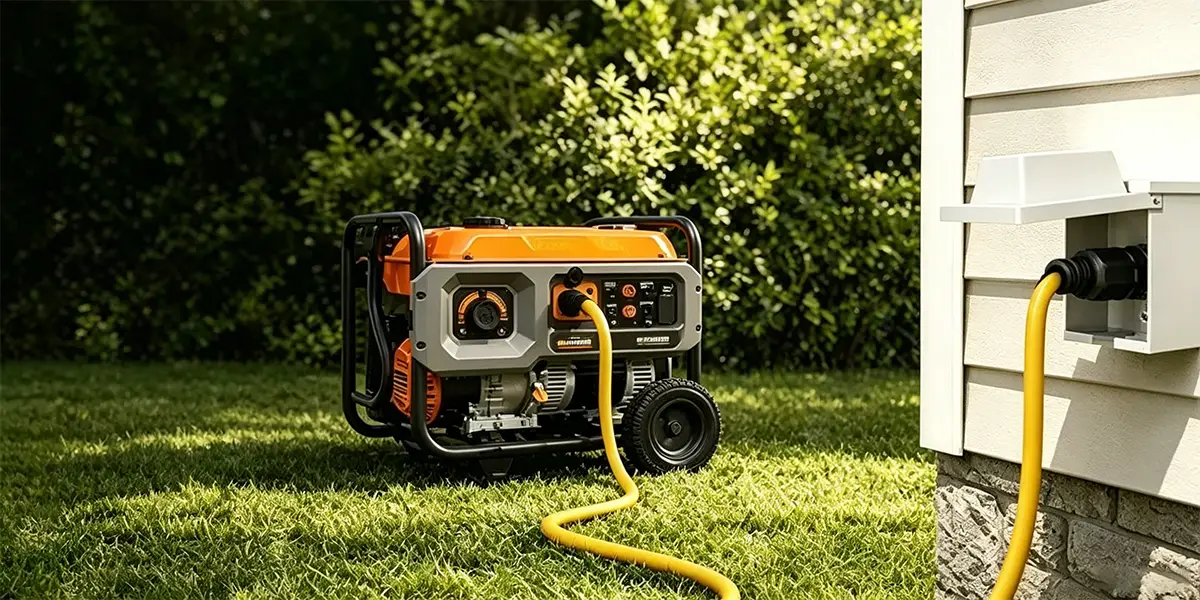
Backup power and portable generator setups have specific cord requirements that standard outdoor extension cords are not designed to meet. Generator extension cords handle significantly higher current loads, use heavy-gauge conductors, and feature twist-lock or straight-blade connectors rated for generator-specific voltages.
Vantecable's generator cord lineup is designed for this exact application — providing safe, stable power transfer from portable generators to home transfer switches, RV hookups, and jobsite distribution panels. Using a standard extension cord in place of a proper generator cord is a serious safety risk, regardless of the cord's gauge. Learn more in our professional guide to generator extension cords.
Choosing the Right Outdoor Extension Cord: A Quick Reference
| Application | Recommended AWG | Max Length | Certification / Rating |
|---|---|---|---|
| String lights / landscape lighting | 16 AWG | 50 ft | ETL or UL Listed |
| Lawnmower / hedge trimmer | 14 AWG | 50 ft | ETL or UL, SJTW rated |
| Power tools (saws, compressors) | 12 AWG | 100 ft | ETL or UL, pure copper |
| Generator / long-run commercial | 10 AWG | 150+ ft | ETL or UL, heavy-duty rated |
Why Vantecable
Vantecable was built around a straightforward conviction: electrical products that people rely on for safety and performance shouldn't be a guessing game. Our extension cord lineup — from 16 AWG landscape cords to 12 AWG heavy-duty professional cords — is engineered to meet real-world demands with transparent specifications, proper certifications, and materials that perform as described.
We offer a full range of outdoor extension cords for home, workshop, generator, and RV applications, with free shipping on select orders. Every product is designed to give you reliable power where you need it — without compromise.
Ready to power your outdoor space the right way?
Shop Outdoor Extension Cords →Vantecable provides safe and reliable power solutions for indoor and outdoor use, covering everyday household needs, outdoor work environments, landscape lighting, and temporary power distribution.